Nvidia's AI breakthrough threatens Tesla's self-driving crown
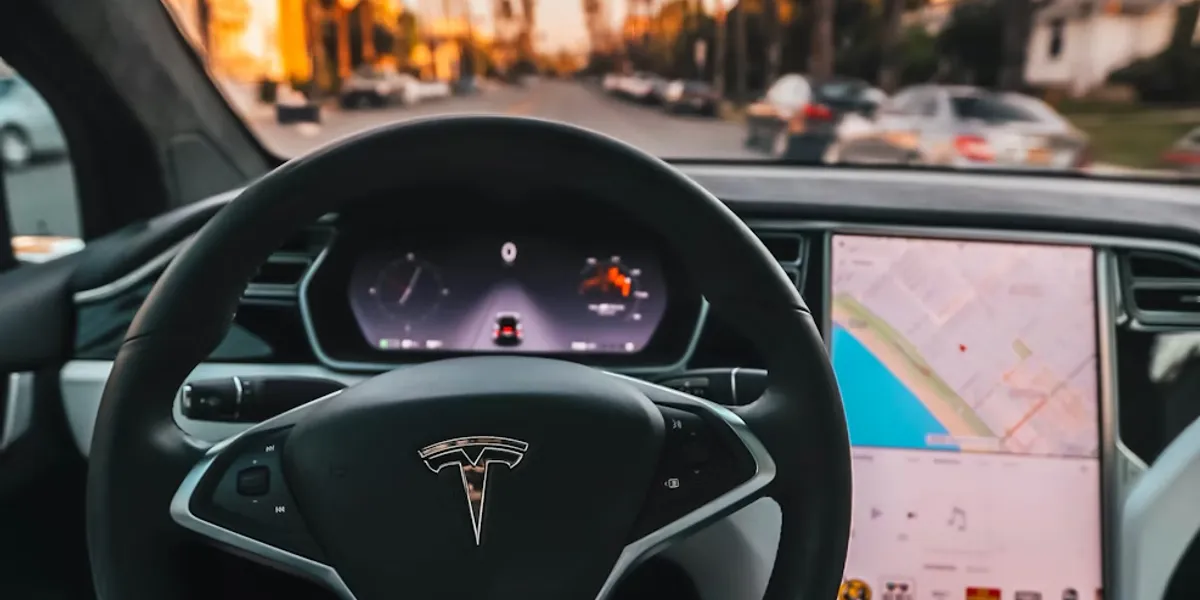
Tesla shareholders woke up to an uncomfortable reality this week: the company's most valuable asset might not be as exclusive as Wall Street once believed. NVIDIA's latest artificial intelligence platform has jolted the autonomous driving sector, demonstrating that self-driving technology could become widely available far sooner than anticipated. For investors who've watched Tesla shares climb on promises of a robotaxi future, this development threatens the premium valuation that's kept the electric vehicle maker trading at multiples that defy traditional automotive metrics. The question now isn't whether Tesla can build self-driving cars, but whether that capability will remain a competitive moat worth hundreds of billions in market capitalisation.
NVIDIA's announcement of its next-generation DRIVE Thor platform marks a pivotal moment in the autonomous vehicle race. The chip giant revealed partnerships with traditional automakers, including Mercedes-Benz, Volvo, and Hyundai, all of whom will gain access to advanced driver-assistance capabilities that rival Tesla's Full Self-Driving technology. This democratisation of AI computing power strikes at the heart of Tesla's investment thesis. For years, Chief Executive Elon Musk has positioned the company not as a car manufacturer but as an AI and robotics firm, arguing that its proprietary self-driving system justifies a valuation more aligned with technology companies than traditional automakers. Yet if Nvidia can provide similar capabilities to any manufacturer willing to integrate its platform, Tesla's technological edge begins to look more like a temporary head start than a sustainable advantage.
The market implications extend far beyond these two companies. Tesla shares have surged 340 per cent over the past 18 months, driven largely by enthusiasm for the company's autonomous driving potential. That rally pushed the company's market value above $ 750 billion, even as it delivered fewer vehicles in 2025 than some analysts had forecast. Meanwhile, Nvidia's stock has become synonymous with the artificial intelligence boom, climbing steadily as demand for its chips exploded across data centres and automotive applications. The stock trades at roughly 58 times forward earnings, reflecting expectations that AI adoption will continue accelerating. But the relationship between these two market darlings has grown more complicated, transforming from complementary technologies into a potential competitive threat.
The Commoditisation Risk That Reshapes Valuations
When technology becomes commoditised, the companies selling that technology typically see their margins compress and their valuations contract. Personal computers provide the textbook example: what once commanded premium prices eventually became interchangeable products competing primarily on cost. NVIDIA's democratisation of autonomous driving capabilities threatens to push Tesla's Full Self-Driving system down a similar path, even as the technology itself continues to improve. The difference matters profoundly to investors weighing whether Tesla deserves its lofty price-to-earnings ratio of approximately 82, compared with traditional automakers trading in the single digits.

The financial mathematics becomes stark when examining what self-driving technology contributes to Tesla's valuation. Analysts have long argued that Tesla's premium valuation rests on its ability to deploy a robotaxi network and generate recurring revenue from autonomous vehicles. Some bulls have modelled this opportunity as potentially worth 300 billion dollars or more in enterprise value. However, if Nvidia enables competitors to launch similar services using standardised AI platforms, that exclusive opportunity evaporates. Traditional automakers with established manufacturing scale could potentially launch autonomous services whilst maintaining their lower cost structures, creating a price war that would pressure everyone's margins.

"The autonomous driving market is heading towards a supplier-dominated model rather than a vertically integrated one," says Marcus Whitfield, Chief Technology Analyst at Thornton Research. "When Nvidia can provide the computational backbone to any manufacturer, Tesla's advantage shifts from technology to brand and user experience, which historically command much lower premiums in the automotive sector."
NVIDIA's latest DRIVE Hyperion platform — purpose-built for Level 4 autonomy — has already drawn in Toyota, Mercedes-Benz, Jaguar Land Rover, Volvo, and Hyundai, raising fresh questions about whether Tesla's technological edge can justify its premium valuation.
This shift explains why some long-term Tesla shareholders have begun reassessing their positions. The company's valuation has always required believing in a future where it captures enormous value from technologies still under development. But as Nvidia makes those same technologies available to established automakers with deeper pockets and broader distribution networks, the path to that valuable future becomes considerably more crowded. Ford, General Motors, and Volkswagen collectively sell tens of millions of vehicles annually, providing a potential distribution advantage that Tesla cannot match if the underlying technology reaches parity.
Winners and Losers in the Autonomous Ecosystem
Yet commoditisation creates opportunities even as it threatens incumbents. NVIDIA's strategy of becoming the essential infrastructure provider for autonomous vehicles positions the company as the proverbial arms dealer in the self-driving gold rush. Whilst individual automakers may struggle to capture outsized profits from commoditised technology, Nvidia stands to benefit regardless of which manufacturer ultimately wins market share. The company's data centre business already generates roughly 47 billion dollars in annual revenue, and automotive applications represent a growth vector that could add billions more as self-driving systems scale globally.
For retail investors, this dynamic suggests a fundamental reallocation of value within the autonomous vehicle ecosystem. Rather than concentrating in vertically integrated manufacturers like Tesla, profits may flow disproportionately to component suppliers and platform providers. Companies providing sensors, high-definition mapping data, and artificial intelligence training infrastructure could capture more sustainable margins than the automakers deploying the finished products. This mirrors patterns seen in smartphones, where component suppliers like Qualcomm and Taiwan Semiconductor maintained stronger profitability than many handset manufacturers who competed primarily on price.
"Investors should think about autonomous vehicles the way they think about cloud computing," notes Catherine Zhou, Senior Portfolio Manager at Cascade Investment Partners. "Amazon and Microsoft built the infrastructure, whilst thousands of companies built businesses on top of it. Nvidia is positioning itself as the AWS of self-driving cars, which historically has proven more profitable than being the application layer."
NVIDIA's approach — building the full compute stack from AI training clusters to on-vehicle deployment — positions it as infrastructure for the entire autonomous driving industry, not just a chip supplier.
The broader market has begun recognising this shift. Traditional automotive suppliers that once traded at modest valuations have seen renewed interest from investors betting that autonomous driving will create opportunities across the supply chain rather than consolidating value in a single manufacturer. Meanwhile, Tesla's valuation has grown more volatile as investors debate whether its first-mover advantage in electric vehicles translates into lasting dominance once self-driving technology becomes widely available.
Looking forward, the competition between Nvidia's platform approach and Tesla's integrated model will likely define the next chapter of automotive investing. For shareholders in either company, the stakes couldn't be higher. Tesla must demonstrate that its end-to-end control of hardware, software, and data creates an experience compelling enough to justify premium pricing even when competitors offer similar autonomous capabilities. NVIDIA needs to prove that its technology can match Tesla's real-world performance whilst serving multiple manufacturers simultaneously. The outcome will determine not just which stock performs better, but how investors should think about technological moats in an era when artificial intelligence platforms can rapidly disseminate capabilities once considered proprietary. For now, the market remains divided, but the trajectory increasingly favours those selling the tools rather than those building the finished products.
Disclaimer: The views and recommendations made above are those of individual analysts or brokerage companies, and not of Winvesta. We advise investors to check with certified experts before making any investment decisions.
Ready to earn on every trade?
Invest in 11,000+ US stocks & ETFs

Tesla shareholders woke up to an uncomfortable reality this week: the company's most valuable asset might not be as exclusive as Wall Street once believed. NVIDIA's latest artificial intelligence platform has jolted the autonomous driving sector, demonstrating that self-driving technology could become widely available far sooner than anticipated. For investors who've watched Tesla shares climb on promises of a robotaxi future, this development threatens the premium valuation that's kept the electric vehicle maker trading at multiples that defy traditional automotive metrics. The question now isn't whether Tesla can build self-driving cars, but whether that capability will remain a competitive moat worth hundreds of billions in market capitalisation.
NVIDIA's announcement of its next-generation DRIVE Thor platform marks a pivotal moment in the autonomous vehicle race. The chip giant revealed partnerships with traditional automakers, including Mercedes-Benz, Volvo, and Hyundai, all of whom will gain access to advanced driver-assistance capabilities that rival Tesla's Full Self-Driving technology. This democratisation of AI computing power strikes at the heart of Tesla's investment thesis. For years, Chief Executive Elon Musk has positioned the company not as a car manufacturer but as an AI and robotics firm, arguing that its proprietary self-driving system justifies a valuation more aligned with technology companies than traditional automakers. Yet if Nvidia can provide similar capabilities to any manufacturer willing to integrate its platform, Tesla's technological edge begins to look more like a temporary head start than a sustainable advantage.
The market implications extend far beyond these two companies. Tesla shares have surged 340 per cent over the past 18 months, driven largely by enthusiasm for the company's autonomous driving potential. That rally pushed the company's market value above $ 750 billion, even as it delivered fewer vehicles in 2025 than some analysts had forecast. Meanwhile, Nvidia's stock has become synonymous with the artificial intelligence boom, climbing steadily as demand for its chips exploded across data centres and automotive applications. The stock trades at roughly 58 times forward earnings, reflecting expectations that AI adoption will continue accelerating. But the relationship between these two market darlings has grown more complicated, transforming from complementary technologies into a potential competitive threat.
The Commoditisation Risk That Reshapes Valuations
When technology becomes commoditised, the companies selling that technology typically see their margins compress and their valuations contract. Personal computers provide the textbook example: what once commanded premium prices eventually became interchangeable products competing primarily on cost. NVIDIA's democratisation of autonomous driving capabilities threatens to push Tesla's Full Self-Driving system down a similar path, even as the technology itself continues to improve. The difference matters profoundly to investors weighing whether Tesla deserves its lofty price-to-earnings ratio of approximately 82, compared with traditional automakers trading in the single digits.
The financial mathematics becomes stark when examining what self-driving technology contributes to Tesla's valuation. Analysts have long argued that Tesla's premium valuation rests on its ability to deploy a robotaxi network and generate recurring revenue from autonomous vehicles. Some bulls have modelled this opportunity as potentially worth 300 billion dollars or more in enterprise value. However, if Nvidia enables competitors to launch similar services using standardised AI platforms, that exclusive opportunity evaporates. Traditional automakers with established manufacturing scale could potentially launch autonomous services whilst maintaining their lower cost structures, creating a price war that would pressure everyone's margins.
"The autonomous driving market is heading towards a supplier-dominated model rather than a vertically integrated one," says Marcus Whitfield, Chief Technology Analyst at Thornton Research. "When Nvidia can provide the computational backbone to any manufacturer, Tesla's advantage shifts from technology to brand and user experience, which historically command much lower premiums in the automotive sector."
NVIDIA's latest DRIVE Hyperion platform — purpose-built for Level 4 autonomy — has already drawn in Toyota, Mercedes-Benz, Jaguar Land Rover, Volvo, and Hyundai, raising fresh questions about whether Tesla's technological edge can justify its premium valuation.
This shift explains why some long-term Tesla shareholders have begun reassessing their positions. The company's valuation has always required believing in a future where it captures enormous value from technologies still under development. But as Nvidia makes those same technologies available to established automakers with deeper pockets and broader distribution networks, the path to that valuable future becomes considerably more crowded. Ford, General Motors, and Volkswagen collectively sell tens of millions of vehicles annually, providing a potential distribution advantage that Tesla cannot match if the underlying technology reaches parity.
Winners and Losers in the Autonomous Ecosystem
Yet commoditisation creates opportunities even as it threatens incumbents. NVIDIA's strategy of becoming the essential infrastructure provider for autonomous vehicles positions the company as the proverbial arms dealer in the self-driving gold rush. Whilst individual automakers may struggle to capture outsized profits from commoditised technology, Nvidia stands to benefit regardless of which manufacturer ultimately wins market share. The company's data centre business already generates roughly 47 billion dollars in annual revenue, and automotive applications represent a growth vector that could add billions more as self-driving systems scale globally.
For retail investors, this dynamic suggests a fundamental reallocation of value within the autonomous vehicle ecosystem. Rather than concentrating in vertically integrated manufacturers like Tesla, profits may flow disproportionately to component suppliers and platform providers. Companies providing sensors, high-definition mapping data, and artificial intelligence training infrastructure could capture more sustainable margins than the automakers deploying the finished products. This mirrors patterns seen in smartphones, where component suppliers like Qualcomm and Taiwan Semiconductor maintained stronger profitability than many handset manufacturers who competed primarily on price.
"Investors should think about autonomous vehicles the way they think about cloud computing," notes Catherine Zhou, Senior Portfolio Manager at Cascade Investment Partners. "Amazon and Microsoft built the infrastructure, whilst thousands of companies built businesses on top of it. Nvidia is positioning itself as the AWS of self-driving cars, which historically has proven more profitable than being the application layer."
NVIDIA's approach — building the full compute stack from AI training clusters to on-vehicle deployment — positions it as infrastructure for the entire autonomous driving industry, not just a chip supplier.
The broader market has begun recognising this shift. Traditional automotive suppliers that once traded at modest valuations have seen renewed interest from investors betting that autonomous driving will create opportunities across the supply chain rather than consolidating value in a single manufacturer. Meanwhile, Tesla's valuation has grown more volatile as investors debate whether its first-mover advantage in electric vehicles translates into lasting dominance once self-driving technology becomes widely available.
Looking forward, the competition between Nvidia's platform approach and Tesla's integrated model will likely define the next chapter of automotive investing. For shareholders in either company, the stakes couldn't be higher. Tesla must demonstrate that its end-to-end control of hardware, software, and data creates an experience compelling enough to justify premium pricing even when competitors offer similar autonomous capabilities. NVIDIA needs to prove that its technology can match Tesla's real-world performance whilst serving multiple manufacturers simultaneously. The outcome will determine not just which stock performs better, but how investors should think about technological moats in an era when artificial intelligence platforms can rapidly disseminate capabilities once considered proprietary. For now, the market remains divided, but the trajectory increasingly favours those selling the tools rather than those building the finished products.
Disclaimer: The views and recommendations made above are those of individual analysts or brokerage companies, and not of Winvesta. We advise investors to check with certified experts before making any investment decisions.
Ready to earn on every trade?
Invest in 11,000+ US stocks & ETFs


