NVIDIA's AI warning: Why investors are skeptical despite strong forecast
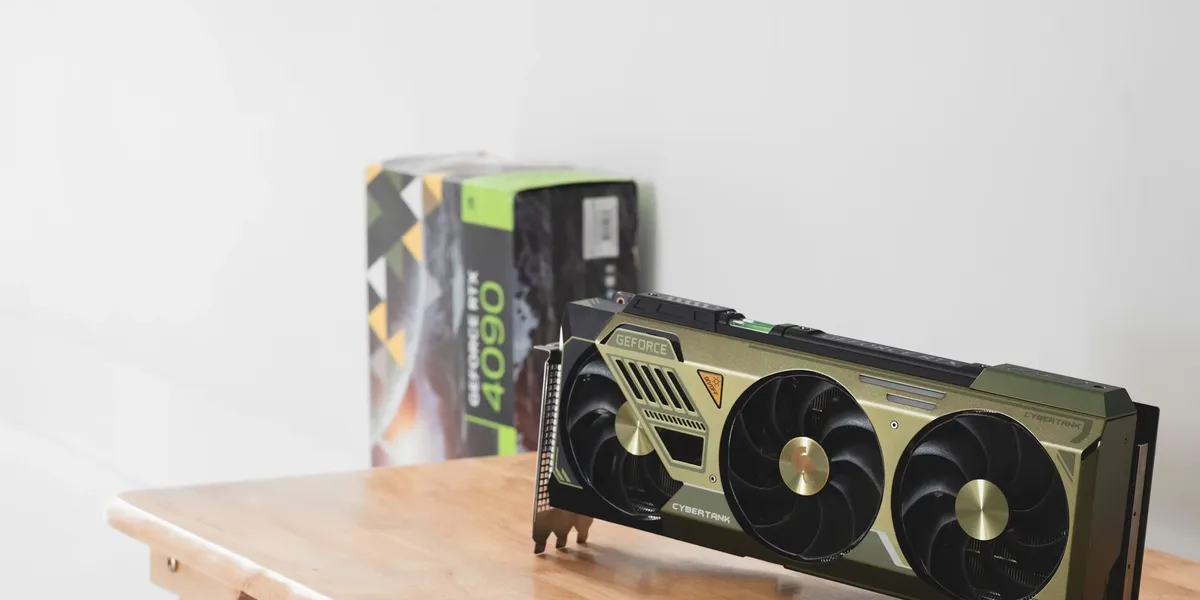
When Nvidia delivered its latest quarterly forecast on Wednesday evening, the company did everything right by Wall Street's traditional metrics. Revenue projections exceeded analyst expectations, profit margins remained robust, and management painted an optimistic picture of artificial intelligence demand stretching well into 2026. Yet by Thursday's close, the stock had barely moved, delivering a lukewarm response that speaks volumes about the current state of investor confidence in the artificial intelligence revolution. For the millions of Americans holding technology stocks in their retirement accounts and brokerage portfolios, this muted reaction represents something far more significant than a single earnings report. It signals a fundamental shift in how markets are valuing the AI boom that has driven extraordinary gains over the past eighteen months.
NVIDIA has become the undisputed barometer of enthusiasm for artificial intelligence, with its graphics processing units powering everything from ChatGPT to autonomous vehicle systems. The Santa Clara-based chipmaker has seen its market capitalisation swell past $2 trillion, making it one of America's most valuable companies alongside Apple and Microsoft. Yet Wednesday's tepid investor response suggests that even strong fundamentals may no longer be enough to satisfy shareholders who have watched the stock climb more than 200 per cent since early 2024. The company's forecast called for quarterly revenue of approximately $32 billion, representing year-over-year growth of more than 70 per cent. In previous quarters, such projections would have sent the stock soaring in after-hours trading. This time, investors shrugged.

The subdued reaction reflects mounting concerns about sustainability. After eighteen months of relentless gains across AI-focused technology stocks, market participants are increasingly questioning whether actual business applications and revenue generation can justify current valuations. Whilst Nvidia's chips remain essential infrastructure for AI development, investors are beginning to scrutinise whether the companies buying those chips can turn their investments into profitable products. This scrutiny arrives at a moment when interest rates remain elevated by historical standards, making future growth projections less valuable in present-day calculations. The mathematics of valuation becomes less forgiving when the discount rate rises, and technology stocks trading at premium multiples face particular pressure under such conditions.
Valuation Fatigue Takes Hold Amongst Technology Investors
Market dynamics have shifted considerably since Nvidia last reported earnings three months ago. Back in November, any hint of continued AI demand growth would spark buying frenzies across semiconductor stocks and their suppliers. Today's investors display what analysts describe as "valuation fatigue," a psychological state where even positive news fails to generate enthusiasm because current prices already reflect optimistic scenarios.NVIDIA trades at approximately forty times forward earnings estimates, a multiple that demands not just growth but accelerating growth to justify further appreciation.

When the company delivers exactly what analysts expected rather than meaningfully exceeding those expectations, the stock finds itself with nowhere to go but sideways.
This phenomenon extends beyond Nvidia to encompass the broader artificial intelligence investment theme. Microsoft, Alphabet, Amazon, and Meta Platforms have collectively committed to spending more than $200 billion on AI infrastructure in 2025 and 2026, with Nvidia capturing a substantial portion of that expenditure. Yet investors are increasingly asking when these investments will translate into revenue growth that justifies such massive capital allocation.

Consumer-facing AI applications remain largely free or minimally monetised, whilst enterprise adoption proceeds more cautiously than initially projected. The disconnect between infrastructure investment and revenue realisation creates uncertainty that manifests in sideways stock movement even when underlying business metrics remain strong.
"We're witnessing a transition from pure momentum investing to a more discerning evaluation of AI economics," says Katherine Morrison, Chief Technology Analyst at Pemberton Research. "Investors want to see evidence that AI spending translates into sustainable competitive advantages and profit growth, not just impressive demonstrations of technical capability."
Goldman Sachs Research documented this exact shift in December 2025, noting that "investors have rotated away from AI infrastructure companies" whose operating earnings are under pressure, while rewarding companies demonstrating a clear link between capital expenditure and actual revenue generation. This selectivity would have been unthinkable during the momentum-driven rallies of 2024.
The semiconductor industry presents particular challenges for valuation assessment because it operates with inherent cyclicality. Even companies with dominant market positions face inventory corrections, demand fluctuations, and technological transitions that can disrupt growth trajectories. NVIDIA itself experienced a significant downturn in 2022 when cryptocurrency demand collapsed, and gaming revenues declined. Whilst artificial intelligence represents a more durable demand driver than cryptocurrency mining, investors remember that technology leadership positions can prove surprisingly fragile. The tepid reaction to strong guidance suggests market participants are building in more conservative assumptions about sustainability and competitive dynamics than they held six months ago.
Portfolio Implications as AI Enthusiasm Moderates
For retail investors holding Nvidia shares directly or through technology-focused funds, the muted market response carries important implications for portfolio strategy. The stock has delivered extraordinary returns for patient shareholders, turning $10,000 invested in early 2023 into more than $70,000 today. Such gains naturally prompt questions about whether to lock in profits or maintain positions in anticipation of further appreciation. Wednesday's price action suggests that easy gains may have concluded, with future returns likely to depend on actual business execution rather than on multiple expansion. Investors who bought shares at elevated valuations during recent months find themselves in a more precarious position, with limited margin of safety if growth disappoints or if broader market conditions deteriorate.
The broader technology sector faces similar dynamics, with artificial intelligence stocks collectively trading at premium valuations that assume flawless execution and sustained growth rates. When bellwether companies like Nvidia fail to generate enthusiasm despite strong results, it suggests investor appetite for risk has diminished across the entire category. This shift doesn't necessarily predict an imminent correction. Still, it does indicate that stocks will likely need to grow into their valuations through earnings growth rather than through further multiple expansion. For diversified investors, this environment favours a more balanced approach between growth-oriented technology holdings and positions in sectors trading at more reasonable valuations.
"The AI infrastructure buildout remains real and substantial, but market pricing has run ahead of revenue realisation timelines," notes David Cartwright, Senior Portfolio Manager at Lexington Capital Advisors. "Smart investors are focusing on companies with clear paths to monetising AI capabilities rather than chasing pure-play infrastructure stocks at peak multiples."
This view found validation in Nvidia's own earnings week, when Janus Henderson portfolio manager Richard Clode told CNBC that "the debate has shifted toward the sustainability of AI capex spending, amid concerns around its quantum, monetisation and potential cashflow degradation"—a stark reminder that even record-breaking results can disappoint when valuations already assume perfection.
Historical parallels offer perspective on the current moment. During previous technology booms, market enthusiasm eventually gave way to more sober assessments of business fundamentals and competitive positioning. Companies with genuine competitive advantages and strong execution continued delivering shareholder value, whilst those riding momentum without underlying business strength faced significant declines. NVIDIA's dominant position in AI processors provides substantial competitive protection, yet even strong companies can experience extended periods of sideways trading while earnings catch up to valuations. Investors shouldrecognisee that modest price reactions to strong news don't necessarily signal the end of a company's growth story. Still, they do suggest that future returns will require patience and tolerance for volatility.
Looking ahead, Nvidia's ability to satisfy increasingly sceptical investors will depend on demonstrating that AI demand remains robust whilst new competitive threats remain manageable. The company faces emerging competition from custom chip designs developed by major customers and from rivals developing alternative processor architectures. Meanwhile, questions persist about whether current AI infrastructure spending levels represent a sustainable new baseline or an investment surge that will moderate once initial buildouts are complete. For retail investors navigating these uncertainties, the tepid response to Wednesday's forecast serves as a reminder that even excellent companies can experience extended periods where stock prices consolidate previous gains. The AI revolution may indeed reshape computing and business operations, but translating that transformation into consistent shareholder returns requires managing expectations alongside maintaining exposure to legitimate innovation.
Disclaimer: The views and recommendations made above are those of individual analysts or brokerage companies, and not of Winvesta. We advise investors to check with certified experts before making any investment decisions.
Ready to earn on every trade?
Invest in 11,000+ US stocks & ETFs

When Nvidia delivered its latest quarterly forecast on Wednesday evening, the company did everything right by Wall Street's traditional metrics. Revenue projections exceeded analyst expectations, profit margins remained robust, and management painted an optimistic picture of artificial intelligence demand stretching well into 2026. Yet by Thursday's close, the stock had barely moved, delivering a lukewarm response that speaks volumes about the current state of investor confidence in the artificial intelligence revolution. For the millions of Americans holding technology stocks in their retirement accounts and brokerage portfolios, this muted reaction represents something far more significant than a single earnings report. It signals a fundamental shift in how markets are valuing the AI boom that has driven extraordinary gains over the past eighteen months.
NVIDIA has become the undisputed barometer of enthusiasm for artificial intelligence, with its graphics processing units powering everything from ChatGPT to autonomous vehicle systems. The Santa Clara-based chipmaker has seen its market capitalisation swell past $2 trillion, making it one of America's most valuable companies alongside Apple and Microsoft. Yet Wednesday's tepid investor response suggests that even strong fundamentals may no longer be enough to satisfy shareholders who have watched the stock climb more than 200 per cent since early 2024. The company's forecast called for quarterly revenue of approximately $32 billion, representing year-over-year growth of more than 70 per cent. In previous quarters, such projections would have sent the stock soaring in after-hours trading. This time, investors shrugged.
The subdued reaction reflects mounting concerns about sustainability. After eighteen months of relentless gains across AI-focused technology stocks, market participants are increasingly questioning whether actual business applications and revenue generation can justify current valuations. Whilst Nvidia's chips remain essential infrastructure for AI development, investors are beginning to scrutinise whether the companies buying those chips can turn their investments into profitable products. This scrutiny arrives at a moment when interest rates remain elevated by historical standards, making future growth projections less valuable in present-day calculations. The mathematics of valuation becomes less forgiving when the discount rate rises, and technology stocks trading at premium multiples face particular pressure under such conditions.
Valuation Fatigue Takes Hold Amongst Technology Investors
Market dynamics have shifted considerably since Nvidia last reported earnings three months ago. Back in November, any hint of continued AI demand growth would spark buying frenzies across semiconductor stocks and their suppliers. Today's investors display what analysts describe as "valuation fatigue," a psychological state where even positive news fails to generate enthusiasm because current prices already reflect optimistic scenarios.NVIDIA trades at approximately forty times forward earnings estimates, a multiple that demands not just growth but accelerating growth to justify further appreciation.
When the company delivers exactly what analysts expected rather than meaningfully exceeding those expectations, the stock finds itself with nowhere to go but sideways.
This phenomenon extends beyond Nvidia to encompass the broader artificial intelligence investment theme. Microsoft, Alphabet, Amazon, and Meta Platforms have collectively committed to spending more than $200 billion on AI infrastructure in 2025 and 2026, with Nvidia capturing a substantial portion of that expenditure. Yet investors are increasingly asking when these investments will translate into revenue growth that justifies such massive capital allocation.
Consumer-facing AI applications remain largely free or minimally monetised, whilst enterprise adoption proceeds more cautiously than initially projected. The disconnect between infrastructure investment and revenue realisation creates uncertainty that manifests in sideways stock movement even when underlying business metrics remain strong.
"We're witnessing a transition from pure momentum investing to a more discerning evaluation of AI economics," says Katherine Morrison, Chief Technology Analyst at Pemberton Research. "Investors want to see evidence that AI spending translates into sustainable competitive advantages and profit growth, not just impressive demonstrations of technical capability."
Goldman Sachs Research documented this exact shift in December 2025, noting that "investors have rotated away from AI infrastructure companies" whose operating earnings are under pressure, while rewarding companies demonstrating a clear link between capital expenditure and actual revenue generation. This selectivity would have been unthinkable during the momentum-driven rallies of 2024.
The semiconductor industry presents particular challenges for valuation assessment because it operates with inherent cyclicality. Even companies with dominant market positions face inventory corrections, demand fluctuations, and technological transitions that can disrupt growth trajectories. NVIDIA itself experienced a significant downturn in 2022 when cryptocurrency demand collapsed, and gaming revenues declined. Whilst artificial intelligence represents a more durable demand driver than cryptocurrency mining, investors remember that technology leadership positions can prove surprisingly fragile. The tepid reaction to strong guidance suggests market participants are building in more conservative assumptions about sustainability and competitive dynamics than they held six months ago.
Portfolio Implications as AI Enthusiasm Moderates
For retail investors holding Nvidia shares directly or through technology-focused funds, the muted market response carries important implications for portfolio strategy. The stock has delivered extraordinary returns for patient shareholders, turning $10,000 invested in early 2023 into more than $70,000 today. Such gains naturally prompt questions about whether to lock in profits or maintain positions in anticipation of further appreciation. Wednesday's price action suggests that easy gains may have concluded, with future returns likely to depend on actual business execution rather than on multiple expansion. Investors who bought shares at elevated valuations during recent months find themselves in a more precarious position, with limited margin of safety if growth disappoints or if broader market conditions deteriorate.
The broader technology sector faces similar dynamics, with artificial intelligence stocks collectively trading at premium valuations that assume flawless execution and sustained growth rates. When bellwether companies like Nvidia fail to generate enthusiasm despite strong results, it suggests investor appetite for risk has diminished across the entire category. This shift doesn't necessarily predict an imminent correction. Still, it does indicate that stocks will likely need to grow into their valuations through earnings growth rather than through further multiple expansion. For diversified investors, this environment favours a more balanced approach between growth-oriented technology holdings and positions in sectors trading at more reasonable valuations.
"The AI infrastructure buildout remains real and substantial, but market pricing has run ahead of revenue realisation timelines," notes David Cartwright, Senior Portfolio Manager at Lexington Capital Advisors. "Smart investors are focusing on companies with clear paths to monetising AI capabilities rather than chasing pure-play infrastructure stocks at peak multiples."
This view found validation in Nvidia's own earnings week, when Janus Henderson portfolio manager Richard Clode told CNBC that "the debate has shifted toward the sustainability of AI capex spending, amid concerns around its quantum, monetisation and potential cashflow degradation"—a stark reminder that even record-breaking results can disappoint when valuations already assume perfection.
Historical parallels offer perspective on the current moment. During previous technology booms, market enthusiasm eventually gave way to more sober assessments of business fundamentals and competitive positioning. Companies with genuine competitive advantages and strong execution continued delivering shareholder value, whilst those riding momentum without underlying business strength faced significant declines. NVIDIA's dominant position in AI processors provides substantial competitive protection, yet even strong companies can experience extended periods of sideways trading while earnings catch up to valuations. Investors shouldrecognisee that modest price reactions to strong news don't necessarily signal the end of a company's growth story. Still, they do suggest that future returns will require patience and tolerance for volatility.
Looking ahead, Nvidia's ability to satisfy increasingly sceptical investors will depend on demonstrating that AI demand remains robust whilst new competitive threats remain manageable. The company faces emerging competition from custom chip designs developed by major customers and from rivals developing alternative processor architectures. Meanwhile, questions persist about whether current AI infrastructure spending levels represent a sustainable new baseline or an investment surge that will moderate once initial buildouts are complete. For retail investors navigating these uncertainties, the tepid response to Wednesday's forecast serves as a reminder that even excellent companies can experience extended periods where stock prices consolidate previous gains. The AI revolution may indeed reshape computing and business operations, but translating that transformation into consistent shareholder returns requires managing expectations alongside maintaining exposure to legitimate innovation.
Disclaimer: The views and recommendations made above are those of individual analysts or brokerage companies, and not of Winvesta. We advise investors to check with certified experts before making any investment decisions.
Ready to earn on every trade?
Invest in 11,000+ US stocks & ETFs


