Amazon KDP royalties in India: when they land and what is deducted
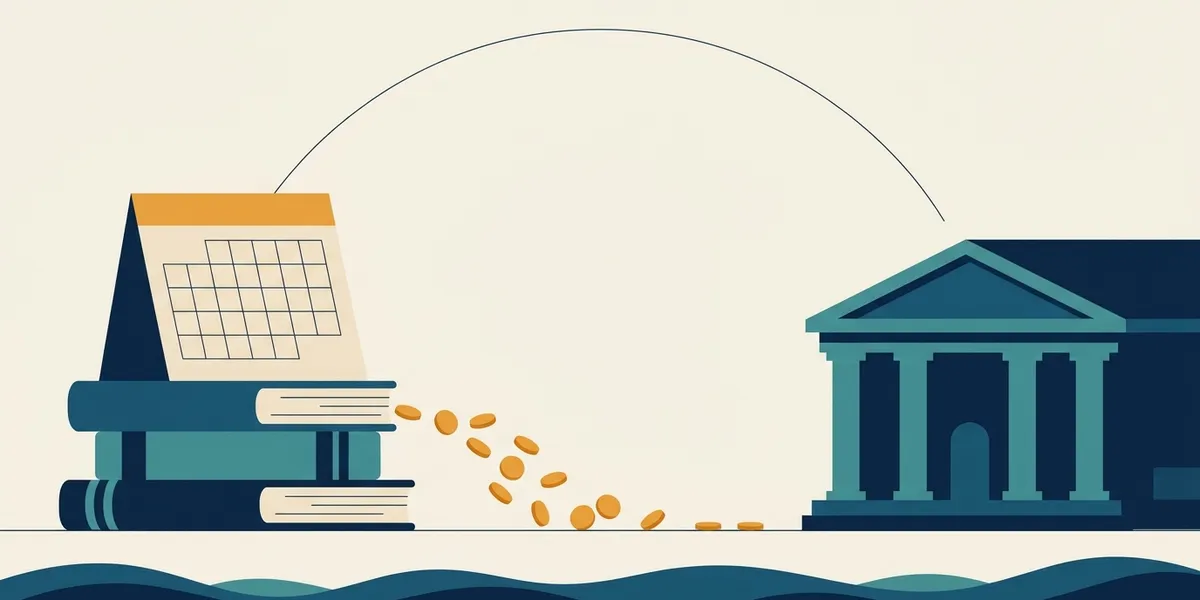
KDP pays Indian authors in rupees by direct deposit, with no minimum payment, about 60 days after the end of the month in which a book sold. An Indian bank then takes 7 to 10 business days more to show the money. A copy sold on 5 March therefore reaches your account around the second week of June.
Every figure here comes from KDP's own help pages, read on 26 November 2026. The same pages say nothing about a FIRC for these deposits, so that question goes to your bank.
KDP pays two months after the sale month closes
January sales are paid at the end of March, February sales at the end of April, March sales at the end of May. The sale date inside the month does not matter: a sale on 1 March and one on 31 March are paid together. Paperbacks in Expanded Distribution wait longer, because distributors report those sales about 30 days after month end and KDP pays about 60 days after that.
KDP says direct deposit to a US bank shows in 1 to 5 business days. For a bank in India it says 7 to 10 business days past the payment date. If the Payments Report shows "Paid" and nothing has arrived after that, KDP tells you to ask your bank.
Amazon.in sales lose 10% to Singapore tax
KDP's tax page says royalties from Amazon.in carry 10% Singapore withholding. A publisher outside Singapore can ask for a reduced rate under a treaty between its country and Singapore, but KDP adds that authors in the US and India likely do not qualify. Only Singapore publishers with a Singapore taxpayer ID are exempt.
Here is what that does to one eBook listed at ₹199 on Amazon.in, on the 35% option. The list price includes 18% GST, and KDP removes the GST before it works out the royalty. ₹199 divided by 1.18 is about ₹168.64, and 35% of that is about ₹59. Singapore withholds 10% of the royalty, about ₹6, so about ₹53 is paid. The 70% option also subtracts delivery costs, which vary by file size.
US sales start at 30% withholding until your tax profile says otherwise
Every author outside the US has to complete a tax profile before publishing. KDP says eBook sales on Amazon.com, and print sales on Amazon.com, Amazon.co.jp, Amazon.com.au and Amazon.ca, are subject to 30% US withholding for a non-US person. A treaty can lower that, and KDP asks for a tax ID to apply it: a US TIN if you have one, otherwise the number your own tax authority issued. The rate that applies appears in your tax profile after the W-8 review page.
A W-8 runs to the last day of the third calendar year after the year it was signed, so one signed in September 2026 is valid through 31 December 2029. KDP says a reduced rate drops back to 30% when the form expires. KDP's pages do not state India's treaty rate, and which rate you should claim is a question for your CA.
Direct deposit pays rupees, and the other routes barely apply
For an Indian bank, KDP's table lists direct deposit in INR for Amazon.in and every other store except Amazon.com.br, which pays by wire in US dollars. Cheques are not offered on Amazon.in. KDP says only wire and cheque payments need a minimum balance, so direct deposit has none.
Amazon.in sales are in rupees already, and KDP says an EFT in the sale currency pays with no conversion. On other stores KDP converts at a rate it sets, with all conversion fees folded into that rate, and it does not publish the margin. To see what a conversion cost you, set a payment in your Payments Report against the mid-market rate on the payment date. The same gap sits behind our guide to receiving less than the invoice amount. Envato works differently, with a $25 wire and a 1.9% margin, as this guide to Envato payouts to India shows. If you need proof of an inward payment, FIRC, FIRA and e-BRC are explained here.
The account name must match your bank's, and a pen name will bounce
KDP's bank form for India asks for the account number and IFSC, plus the holder's date of birth and address. The name has to match your bank's records. It needs at least two words of at least two letters each, with no initial at the start or end: "J. Doe" fails and "John D. Doe" passes. Titles such as Mr or Dr are out. KDP says a pen name in that field gets the payment rejected by the bank.
After you add an account, KDP checks it within five business days. A saved account cannot be edited, so you delete it and add a new one. The deleted account stays in "deletion pending" until a replacement exists, so that pending royalties can still be paid.
KDP only pays into accounts it approves
KDP's Payment Service Provider programme limits the accounts it will pay into. An account managed by a payment company, rather than issued directly by a deposit-taking bank, counts as a PSP account, and KDP accepts those only from providers on its participating list. An author KDP rules ineligible can use only an account opened directly with a bank. If KDP asks you to switch and you do not, royalties are held and you cannot publish.
That limits where a collections account can help here. Winvesta's Global Collections Account gives freelancers and exporters USD account details for payments from foreign clients, but we have not confirmed that KDP accepts it, and rupee direct deposit to your own Indian bank account already covers KDP. It earns its place with clients and platforms that pay in dollars.
Disclaimer: The information provided in this blog is for general informational purposes only and does not constitute financial or legal advice. Winvesta makes no representations or warranties about the accuracy or suitability of the content and recommends consulting a professional before making any financial decisions.
Get paid globally. Keep more of it.
No FX markups. No GST. Funds in 1 day.

Table of Contents
KDP pays Indian authors in rupees by direct deposit, with no minimum payment, about 60 days after the end of the month in which a book sold. An Indian bank then takes 7 to 10 business days more to show the money. A copy sold on 5 March therefore reaches your account around the second week of June.
Every figure here comes from KDP's own help pages, read on 26 November 2026. The same pages say nothing about a FIRC for these deposits, so that question goes to your bank.
KDP pays two months after the sale month closes
January sales are paid at the end of March, February sales at the end of April, March sales at the end of May. The sale date inside the month does not matter: a sale on 1 March and one on 31 March are paid together. Paperbacks in Expanded Distribution wait longer, because distributors report those sales about 30 days after month end and KDP pays about 60 days after that.
KDP says direct deposit to a US bank shows in 1 to 5 business days. For a bank in India it says 7 to 10 business days past the payment date. If the Payments Report shows "Paid" and nothing has arrived after that, KDP tells you to ask your bank.
Amazon.in sales lose 10% to Singapore tax
KDP's tax page says royalties from Amazon.in carry 10% Singapore withholding. A publisher outside Singapore can ask for a reduced rate under a treaty between its country and Singapore, but KDP adds that authors in the US and India likely do not qualify. Only Singapore publishers with a Singapore taxpayer ID are exempt.
Here is what that does to one eBook listed at ₹199 on Amazon.in, on the 35% option. The list price includes 18% GST, and KDP removes the GST before it works out the royalty. ₹199 divided by 1.18 is about ₹168.64, and 35% of that is about ₹59. Singapore withholds 10% of the royalty, about ₹6, so about ₹53 is paid. The 70% option also subtracts delivery costs, which vary by file size.
US sales start at 30% withholding until your tax profile says otherwise
Every author outside the US has to complete a tax profile before publishing. KDP says eBook sales on Amazon.com, and print sales on Amazon.com, Amazon.co.jp, Amazon.com.au and Amazon.ca, are subject to 30% US withholding for a non-US person. A treaty can lower that, and KDP asks for a tax ID to apply it: a US TIN if you have one, otherwise the number your own tax authority issued. The rate that applies appears in your tax profile after the W-8 review page.
A W-8 runs to the last day of the third calendar year after the year it was signed, so one signed in September 2026 is valid through 31 December 2029. KDP says a reduced rate drops back to 30% when the form expires. KDP's pages do not state India's treaty rate, and which rate you should claim is a question for your CA.
Direct deposit pays rupees, and the other routes barely apply
For an Indian bank, KDP's table lists direct deposit in INR for Amazon.in and every other store except Amazon.com.br, which pays by wire in US dollars. Cheques are not offered on Amazon.in. KDP says only wire and cheque payments need a minimum balance, so direct deposit has none.
Amazon.in sales are in rupees already, and KDP says an EFT in the sale currency pays with no conversion. On other stores KDP converts at a rate it sets, with all conversion fees folded into that rate, and it does not publish the margin. To see what a conversion cost you, set a payment in your Payments Report against the mid-market rate on the payment date. The same gap sits behind our guide to receiving less than the invoice amount. Envato works differently, with a $25 wire and a 1.9% margin, as this guide to Envato payouts to India shows. If you need proof of an inward payment, FIRC, FIRA and e-BRC are explained here.
The account name must match your bank's, and a pen name will bounce
KDP's bank form for India asks for the account number and IFSC, plus the holder's date of birth and address. The name has to match your bank's records. It needs at least two words of at least two letters each, with no initial at the start or end: "J. Doe" fails and "John D. Doe" passes. Titles such as Mr or Dr are out. KDP says a pen name in that field gets the payment rejected by the bank.
After you add an account, KDP checks it within five business days. A saved account cannot be edited, so you delete it and add a new one. The deleted account stays in "deletion pending" until a replacement exists, so that pending royalties can still be paid.
KDP only pays into accounts it approves
KDP's Payment Service Provider programme limits the accounts it will pay into. An account managed by a payment company, rather than issued directly by a deposit-taking bank, counts as a PSP account, and KDP accepts those only from providers on its participating list. An author KDP rules ineligible can use only an account opened directly with a bank. If KDP asks you to switch and you do not, royalties are held and you cannot publish.
That limits where a collections account can help here. Winvesta's Global Collections Account gives freelancers and exporters USD account details for payments from foreign clients, but we have not confirmed that KDP accepts it, and rupee direct deposit to your own Indian bank account already covers KDP. It earns its place with clients and platforms that pay in dollars.
Disclaimer: The information provided in this blog is for general informational purposes only and does not constitute financial or legal advice. Winvesta makes no representations or warranties about the accuracy or suitability of the content and recommends consulting a professional before making any financial decisions.
Get paid globally. Keep more of it.
No FX markups. No GST. Funds in 1 day.