How to receive Deel payments in India: withdrawal options, fees and paperwork
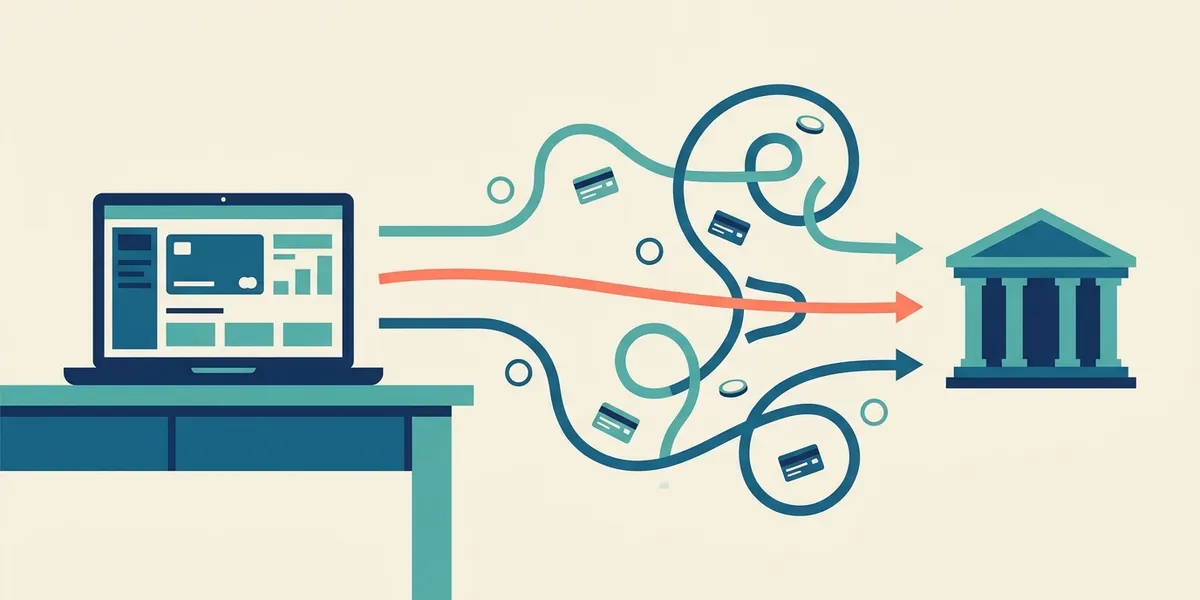
The contract is signed, your client has approved the month's invoice, and your Deel dashboard shows a balance of 4,000 dollars. Then you open the withdrawal screen and find half a dozen ways to move it, each with a different fee, a different speed and a different rupee figure at the end. Pick the wrong one every month and you quietly give away a week's work a year.
Getting money out of Deel is simple. Getting it out efficiently, with paperwork your bank and your CA will accept, takes a little more thought. Here is how the options compare from India, and what to set up before your first withdrawal.
How Deel pays you, and where the money waits
When you work through Deel as a contractor, your client pays Deel and Deel pays you. Each payment cycle, the amount your client approves lands in your Deel balance and stays there until you withdraw it. Nothing reaches India, and nothing is converted to rupees, until you choose a withdrawal method.
That gap is useful. You decide when to withdraw, which route to use, and whether to convert now or later. If you have not set up your profile yet, our guide to creating a Deel account walks through the account and security steps.
Your withdrawal options from India, compared
Deel publishes its contractor withdrawal methods and fees. As of its June 2026 update, these are the routes most Indian contractors weigh up. Fees change, so treat the figures below as a starting point and check what Deel shows on your own withdrawal screen before you confirm.
Local bank transfer. Deel lists no withdrawal fee and a timeline of one to five business days. Sent to an Indian rupee account, this means Deel converts your balance to rupees before paying out, so the real cost of this route sits in the exchange rate it applies, not on a fee line.
International bank transfer (SWIFT). Deel charges a variable fee from 5 dollars, capped at 10 dollars, and quotes five to seven business days. Intermediary banks along the route can take their own deductions, which neither Deel nor your Indian bank can predict, and your bank applies its own conversion rate when the dollars arrive.
E-wallets. Deel lists Payoneer at 1%, PayPal at 2.5%, and Wise and Revolut with no Deel fee, each typically within one business day. That is only the first leg. You still have to move the money from the wallet to your Indian bank, and each wallet charges for that or builds a margin into its rate in its own way.
Deel Card and instant card transfer. The Deel Card holds a dollar balance you can spend, and instant card transfers cost 2%, up to 15 dollars, according to Deel's table. Useful when speed matters, rarely the cheapest way to bring a monthly retainer home.
If this feels familiar, it is the same choice contractors on other platforms face. Our Toptal payments guide works through it for Toptal, including the conversion fee that most guides skip.
The cost that never shows up as a fee
A route marked free is not free if the conversion is poor. Every route ends with your dollars becoming rupees, and whoever does that conversion earns the gap between the rate they give you and the mid-market rate. On a 4,000 dollar payment, a rate that is one percent worse costs you 40 dollars, every month.
The fix is a habit, not a tool. Before you confirm a withdrawal, note the rupee amount you will receive and divide it by the dollars you are sending. Compare that effective rate with the mid-market rate at the same moment. Our explainer on the mid-market rate shows where to find it and how to read the gap.
SWIFT adds a second hidden cost: deductions along the way. If a withdrawal arrives short of what Deel sent, our guide to payments that arrive for less than the invoice explains where the money usually goes and how to trace it.
Paperwork your bank and your CA will ask for
Deel is a foreign platform, not an Indian bank. The record that a foreign payment came into India, the FIRA or FIRC, comes from the bank or regulated provider that receives the money here. Ask yours how it issues one, whether automatically or on request, and keep it with the Deel invoice for the same cycle. Our FIRC guide explains what the document is and why it matters.
Your bank will also classify each incoming payment with a purpose code. Use the one that describes the service you provide, not the platform that paid you; software development work, for example, typically uses P0802. Agree it with your bank before the first withdrawal so you are not answering a query later.
Keep one folder per payment cycle: the invoice or payment record from Deel, the withdrawal confirmation, and the FIRA. Your CA will want all three at year end, and you will want them the day a bank asks where the money came from. Whether you also need GST registration depends on your turnover and setup, so settle that with your CA rather than a forum thread.
Which route suits which contractor
If you withdraw small, irregular amounts and want the least effort, a local bank transfer to your rupee account is hard to beat, as long as you check the effective rate each time.
If you are on a steady monthly retainer, the rate matters more than the fee. Spend twenty minutes comparing routes once, using the same amount on each screen, then stick with the cheapest. That comparison is worth more than any single withdrawal.
If you are paid through more than one channel, say Deel for one client and direct invoices for another, it helps to bring everything into one dollar account first. You convert on your own timing and keep one consistent set of records. If you are still adding platforms, our list of freelance websites for Indian professionals covers where Indian contractors find work.
Setting up your withdrawal method without surprises
Add the bank account in exactly the name your bank holds, so the name on the payout matches the name on the account. A name mismatch is one of the most common reasons an incoming payment is held. Then make a small first withdrawal and check three things when it lands: the amount, the effective rupee rate, and whether your bank asks for any documents. Only then move your full balance.
If you would rather receive dollars and decide when to convert, Winvesta's Global Collections Account gives you local USD account details, as well as GBP, EUR, CAD and AUD. Where Deel lets you add a USD bank account as a withdrawal method (options vary by country and profile, so check your withdrawal settings first), your earnings can arrive there and be sent on to your Indian bank account through RBI-regulated partner banks, with FIRA support for your records. It does not pick your purpose code or replace your CA's advice. See how the Global Collections Account works.
Disclaimer: The information provided in this blog is for general informational purposes only and does not constitute financial or legal advice. Winvesta makes no representations or warranties about the accuracy or suitability of the content and recommends consulting a professional before making any financial decisions.
Get paid globally. Keep more of it.
No FX markups. No GST. Funds in 1 day.

The contract is signed, your client has approved the month's invoice, and your Deel dashboard shows a balance of 4,000 dollars. Then you open the withdrawal screen and find half a dozen ways to move it, each with a different fee, a different speed and a different rupee figure at the end. Pick the wrong one every month and you quietly give away a week's work a year.
Getting money out of Deel is simple. Getting it out efficiently, with paperwork your bank and your CA will accept, takes a little more thought. Here is how the options compare from India, and what to set up before your first withdrawal.
How Deel pays you, and where the money waits
When you work through Deel as a contractor, your client pays Deel and Deel pays you. Each payment cycle, the amount your client approves lands in your Deel balance and stays there until you withdraw it. Nothing reaches India, and nothing is converted to rupees, until you choose a withdrawal method.
That gap is useful. You decide when to withdraw, which route to use, and whether to convert now or later. If you have not set up your profile yet, our guide to creating a Deel account walks through the account and security steps.
Your withdrawal options from India, compared
Deel publishes its contractor withdrawal methods and fees. As of its June 2026 update, these are the routes most Indian contractors weigh up. Fees change, so treat the figures below as a starting point and check what Deel shows on your own withdrawal screen before you confirm.
Local bank transfer. Deel lists no withdrawal fee and a timeline of one to five business days. Sent to an Indian rupee account, this means Deel converts your balance to rupees before paying out, so the real cost of this route sits in the exchange rate it applies, not on a fee line.
International bank transfer (SWIFT). Deel charges a variable fee from 5 dollars, capped at 10 dollars, and quotes five to seven business days. Intermediary banks along the route can take their own deductions, which neither Deel nor your Indian bank can predict, and your bank applies its own conversion rate when the dollars arrive.
E-wallets. Deel lists Payoneer at 1%, PayPal at 2.5%, and Wise and Revolut with no Deel fee, each typically within one business day. That is only the first leg. You still have to move the money from the wallet to your Indian bank, and each wallet charges for that or builds a margin into its rate in its own way.
Deel Card and instant card transfer. The Deel Card holds a dollar balance you can spend, and instant card transfers cost 2%, up to 15 dollars, according to Deel's table. Useful when speed matters, rarely the cheapest way to bring a monthly retainer home.
If this feels familiar, it is the same choice contractors on other platforms face. Our Toptal payments guide works through it for Toptal, including the conversion fee that most guides skip.
The cost that never shows up as a fee
A route marked free is not free if the conversion is poor. Every route ends with your dollars becoming rupees, and whoever does that conversion earns the gap between the rate they give you and the mid-market rate. On a 4,000 dollar payment, a rate that is one percent worse costs you 40 dollars, every month.
The fix is a habit, not a tool. Before you confirm a withdrawal, note the rupee amount you will receive and divide it by the dollars you are sending. Compare that effective rate with the mid-market rate at the same moment. Our explainer on the mid-market rate shows where to find it and how to read the gap.
SWIFT adds a second hidden cost: deductions along the way. If a withdrawal arrives short of what Deel sent, our guide to payments that arrive for less than the invoice explains where the money usually goes and how to trace it.
Paperwork your bank and your CA will ask for
Deel is a foreign platform, not an Indian bank. The record that a foreign payment came into India, the FIRA or FIRC, comes from the bank or regulated provider that receives the money here. Ask yours how it issues one, whether automatically or on request, and keep it with the Deel invoice for the same cycle. Our FIRC guide explains what the document is and why it matters.
Your bank will also classify each incoming payment with a purpose code. Use the one that describes the service you provide, not the platform that paid you; software development work, for example, typically uses P0802. Agree it with your bank before the first withdrawal so you are not answering a query later.
Keep one folder per payment cycle: the invoice or payment record from Deel, the withdrawal confirmation, and the FIRA. Your CA will want all three at year end, and you will want them the day a bank asks where the money came from. Whether you also need GST registration depends on your turnover and setup, so settle that with your CA rather than a forum thread.
Which route suits which contractor
If you withdraw small, irregular amounts and want the least effort, a local bank transfer to your rupee account is hard to beat, as long as you check the effective rate each time.
If you are on a steady monthly retainer, the rate matters more than the fee. Spend twenty minutes comparing routes once, using the same amount on each screen, then stick with the cheapest. That comparison is worth more than any single withdrawal.
If you are paid through more than one channel, say Deel for one client and direct invoices for another, it helps to bring everything into one dollar account first. You convert on your own timing and keep one consistent set of records. If you are still adding platforms, our list of freelance websites for Indian professionals covers where Indian contractors find work.
Setting up your withdrawal method without surprises
Add the bank account in exactly the name your bank holds, so the name on the payout matches the name on the account. A name mismatch is one of the most common reasons an incoming payment is held. Then make a small first withdrawal and check three things when it lands: the amount, the effective rupee rate, and whether your bank asks for any documents. Only then move your full balance.
If you would rather receive dollars and decide when to convert, Winvesta's Global Collections Account gives you local USD account details, as well as GBP, EUR, CAD and AUD. Where Deel lets you add a USD bank account as a withdrawal method (options vary by country and profile, so check your withdrawal settings first), your earnings can arrive there and be sent on to your Indian bank account through RBI-regulated partner banks, with FIRA support for your records. It does not pick your purpose code or replace your CA's advice. See how the Global Collections Account works.
Disclaimer: The information provided in this blog is for general informational purposes only and does not constitute financial or legal advice. Winvesta makes no representations or warranties about the accuracy or suitability of the content and recommends consulting a professional before making any financial decisions.
Get paid globally. Keep more of it.
No FX markups. No GST. Funds in 1 day.