Value chain
What is a value chain?
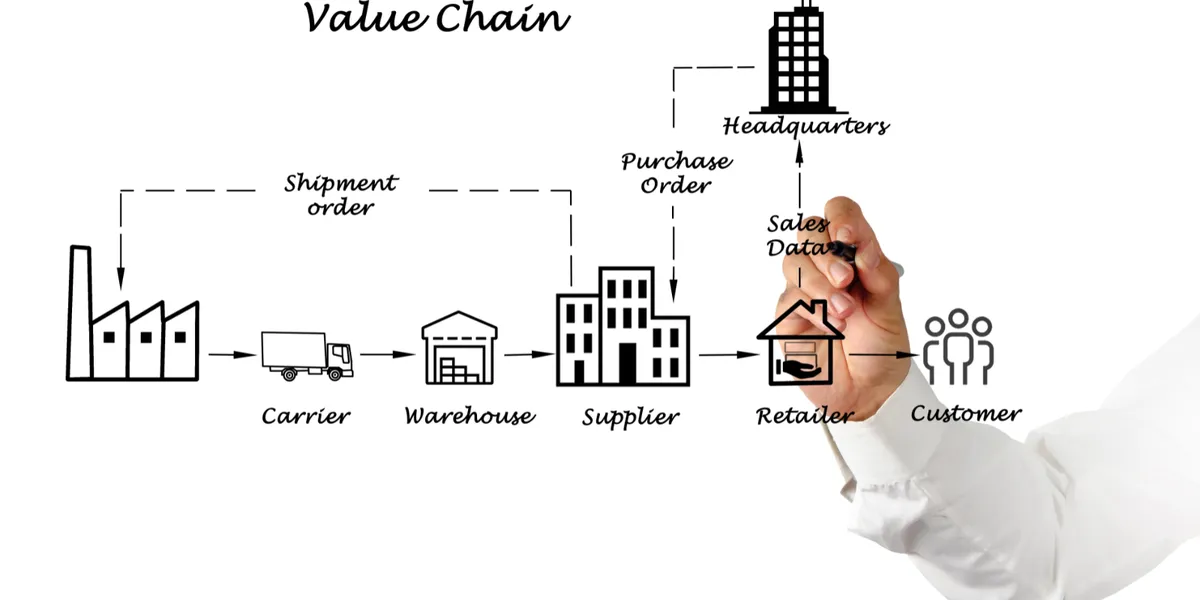
A value chain is the series of steps a business takes to create a product or service—from its origin to the customer's hands. Each step adds value, covering everything from sourcing materials and production to marketing, delivering, and servicing the final product.
Key takeaways
- Integrated activities: Includes everything from inbound logistics and operations to outbound logistics, marketing, sales, and customer service.
- Value addition: Every step is an opportunity to increase value for the customer or reduce costs for the business.
- Flow structure: Involves not just the flow of goods, but also knowledge and expertise throughout the stages
Why does a value chain matter?
The value chain isn’t just a process; it’s a blueprint for efficiency and profitability. By breaking down every activity, businesses spot weak links, cut out waste, and double down on what works. This approach leads to lower costs, happier customers, and a stronger competitive edge.
Identify value-adding activities
Pinpoint steps that boost customer satisfaction or improve margins.
Cut inefficiencies
Spot and remove waste, bottlenecks, or overlapping tasks.
Sharpen your edge
Deliver standout value—faster delivery, better service, stronger products.
Link strategy to operations
Align every activity to support long-term goals and consistent growth.
Value chains aren't just about reducing costs. They help businesses innovate—whether that's unique packaging, advanced tech, or standout customer support. Each improvement adds up to higher profits and stronger market position.
How does the value chain work?
The value chain is typically divided into two main types of activities:
- Primary activities: Directly involved in creating and delivering a product/service, such as inbound logistics (receiving materials), operations (production), outbound logistics (distribution), marketing & sales, and post-sales service.
- Support activities: Provide necessary infrastructure and support, including procurement, technology development, human resource management, and firm infrastructure
The classic model, introduced by Michael Porter, breaks the value chain into two categories: primary and support activities.
Why automation matters?
Innovative businesses now turn to automation and digital tools to streamline their value chains. Automated procurement, data-driven marketing, and AI-powered customer service reduce errors, speed up processes, and cut costs. The result: better decision-making and faster response times.
Real-world examples
Tesla’s value chain transformation
Tesla controls sourcing by partnering directly with battery and material suppliers. In-house manufacturing and software updates set the company apart. Direct-to-consumer sales and responsive post-sale service build loyalty, showing how a tightly managed value chain drives innovation and customer satisfaction.
Disclaimer: The information provided in this business glossary is for educational purposes only and should not be considered as financial advice. Always consult with qualified financial professionals before making investment decisions.
Get paid globally. Keep more of it.
No FX markups. No GST. Funds in 1 day.

What is a value chain?
A value chain is the series of steps a business takes to create a product or service—from its origin to the customer's hands. Each step adds value, covering everything from sourcing materials and production to marketing, delivering, and servicing the final product.
Key takeaways
- Integrated activities: Includes everything from inbound logistics and operations to outbound logistics, marketing, sales, and customer service.
- Value addition: Every step is an opportunity to increase value for the customer or reduce costs for the business.
- Flow structure: Involves not just the flow of goods, but also knowledge and expertise throughout the stages
Why does a value chain matter?
The value chain isn’t just a process; it’s a blueprint for efficiency and profitability. By breaking down every activity, businesses spot weak links, cut out waste, and double down on what works. This approach leads to lower costs, happier customers, and a stronger competitive edge.
Identify value-adding activities
Pinpoint steps that boost customer satisfaction or improve margins.
Cut inefficiencies
Spot and remove waste, bottlenecks, or overlapping tasks.
Sharpen your edge
Deliver standout value—faster delivery, better service, stronger products.
Link strategy to operations
Align every activity to support long-term goals and consistent growth.
Value chains aren't just about reducing costs. They help businesses innovate—whether that's unique packaging, advanced tech, or standout customer support. Each improvement adds up to higher profits and stronger market position.
How does the value chain work?
The value chain is typically divided into two main types of activities:
- Primary activities: Directly involved in creating and delivering a product/service, such as inbound logistics (receiving materials), operations (production), outbound logistics (distribution), marketing & sales, and post-sales service.
- Support activities: Provide necessary infrastructure and support, including procurement, technology development, human resource management, and firm infrastructure
The classic model, introduced by Michael Porter, breaks the value chain into two categories: primary and support activities.
Why automation matters?
Innovative businesses now turn to automation and digital tools to streamline their value chains. Automated procurement, data-driven marketing, and AI-powered customer service reduce errors, speed up processes, and cut costs. The result: better decision-making and faster response times.
Real-world examples
Tesla’s value chain transformation
Tesla controls sourcing by partnering directly with battery and material suppliers. In-house manufacturing and software updates set the company apart. Direct-to-consumer sales and responsive post-sale service build loyalty, showing how a tightly managed value chain drives innovation and customer satisfaction.
Disclaimer: The information provided in this business glossary is for educational purposes only and should not be considered as financial advice. Always consult with qualified financial professionals before making investment decisions.
Get paid globally. Keep more of it.
No FX markups. No GST. Funds in 1 day.