Sales funnel
What is Sales funnel?
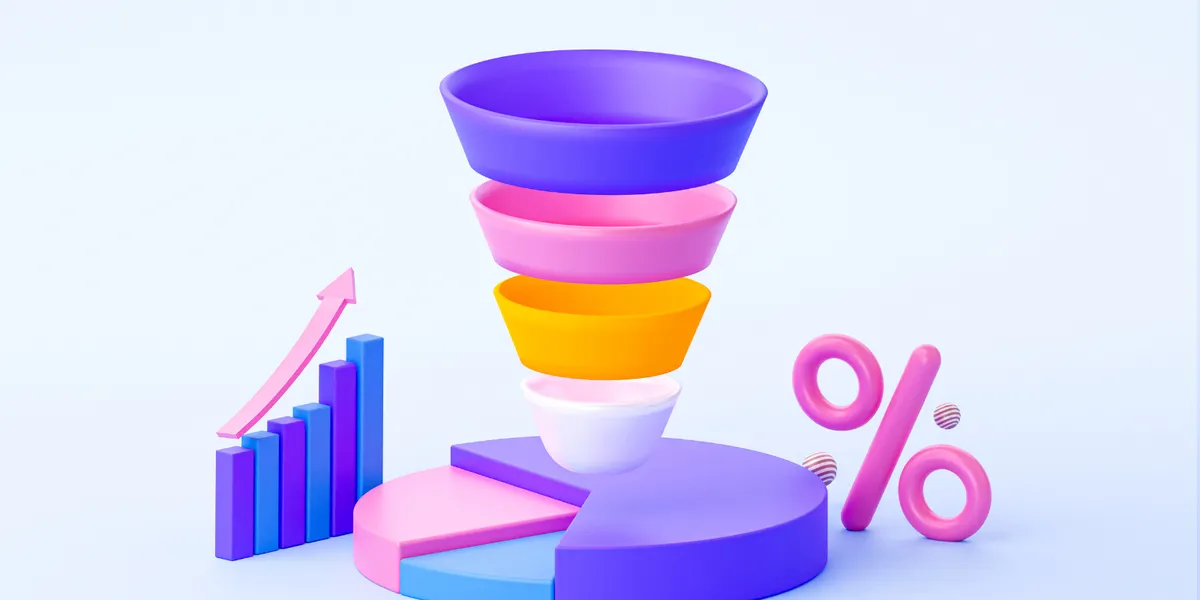
A sales funnel is a visual and strategic model that maps out the journey potential customers take from first becoming aware of a business to making a purchase. The funnel shape illustrates how a large pool of prospects narrows down at each stage, with only a fraction ultimately becoming paying customers. This process helps businesses understand and optimize how leads are converted into sales.
Key takeaways
Customer journey visualization
The sales funnel captures each step of the buyer’s journey, from initial awareness to final purchase, helping businesses identify where prospects drop off and where to focus marketing and sales efforts.
Stage-based structure
Typical sales funnels have three main sections:
- Top (Awareness): Attracting a broad audience and generating interest.
- Middle (Consideration/Evaluation): Nurturing leads and addressing their needs or objections.
- Bottom (Decision/Purchase): Closing the sale and turning leads into customers.
Conversion optimization
By analyzing each stage, companies can refine their messaging, content, and sales tactics to improve conversion rates and overall sales performance.
Why does the sales funnel matter?
A well-defined sales funnel enables businesses to customize their marketing and sales strategies to align with each prospect’s stage, boosting conversion rates. It also helps identify where potential customers are dropping out, allowing for targeted improvements that enhance sales efficiency. By mapping the funnel, companies can create a smoother and more personalized customer journey, fostering trust and encouraging repeat business.
Typical sales funnel stages
Awareness
Prospect learns about your business or product for the first time.
Interest
Prospect seeks more information and shows initial engagement.
Consideration
Prospect evaluates your offering against competitors, weighing benefits and features.
Decision
Prospect is ready to buy and may negotiate terms or pricing.
Purchase
Prospect becomes a customer by completing the transaction.
Loyalty/Retention
Post-purchase engagement to encourage repeat business and referrals.
Impact on business and sales
Lead management: Organizes and tracks prospects through each stage
Conversion rates: Identifies and improves bottlenecks to boost sales
Personalization: Enables tailored messaging and offers at each stage
Forecasting: Provides data for more accurate sales projections

Real-world examples
Case study: E-commerce sales funnel
- Awareness: A user discovers an online store via a Google ad.
- Interest: The user browses products and signs up for the newsletter.
- Consideration: They receive targeted emails with product recommendations and reviews.
- Decision: The user adds items to their cart and receives a discount code.
- Purchase: They complete the checkout process and become a customer.
- Loyalty: The store follows up with personalized offers and loyalty rewards, encouraging repeat purchases.
Disclaimer: The information provided in this business glossary is for educational purposes only and should not be considered as financial advice. Always consult with qualified financial professionals before making investment decisions.
Get paid globally. Keep more of it.
No FX markups. No GST. Funds in 1 day.

Table of Contents
What is Sales funnel?
A sales funnel is a visual and strategic model that maps out the journey potential customers take from first becoming aware of a business to making a purchase. The funnel shape illustrates how a large pool of prospects narrows down at each stage, with only a fraction ultimately becoming paying customers. This process helps businesses understand and optimize how leads are converted into sales.
Key takeaways
Customer journey visualization
The sales funnel captures each step of the buyer’s journey, from initial awareness to final purchase, helping businesses identify where prospects drop off and where to focus marketing and sales efforts.
Stage-based structure
Typical sales funnels have three main sections:
- Top (Awareness): Attracting a broad audience and generating interest.
- Middle (Consideration/Evaluation): Nurturing leads and addressing their needs or objections.
- Bottom (Decision/Purchase): Closing the sale and turning leads into customers.
Conversion optimization
By analyzing each stage, companies can refine their messaging, content, and sales tactics to improve conversion rates and overall sales performance.
Why does the sales funnel matter?
A well-defined sales funnel enables businesses to customize their marketing and sales strategies to align with each prospect’s stage, boosting conversion rates. It also helps identify where potential customers are dropping out, allowing for targeted improvements that enhance sales efficiency. By mapping the funnel, companies can create a smoother and more personalized customer journey, fostering trust and encouraging repeat business.
Typical sales funnel stages
Awareness
Prospect learns about your business or product for the first time.
Interest
Prospect seeks more information and shows initial engagement.
Consideration
Prospect evaluates your offering against competitors, weighing benefits and features.
Decision
Prospect is ready to buy and may negotiate terms or pricing.
Purchase
Prospect becomes a customer by completing the transaction.
Loyalty/Retention
Post-purchase engagement to encourage repeat business and referrals.
Impact on business and sales
Lead management: Organizes and tracks prospects through each stage
Conversion rates: Identifies and improves bottlenecks to boost sales
Personalization: Enables tailored messaging and offers at each stage
Forecasting: Provides data for more accurate sales projections
Real-world examples
Case study: E-commerce sales funnel
- Awareness: A user discovers an online store via a Google ad.
- Interest: The user browses products and signs up for the newsletter.
- Consideration: They receive targeted emails with product recommendations and reviews.
- Decision: The user adds items to their cart and receives a discount code.
- Purchase: They complete the checkout process and become a customer.
- Loyalty: The store follows up with personalized offers and loyalty rewards, encouraging repeat purchases.
Disclaimer: The information provided in this business glossary is for educational purposes only and should not be considered as financial advice. Always consult with qualified financial professionals before making investment decisions.
Get paid globally. Keep more of it.
No FX markups. No GST. Funds in 1 day.