Debt-to-equity ratio
What isDebt-to-equity ratio?
The debt-to-equity ratio is a financial metric that compares a company's total debt to its total shareholders' equity. It indicates the proportion of company financing that comes from creditors and investors.
Key takeaways
Leverage indicator
Measures the extent to which a company is funding its growth with debt versus equity.
Higher ratio = higher risk
Indicates heavier reliance on debt, which can lead to increased financial obligations.
Lower ratio = more conservative:
Reflects cautious capital structure with lower debt exposure.
Important to investors and creditors
Helps assess financial health, risk appetite, and repayment ability.
Industry-sensitive
Optimal ratio varies across sectors depending on capital intensity.
Why the debt-to-equity ratio matters
The D/E ratio is a cornerstone of financial analysis. Lenders look at it to evaluate a company's creditworthiness, while investors use it to understand the risk-reward balance. A high ratio might signal aggressive growth funded by borrowing — which could lead to higher returns, but also higher financial stress in downturns. A low ratio may suggest stability but also missed growth opportunities.
How it’s calculated
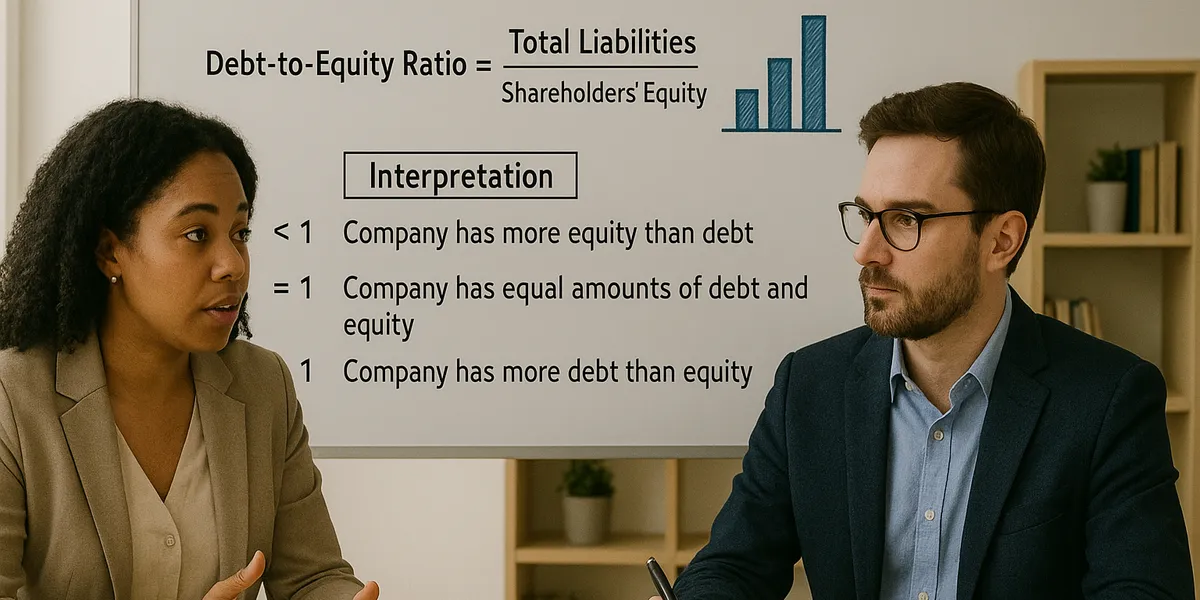
Debt-to-Equity Ratio= Total Liabilities/shareholders' Equity
Both values are pulled from the company’s balance sheet.
Interpreting the ratio
- A D/E ratio > 1 means the company has more debt than equity — potentially risky but common in capital-heavy industries.
- A D/E ratio < 1 indicates the company is primarily financed through equity — typically seen as less risky.
- Comparing D/E ratios only makes sense within the same industry, as capital structures vary widely.
The D/E ratio directly ties into the balance sheet. It influences:
Risk assessments by lenders and credit rating agencies.
Cost of capital — higher debt increases interest expenses.
Return on equity — leverage can amplify returns when used effectively.

The role of financial strategy
Management often adjusts the D/E ratio as part of broader capital planning. Leveraging debt can reduce the weighted average cost of capital (WACC) if done wisely. However, excessive debt can lead to solvency issues — especially during downturns.
Real-world examples
Case study:
Tata Motors’ evolving debt-to-equity strategy
In the early 2010s, Tata Motors took on significant debt to fund the acquisition of Jaguar Land Rover. This pushed its D/E ratio above 2.5, raising investor concerns. Over the next decade, the company focused on deleveraging through improved cash flow and asset sales. By FY24, Tata Motors had brought its D/E ratio closer to 1.5 — signaling improved balance sheet health.
This evolution showcases how strategic debt management can balance growth and financial discipline.
Disclaimer: The information provided in this business glossary is for educational purposes only and should not be considered as financial advice. Always consult with qualified financial professionals before making investment decisions.
Get paid globally. Keep more of it.
No FX markups. No GST. Funds in 1 day.

What isDebt-to-equity ratio?
The debt-to-equity ratio is a financial metric that compares a company's total debt to its total shareholders' equity. It indicates the proportion of company financing that comes from creditors and investors.
Key takeaways
Leverage indicator
Measures the extent to which a company is funding its growth with debt versus equity.
Higher ratio = higher risk
Indicates heavier reliance on debt, which can lead to increased financial obligations.
Lower ratio = more conservative:
Reflects cautious capital structure with lower debt exposure.
Important to investors and creditors
Helps assess financial health, risk appetite, and repayment ability.
Industry-sensitive
Optimal ratio varies across sectors depending on capital intensity.
Why the debt-to-equity ratio matters
The D/E ratio is a cornerstone of financial analysis. Lenders look at it to evaluate a company's creditworthiness, while investors use it to understand the risk-reward balance. A high ratio might signal aggressive growth funded by borrowing — which could lead to higher returns, but also higher financial stress in downturns. A low ratio may suggest stability but also missed growth opportunities.
How it’s calculated
Debt-to-Equity Ratio= Total Liabilities/shareholders' Equity
Both values are pulled from the company’s balance sheet.
Interpreting the ratio
- A D/E ratio > 1 means the company has more debt than equity — potentially risky but common in capital-heavy industries.
- A D/E ratio < 1 indicates the company is primarily financed through equity — typically seen as less risky.
- Comparing D/E ratios only makes sense within the same industry, as capital structures vary widely.
The D/E ratio directly ties into the balance sheet. It influences:
Risk assessments by lenders and credit rating agencies.
Cost of capital — higher debt increases interest expenses.
Return on equity — leverage can amplify returns when used effectively.
The role of financial strategy
Management often adjusts the D/E ratio as part of broader capital planning. Leveraging debt can reduce the weighted average cost of capital (WACC) if done wisely. However, excessive debt can lead to solvency issues — especially during downturns.
Real-world examples
Case study:
Tata Motors’ evolving debt-to-equity strategy
In the early 2010s, Tata Motors took on significant debt to fund the acquisition of Jaguar Land Rover. This pushed its D/E ratio above 2.5, raising investor concerns. Over the next decade, the company focused on deleveraging through improved cash flow and asset sales. By FY24, Tata Motors had brought its D/E ratio closer to 1.5 — signaling improved balance sheet health.
This evolution showcases how strategic debt management can balance growth and financial discipline.
Disclaimer: The information provided in this business glossary is for educational purposes only and should not be considered as financial advice. Always consult with qualified financial professionals before making investment decisions.
Get paid globally. Keep more of it.
No FX markups. No GST. Funds in 1 day.