Brand equity
What is
brand equity?
Brand equity refers to the value a brand holds in the minds of consumers, driven by their perceptions, experiences, and associations with the brand. It is the premium value a brand adds to a product or service compared to a generic equivalent.
Key takeaways
Intangible value
Brand equity is based on consumer perception, not just financial metrics.
Positive vs. negative equity
Positive equity arises from trust and loyalty, while negative equity results from poor experiences or a damaged reputation.
Key components
Includes brand awareness, perceived quality, brand loyalty, and brand associations.
Business impact
Strong brand equity enables premium pricing, customer loyalty, easier product launches, and competitive advantage.
Key components of brand equity
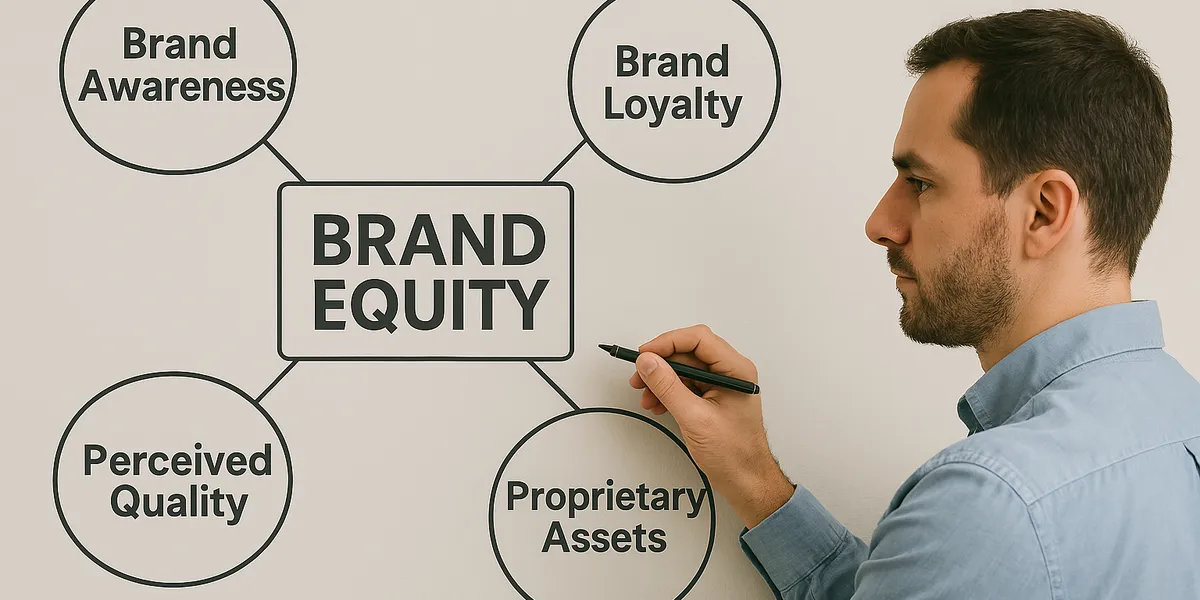
Brand equity is a critical concept in marketing and branding. It represents the additional value a product gains due to its brand name compared to an unbranded or generic equivalent. This value is shaped by several factors:
- Brand awareness: The extent to which consumers recognize and recall the brand.
- Perceived quality: The consumer's judgment of the brand's overall quality and reliability.
- Brand loyalty: The degree to which customers repeatedly choose the brand over competitors.
- Brand associations: Emotional or functional attributes linked to the brand in consumers' minds.
- Proprietary assets: Trademarks, patents, and relationships that protect and enhance the brand.
Strong brand equity translates into tangible business benefits such as higher profit margins, reduced marketing costs for new products, and resilience during market fluctuations.
| Component | Description |
|---|---|
| Brand awareness | Recognition and recall of the brand among consumers. |
| Perceived quality | Consumers' perception of the product's quality and value. |
| Brand loyalty | Repeat purchases and advocacy by loyal customers. |
| Brand associations | Emotional or symbolic connections linked to the brand. |
| Proprietary assets | Legal protections like trademarks that safeguard the brand's uniqueness. |
Real-world examples
1. Case study: Nike's "Just Do It" campaign
Nike built strong brand equity by associating with athletes like Michael Jordan and Serena Williams while promoting empowerment through its iconic slogan "Just Do It." This strategy positioned Nike as more than just a sportswear company—it became a symbol of perseverance and achievement.
2. Case study: Apple's iPhone launch
Apple leveraged its existing strong brand equity from its computers to launch the iPhone in 2007. Its commitment to innovation, design excellence, and seamless user experience helped it dominate the smartphone market.
Disclaimer: The information provided in this business glossary is for educational purposes only and should not be considered as financial advice. Always consult with qualified financial professionals before making investment decisions.
Get paid globally. Keep more of it.
No FX markups. No GST. Funds in 1 day.

Table of Contents
What is
brand equity?
Brand equity refers to the value a brand holds in the minds of consumers, driven by their perceptions, experiences, and associations with the brand. It is the premium value a brand adds to a product or service compared to a generic equivalent.
Key takeaways
Intangible value
Brand equity is based on consumer perception, not just financial metrics.
Positive vs. negative equity
Positive equity arises from trust and loyalty, while negative equity results from poor experiences or a damaged reputation.
Key components
Includes brand awareness, perceived quality, brand loyalty, and brand associations.
Business impact
Strong brand equity enables premium pricing, customer loyalty, easier product launches, and competitive advantage.
Key components of brand equity
Brand equity is a critical concept in marketing and branding. It represents the additional value a product gains due to its brand name compared to an unbranded or generic equivalent. This value is shaped by several factors:
- Brand awareness: The extent to which consumers recognize and recall the brand.
- Perceived quality: The consumer's judgment of the brand's overall quality and reliability.
- Brand loyalty: The degree to which customers repeatedly choose the brand over competitors.
- Brand associations: Emotional or functional attributes linked to the brand in consumers' minds.
- Proprietary assets: Trademarks, patents, and relationships that protect and enhance the brand.
Strong brand equity translates into tangible business benefits such as higher profit margins, reduced marketing costs for new products, and resilience during market fluctuations.
| Component | Description |
|---|---|
| Brand awareness | Recognition and recall of the brand among consumers. |
| Perceived quality | Consumers' perception of the product's quality and value. |
| Brand loyalty | Repeat purchases and advocacy by loyal customers. |
| Brand associations | Emotional or symbolic connections linked to the brand. |
| Proprietary assets | Legal protections like trademarks that safeguard the brand's uniqueness. |
Real-world examples
1. Case study: Nike's "Just Do It" campaign
Nike built strong brand equity by associating with athletes like Michael Jordan and Serena Williams while promoting empowerment through its iconic slogan "Just Do It." This strategy positioned Nike as more than just a sportswear company—it became a symbol of perseverance and achievement.
2. Case study: Apple's iPhone launch
Apple leveraged its existing strong brand equity from its computers to launch the iPhone in 2007. Its commitment to innovation, design excellence, and seamless user experience helped it dominate the smartphone market.
Disclaimer: The information provided in this business glossary is for educational purposes only and should not be considered as financial advice. Always consult with qualified financial professionals before making investment decisions.
Get paid globally. Keep more of it.
No FX markups. No GST. Funds in 1 day.