Wall Street's cautious cheer meets the wild return of meme stock mania
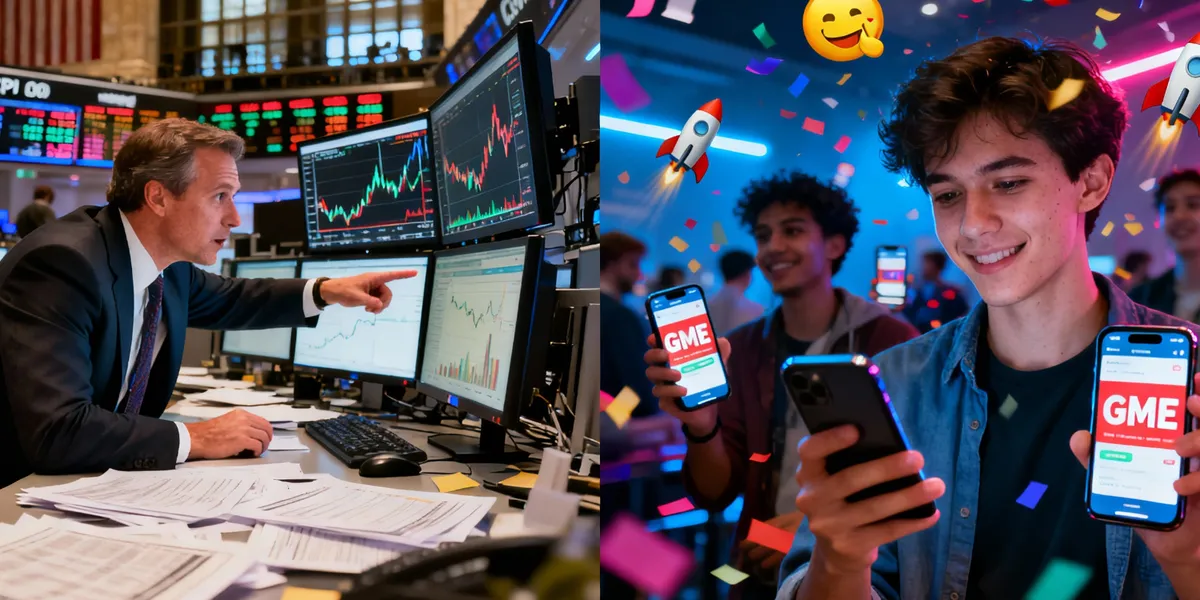
A peculiar mood has settled over the trading floors of New York. In one corner, you have the sober, methodical world of institutional finance, where analysts spent weeks poring over economic models, attempting to divine the direction of inflation. Their collective breath was held for the latest Consumer Price Index (CPI) report, a set of figures with the power to chart the course of the world’s most influential central bank. The release of that data sent a palpable wave of relief through the market, buoying indices to record highs. Yet, in another, far more boisterous corner of the market, a ghost from 2021 has reappeared. The retail trading phenomenon, colloquially known as the ‘meme stock’ frenzy, has roared back to life, centred on the same unlikely protagonists: a video game retailer and a cinema chain. This strange duality, a market guided by both painstaking economic analysis and wild, social media-fuelled speculation, defines the current, captivating chapter in the story of US equities.
A Welcome Chill in Inflationary Winds
For months, the market narrative has been tethered to a single, stubborn question: when will the US Federal Reserve feel confident enough to begin lowering interest rates? The primary obstacle has been inflation, which proved unexpectedly persistent through the first quarter of the year, forcing investors to repeatedly postpone their expectations for a policy pivot. This week, however, brought a welcome change of scenery. The April CPI report showed that headline inflation rose by 0.3% from the previous month, a slight deceleration from the 0.4% readings in February and March. On an annual basis, the figure came in at 3.4%, meeting expectations but confirming a modest cooling trend. More importantly for the Fed, the ‘core’ CPI, which strips out volatile food and energy prices, also slowed to a 3.6% annual pace, its lowest level in three years. For a market starved of good news on the inflation front, this was the signal it had been waiting for.
The reaction was immediate and decisive. The S&P 500 sailed past the 5,300 mark for the first time, while the tech-heavy Nasdaq Composite and the blue-chip Dow Jones Industrial Average also posted fresh record highs. Treasury yields, which move opposite to prices, fell as traders increased their wagers on the Fed cutting rates later this year. The data suggested that the central bank's campaign of monetary tightening is indeed working, albeit at a frustratingly slow pace. It gives Fed Chair Jerome Powell and his colleagues the breathing room they need, allowing them to maintain their data-dependent stance without the immediate pressure of having to consider further rate hikes. The report was seen not as a definitive victory, but as a crucial first step back onto the desired path of disinflation.
"Today’s inflation report is a step in the right direction. After three months of unwelcome surprises, the Fed has been waiting for a print like this to quell their concerns about inflation reaccelerating. A September rate cut is now back on the table," observed Seema Shah, Chief Global Strategist at Principal Asset Management.
Alongside the inflation data, a surprisingly weak retail sales report for April added another layer to the narrative. The figures showed a flat reading, suggesting that the American consumer, the main engine of the US economy, might finally be feeling the strain of higher borrowing costs and persistent inflation. While a faltering consumer is not typically a cause for celebration, in the current context it was interpreted as another reason for the Fed to consider easing its policy stance. The combination of cooling inflation and softening consumer spending painted a picture of an economy gently losing momentum, a ‘soft landing’ scenario that is the ideal outcome for stock market investors. The big technology names, from Microsoft to NVIDIA, led the charge, as the prospect of lower rates makes their future earnings appear more valuable today.
The Casino Corner Reopens for Business
While the broader market was calmly digesting macroeconomic data, a very different kind of energy was electrifying a handful of specific stocks. GameStop (GME) and AMC Entertainment (AMC), the poster children of the 2021 retail trading mania, were back with a vengeance. The catalyst was the sudden reappearance on social media of Keith Gill, the individual investor known online as "Roaring Kitty," whose bullish analysis of GameStop was a central feature of the original saga. After three years of silence, a series of cryptic posts from his X account was all it took to reignite the speculative fervour. The price action that followed was nothing short of astonishing. GameStop shares surged more than 300% over a handful of trading sessions, while AMC also saw its value multiply, with both stocks experiencing extreme volatility and multiple trading halts.
This renewed frenzy has little to do with the underlying business fundamentals of either company. GameStop remains a struggling brick-and-mortar retailer attempting a difficult digital transition, and AMC operates in a cinema industry facing long-term structural challenges. Instead, the movement is a spectacle of market sentiment, coordination among retail traders on platforms like Reddit, and a desire to challenge institutional short-sellers who are betting against the companies. For many participants, it is less an investment and more of a cultural event, a high-stakes game against what they perceive as the Wall Street establishment. The rally saw fortunes made and lost in a matter of hours, as the share prices swung violently based on momentum and social media chatter rather than any new corporate information.
"The GME rally has nothing to do with fundamentals and everything to do with speculation. The company didn't announce anything that would justify such a stellar rise in its share price. It's a gamble on crowd madness," noted Ipek Ozkardeskaya, a senior analyst at Swissquote Bank.
The return of this phenomenon highlights a persistent feature of the modern market. While institutional investors focus on inflation, interest rates, and earnings per share, a significant and unpredictable force exists within the retail community. It serves as a stark reminder of the risks present in the market's less rational corners. While the main indices celebrated a fundamentally justified move to new highs, the explosive and unpredictable nature of the meme stock revival demonstrated that market behaviour can sometimes become completely detached from economic reality. As the dust begins to settle on another wild week, investors are left to navigate a marketplace with a split personality: one side cautiously optimistic about a gentle economic cooling, the other revelling in a chaotic, high-stakes game of chance.
Disclaimer: The views and recommendations made above are those of individual analysts or brokerage companies, and not of Winvesta. We advise investors to check with certified experts before making any investment decisions.
Ready to earn on every trade?
Invest in 11,000+ US stocks & ETFs

A peculiar mood has settled over the trading floors of New York. In one corner, you have the sober, methodical world of institutional finance, where analysts spent weeks poring over economic models, attempting to divine the direction of inflation. Their collective breath was held for the latest Consumer Price Index (CPI) report, a set of figures with the power to chart the course of the world’s most influential central bank. The release of that data sent a palpable wave of relief through the market, buoying indices to record highs. Yet, in another, far more boisterous corner of the market, a ghost from 2021 has reappeared. The retail trading phenomenon, colloquially known as the ‘meme stock’ frenzy, has roared back to life, centred on the same unlikely protagonists: a video game retailer and a cinema chain. This strange duality, a market guided by both painstaking economic analysis and wild, social media-fuelled speculation, defines the current, captivating chapter in the story of US equities.
A Welcome Chill in Inflationary Winds
For months, the market narrative has been tethered to a single, stubborn question: when will the US Federal Reserve feel confident enough to begin lowering interest rates? The primary obstacle has been inflation, which proved unexpectedly persistent through the first quarter of the year, forcing investors to repeatedly postpone their expectations for a policy pivot. This week, however, brought a welcome change of scenery. The April CPI report showed that headline inflation rose by 0.3% from the previous month, a slight deceleration from the 0.4% readings in February and March. On an annual basis, the figure came in at 3.4%, meeting expectations but confirming a modest cooling trend. More importantly for the Fed, the ‘core’ CPI, which strips out volatile food and energy prices, also slowed to a 3.6% annual pace, its lowest level in three years. For a market starved of good news on the inflation front, this was the signal it had been waiting for.
The reaction was immediate and decisive. The S&P 500 sailed past the 5,300 mark for the first time, while the tech-heavy Nasdaq Composite and the blue-chip Dow Jones Industrial Average also posted fresh record highs. Treasury yields, which move opposite to prices, fell as traders increased their wagers on the Fed cutting rates later this year. The data suggested that the central bank's campaign of monetary tightening is indeed working, albeit at a frustratingly slow pace. It gives Fed Chair Jerome Powell and his colleagues the breathing room they need, allowing them to maintain their data-dependent stance without the immediate pressure of having to consider further rate hikes. The report was seen not as a definitive victory, but as a crucial first step back onto the desired path of disinflation.
"Today’s inflation report is a step in the right direction. After three months of unwelcome surprises, the Fed has been waiting for a print like this to quell their concerns about inflation reaccelerating. A September rate cut is now back on the table," observed Seema Shah, Chief Global Strategist at Principal Asset Management.
Alongside the inflation data, a surprisingly weak retail sales report for April added another layer to the narrative. The figures showed a flat reading, suggesting that the American consumer, the main engine of the US economy, might finally be feeling the strain of higher borrowing costs and persistent inflation. While a faltering consumer is not typically a cause for celebration, in the current context it was interpreted as another reason for the Fed to consider easing its policy stance. The combination of cooling inflation and softening consumer spending painted a picture of an economy gently losing momentum, a ‘soft landing’ scenario that is the ideal outcome for stock market investors. The big technology names, from Microsoft to NVIDIA, led the charge, as the prospect of lower rates makes their future earnings appear more valuable today.
The Casino Corner Reopens for Business
While the broader market was calmly digesting macroeconomic data, a very different kind of energy was electrifying a handful of specific stocks. GameStop (GME) and AMC Entertainment (AMC), the poster children of the 2021 retail trading mania, were back with a vengeance. The catalyst was the sudden reappearance on social media of Keith Gill, the individual investor known online as "Roaring Kitty," whose bullish analysis of GameStop was a central feature of the original saga. After three years of silence, a series of cryptic posts from his X account was all it took to reignite the speculative fervour. The price action that followed was nothing short of astonishing. GameStop shares surged more than 300% over a handful of trading sessions, while AMC also saw its value multiply, with both stocks experiencing extreme volatility and multiple trading halts.
This renewed frenzy has little to do with the underlying business fundamentals of either company. GameStop remains a struggling brick-and-mortar retailer attempting a difficult digital transition, and AMC operates in a cinema industry facing long-term structural challenges. Instead, the movement is a spectacle of market sentiment, coordination among retail traders on platforms like Reddit, and a desire to challenge institutional short-sellers who are betting against the companies. For many participants, it is less an investment and more of a cultural event, a high-stakes game against what they perceive as the Wall Street establishment. The rally saw fortunes made and lost in a matter of hours, as the share prices swung violently based on momentum and social media chatter rather than any new corporate information.
"The GME rally has nothing to do with fundamentals and everything to do with speculation. The company didn't announce anything that would justify such a stellar rise in its share price. It's a gamble on crowd madness," noted Ipek Ozkardeskaya, a senior analyst at Swissquote Bank.
The return of this phenomenon highlights a persistent feature of the modern market. While institutional investors focus on inflation, interest rates, and earnings per share, a significant and unpredictable force exists within the retail community. It serves as a stark reminder of the risks present in the market's less rational corners. While the main indices celebrated a fundamentally justified move to new highs, the explosive and unpredictable nature of the meme stock revival demonstrated that market behaviour can sometimes become completely detached from economic reality. As the dust begins to settle on another wild week, investors are left to navigate a marketplace with a split personality: one side cautiously optimistic about a gentle economic cooling, the other revelling in a chaotic, high-stakes game of chance.
Disclaimer: The views and recommendations made above are those of individual analysts or brokerage companies, and not of Winvesta. We advise investors to check with certified experts before making any investment decisions.
Ready to earn on every trade?
Invest in 11,000+ US stocks & ETFs


