Oil's $63B war windfall: Winners, losers & your portfolio
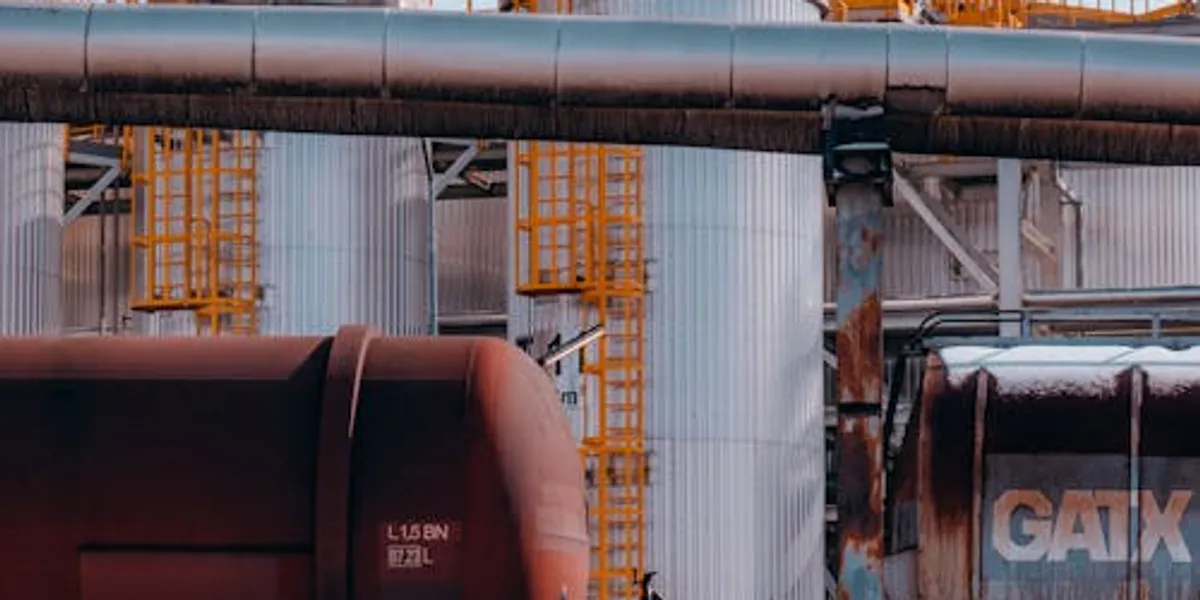
American energy companies stand on the brink of a $63 billion windfall as escalating tensions in the Gulf region send crude oil prices surging towards $100 per barrel, creating a profound shift in market dynamics that will reshape investment portfolios and economic policy for the remainder of 2026. The disruption arrives at a particularly delicate moment for US markets, as investors had grown comfortable with moderating inflation and the prospect of stable interest rates. Now, energy stocks such as ExxonMobil, Chevron, and ConocoPhillips are positioned to capture extraordinary profits whilst simultaneously threatening to reignite inflationary pressures that could force the Federal Reserve back into hawkish territory. This dramatic turn of events represents more than just a sector rotation—it signals a fundamental recalibration of risk across equity markets, with implications cascading from consumer discretionary stocks to technology giants dependent on healthy consumer spending.
The current situation stems from rapidly deteriorating security conditions in the Gulf region, where critical shipping lanes carry roughly 20% of global oil supplies. Oil futures contracts for West Texas Intermediate crude have already climbed 34% since January, settling at $94 per barrel on Friday, whilst Brent crude trades even higher at $97.50. Analysts project that if prices average $100 throughout the year—a scenario growing more likely by the day—American producers would collectively realise approximately $63 billion in additional revenue compared to their baseline projections made just three months ago. This windfall dwarfs previous profit surges, including the 2022 spike following Russia's invasion of Ukraine, because domestic production capacity has expanded significantly whilst global spare capacity remains constrained. The seven largest US energy companies have already seen their combined market capitalisation increase by $142 billion since early February, with investors rushing to position themselves ahead of what many anticipate will be exceptional quarterly earnings reports.

Energy Stocks Transform Into Portfolio Anchors
For retail investors, the energy sector has suddenly evolved from a modest portfolio allocation into a potential cornerstone holding, though this transition carries considerable complexity. ExxonMobil shares have surged 28% year-to-date, trading at $128 per share, whilst Chevron has climbed 31% to $172 per share. ConocoPhillips, Marathon Petroleum, and Occidental Petroleum have posted similar gains, fundamentally altering the risk-reward calculus for diversified portfolios. The energy sector now comprises approximately 5.8% of the S&P 500 index by market capitalisation, its highest weighting since 2019, and some analysts project this could reach 7% if oil prices remain elevated through the summer driving season. Yet investors must recognise that energy stocks introduce pronounced volatility—the very geopolitical tensions driving prices higher could resolve unexpectedly, triggering sharp reversals that erase gains within weeks.
"We're seeing unprecedented interest from retail investors who traditionally avoided energy exposure due to climate concerns and sector volatility," says Marcus Blackwood, Senior Portfolio Manager at Stratton Capital Advisors. "The mathematics are compelling—at $100 oil, these companies generate extraordinary free cash flow that they're returning to shareholders through dividends and buybacks, but investors need to understand they're essentially taking a directional bet on geopolitical instability."
As CNBC reported in early 2026, retail investors have been rushing into energy and oil-related stocks at record levels, with names like Chevron and Halliburton surging in popularity on platforms like Reddit's WallStreetBets.
The sector's transformation extends beyond share price appreciation. Dividend yields have become particularly attractive, with Chevron now offering 3.7% and ExxonMobil yielding 3.2%, figures that compare favourably against the 10-year Treasury yield of 4.1%. More significantly, these companies have demonstrated commitment to capital discipline, allocating roughly 60% of free cash flow to shareholder returns rather than pursuing aggressive production expansion. This disciplined approach means that even modest oil price increases translate directly into enhanced profitability, creating what some analysts describe as "asymmetric upside" where profits grow disproportionately relative to price movements. However, this same dynamic works in reverse should prices collapse, making position sizing crucial for investors seeking to capture energy gains without overexposing their portfolios to commodity risk.
The Inflation Squeeze Threatens Broader Markets
Whilst energy shareholders celebrate surging valuations, the broader market faces a sobering reality: sustained $100 oil threatens to derail the economic recovery and force difficult policy choices that could punish growth-oriented investments. Every $10 increase in crude oil prices typically adds approximately 0.4 percentage points to headline inflation, meaning the current price trajectory could push the Consumer Price Index back above 4% by summer—a level that would almost certainly compel the Federal Reserve to maintain restrictive interest rates or potentially resume tightening. This scenario creates particular headwinds for technology stocks, which have driven market gains throughout 2025 and early 2026. The Nasdaq Composite has already retreated 6% from its February peak, with megacap names including Apple, Microsoft, and Alphabet declining as investors reassess valuations in an environment where the risk-free rate may remain elevated for longer than anticipated.
Consumer discretionary stocks face even more acute pressure, as higher gasoline prices directly reduce disposable income available for other purchases. Americans currently spend roughly $380 billion annually on gasoline, and a sustained $100 oil price environment would increase this by approximately $65 billion compared to recent norms—effectively functioning as a significant tax increase that siphons spending from restaurants, retailers, and entertainment venues. Companies such as Target, Home Depot, and Starbucks have already issued cautious guidance for the second quarter, acknowledging that fuel costs represent a meaningful headwind to consumer sentiment. The restaurant sector appears particularly vulnerable, with discretionary dining trips historically declining 8-12% during periods of elevated gasoline prices as families opt for home cooking to offset transportation costs.

"The energy sector's gain becomes virtually every other sector's pain through multiple transmission channels," notes Dr Jennifer Kowalski, Chief Investment Strategist at Meridian Wealth Advisors. "We're essentially witnessing a massive wealth transfer from consumers to energy producers, with the added complication that this squeeze arrives precisely when the Federal Reserve has minimal room to provide accommodation without risking renewed inflation."
CNBC's analysis of the Iran war's impact on oil prices echoes this concern, with Moody's chief economist Mark Zandi warning that if oil stays near $100, inflation will quickly accelerate, cutting into consumers' purchasing power and hitting spending, GDP, and jobs.
The Federal Reserve now confronts an unenviable dilemma. Chairman Powell has repeatedly emphasised the central bank's commitment to returning inflation to its 2% target, yet oil-driven price increases represent supply shocks largely beyond monetary policy's reach. Raising interest rates to combat energy-driven inflation risks triggering unnecessary economic damage while doing little to address the underlying supply constraints. Conversely, maintaining current rates whilst inflation accelerates could undermine the Fed's hard-won credibility, potentially unhinging inflation expectations and requiring even more aggressive tightening later. Financial markets are already pricing increased uncertainty, with the CBOE Volatility Index rising to 22—elevated but not panic levels—whilst bond yields have steepened dramatically, suggesting investors anticipate either sustained inflation or economic weakening that eventually collapses commodity prices.
"Investors should prepare for a bifurcated market where energy and defensive sectors outperform whilst growth stocks struggle," says Thomas Richardson, Head of Equity Strategy at Continental Research Group. "The ideal portfolio positioning combines selective energy exposure—perhaps 8-10% for aggressive investors—with quality defensive names in healthcare and utilities, whilst maintaining discipline around valuation in technology despite the recent selloff."
This view is gaining traction across Wall Street. As Yahoo Finance recently highlighted, industrials, energy, and materials stocks are outperforming tech in 2026, suggesting a broader sector rotation is already underway.
Looking ahead, investors must monitor several critical signposts that will determine whether energy's windfall proves sustainable or transitory. Diplomatic efforts to de-escalate Gulf tensions remain ongoing, and any breakthrough could trigger a rapid decline in oil prices that reverses recent sector performance. Simultaneously, the upcoming summer driving season will test consumer resilience, providing crucial data about whether elevated prices materially damage spending patterns. The energy windfall represents a genuine opportunity for those positioned correctly, but it arrives packaged with macroeconomic complications that demand thoughtful portfolio construction rather than indiscriminate sector chasing.
Disclaimer: The views and recommendations made above are those of individual analysts or brokerage companies, and not of Winvesta. We advise investors to check with certified experts before making any investment decisions.
Ready to earn on every trade?
Invest in 11,000+ US stocks & ETFs

American energy companies stand on the brink of a $63 billion windfall as escalating tensions in the Gulf region send crude oil prices surging towards $100 per barrel, creating a profound shift in market dynamics that will reshape investment portfolios and economic policy for the remainder of 2026. The disruption arrives at a particularly delicate moment for US markets, as investors had grown comfortable with moderating inflation and the prospect of stable interest rates. Now, energy stocks such as ExxonMobil, Chevron, and ConocoPhillips are positioned to capture extraordinary profits whilst simultaneously threatening to reignite inflationary pressures that could force the Federal Reserve back into hawkish territory. This dramatic turn of events represents more than just a sector rotation—it signals a fundamental recalibration of risk across equity markets, with implications cascading from consumer discretionary stocks to technology giants dependent on healthy consumer spending.
The current situation stems from rapidly deteriorating security conditions in the Gulf region, where critical shipping lanes carry roughly 20% of global oil supplies. Oil futures contracts for West Texas Intermediate crude have already climbed 34% since January, settling at $94 per barrel on Friday, whilst Brent crude trades even higher at $97.50. Analysts project that if prices average $100 throughout the year—a scenario growing more likely by the day—American producers would collectively realise approximately $63 billion in additional revenue compared to their baseline projections made just three months ago. This windfall dwarfs previous profit surges, including the 2022 spike following Russia's invasion of Ukraine, because domestic production capacity has expanded significantly whilst global spare capacity remains constrained. The seven largest US energy companies have already seen their combined market capitalisation increase by $142 billion since early February, with investors rushing to position themselves ahead of what many anticipate will be exceptional quarterly earnings reports.
Energy Stocks Transform Into Portfolio Anchors
For retail investors, the energy sector has suddenly evolved from a modest portfolio allocation into a potential cornerstone holding, though this transition carries considerable complexity. ExxonMobil shares have surged 28% year-to-date, trading at $128 per share, whilst Chevron has climbed 31% to $172 per share. ConocoPhillips, Marathon Petroleum, and Occidental Petroleum have posted similar gains, fundamentally altering the risk-reward calculus for diversified portfolios. The energy sector now comprises approximately 5.8% of the S&P 500 index by market capitalisation, its highest weighting since 2019, and some analysts project this could reach 7% if oil prices remain elevated through the summer driving season. Yet investors must recognise that energy stocks introduce pronounced volatility—the very geopolitical tensions driving prices higher could resolve unexpectedly, triggering sharp reversals that erase gains within weeks.
"We're seeing unprecedented interest from retail investors who traditionally avoided energy exposure due to climate concerns and sector volatility," says Marcus Blackwood, Senior Portfolio Manager at Stratton Capital Advisors. "The mathematics are compelling—at $100 oil, these companies generate extraordinary free cash flow that they're returning to shareholders through dividends and buybacks, but investors need to understand they're essentially taking a directional bet on geopolitical instability."
As CNBC reported in early 2026, retail investors have been rushing into energy and oil-related stocks at record levels, with names like Chevron and Halliburton surging in popularity on platforms like Reddit's WallStreetBets.
The sector's transformation extends beyond share price appreciation. Dividend yields have become particularly attractive, with Chevron now offering 3.7% and ExxonMobil yielding 3.2%, figures that compare favourably against the 10-year Treasury yield of 4.1%. More significantly, these companies have demonstrated commitment to capital discipline, allocating roughly 60% of free cash flow to shareholder returns rather than pursuing aggressive production expansion. This disciplined approach means that even modest oil price increases translate directly into enhanced profitability, creating what some analysts describe as "asymmetric upside" where profits grow disproportionately relative to price movements. However, this same dynamic works in reverse should prices collapse, making position sizing crucial for investors seeking to capture energy gains without overexposing their portfolios to commodity risk.
The Inflation Squeeze Threatens Broader Markets
Whilst energy shareholders celebrate surging valuations, the broader market faces a sobering reality: sustained $100 oil threatens to derail the economic recovery and force difficult policy choices that could punish growth-oriented investments. Every $10 increase in crude oil prices typically adds approximately 0.4 percentage points to headline inflation, meaning the current price trajectory could push the Consumer Price Index back above 4% by summer—a level that would almost certainly compel the Federal Reserve to maintain restrictive interest rates or potentially resume tightening. This scenario creates particular headwinds for technology stocks, which have driven market gains throughout 2025 and early 2026. The Nasdaq Composite has already retreated 6% from its February peak, with megacap names including Apple, Microsoft, and Alphabet declining as investors reassess valuations in an environment where the risk-free rate may remain elevated for longer than anticipated.
Consumer discretionary stocks face even more acute pressure, as higher gasoline prices directly reduce disposable income available for other purchases. Americans currently spend roughly $380 billion annually on gasoline, and a sustained $100 oil price environment would increase this by approximately $65 billion compared to recent norms—effectively functioning as a significant tax increase that siphons spending from restaurants, retailers, and entertainment venues. Companies such as Target, Home Depot, and Starbucks have already issued cautious guidance for the second quarter, acknowledging that fuel costs represent a meaningful headwind to consumer sentiment. The restaurant sector appears particularly vulnerable, with discretionary dining trips historically declining 8-12% during periods of elevated gasoline prices as families opt for home cooking to offset transportation costs.
"The energy sector's gain becomes virtually every other sector's pain through multiple transmission channels," notes Dr Jennifer Kowalski, Chief Investment Strategist at Meridian Wealth Advisors. "We're essentially witnessing a massive wealth transfer from consumers to energy producers, with the added complication that this squeeze arrives precisely when the Federal Reserve has minimal room to provide accommodation without risking renewed inflation."
CNBC's analysis of the Iran war's impact on oil prices echoes this concern, with Moody's chief economist Mark Zandi warning that if oil stays near $100, inflation will quickly accelerate, cutting into consumers' purchasing power and hitting spending, GDP, and jobs.
The Federal Reserve now confronts an unenviable dilemma. Chairman Powell has repeatedly emphasised the central bank's commitment to returning inflation to its 2% target, yet oil-driven price increases represent supply shocks largely beyond monetary policy's reach. Raising interest rates to combat energy-driven inflation risks triggering unnecessary economic damage while doing little to address the underlying supply constraints. Conversely, maintaining current rates whilst inflation accelerates could undermine the Fed's hard-won credibility, potentially unhinging inflation expectations and requiring even more aggressive tightening later. Financial markets are already pricing increased uncertainty, with the CBOE Volatility Index rising to 22—elevated but not panic levels—whilst bond yields have steepened dramatically, suggesting investors anticipate either sustained inflation or economic weakening that eventually collapses commodity prices.
"Investors should prepare for a bifurcated market where energy and defensive sectors outperform whilst growth stocks struggle," says Thomas Richardson, Head of Equity Strategy at Continental Research Group. "The ideal portfolio positioning combines selective energy exposure—perhaps 8-10% for aggressive investors—with quality defensive names in healthcare and utilities, whilst maintaining discipline around valuation in technology despite the recent selloff."
This view is gaining traction across Wall Street. As Yahoo Finance recently highlighted, industrials, energy, and materials stocks are outperforming tech in 2026, suggesting a broader sector rotation is already underway.
Looking ahead, investors must monitor several critical signposts that will determine whether energy's windfall proves sustainable or transitory. Diplomatic efforts to de-escalate Gulf tensions remain ongoing, and any breakthrough could trigger a rapid decline in oil prices that reverses recent sector performance. Simultaneously, the upcoming summer driving season will test consumer resilience, providing crucial data about whether elevated prices materially damage spending patterns. The energy windfall represents a genuine opportunity for those positioned correctly, but it arrives packaged with macroeconomic complications that demand thoughtful portfolio construction rather than indiscriminate sector chasing.
Disclaimer: The views and recommendations made above are those of individual analysts or brokerage companies, and not of Winvesta. We advise investors to check with certified experts before making any investment decisions.
Ready to earn on every trade?
Invest in 11,000+ US stocks & ETFs


