Jamie Dimon warns of 2008-style banking crisis as rivals take risks
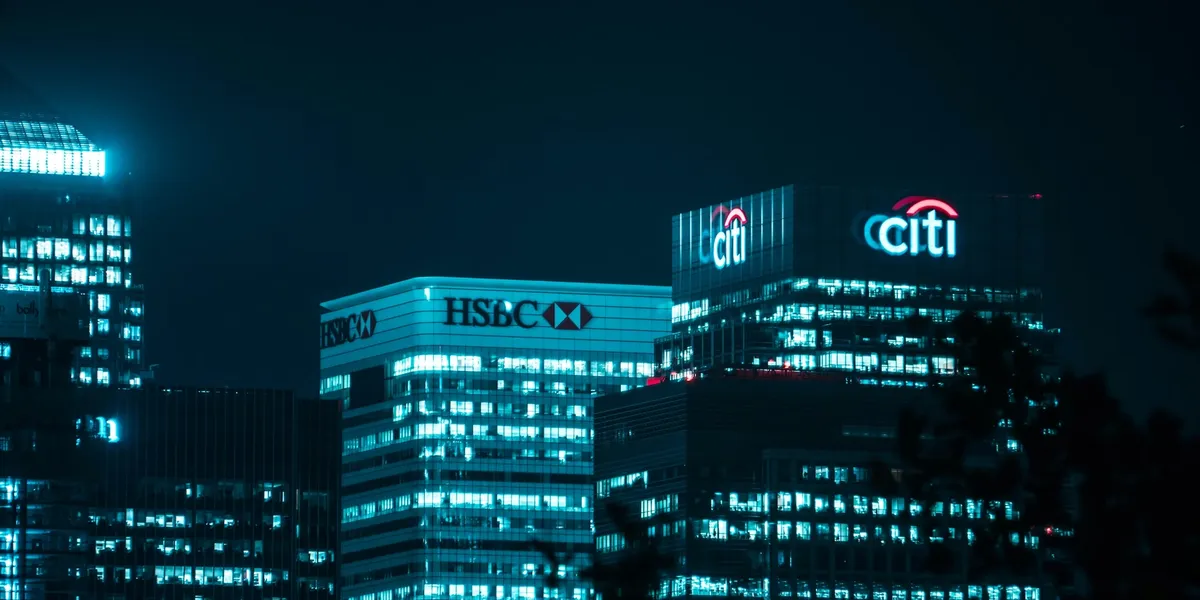
When the most powerful banker in America starts drawing comparisons to 2008, investors need to pay attention. Jamie Dimon, Chief Executive Officer of JPMorgan Chase, recently stated he's observing troubling parallels to the era before the financial crisis, as competitors engage in what he characterises as "dumb things" to win market share. The stark warning from Dimon, whose bank emerged from the 2008 collapse as the industry's undisputed champion, carries weight that extends far beyond the financial sector. For retail investors holding bank stocks, index funds, or simply trying to navigate market conditions, this commentary signals a potential shift in the competitive landscape that could reshape portfolios and market stability in the coming months.
Dimon's remarks came during a discussion about the increasingly aggressive competition across financial services, where banks and alternative lenders alike are vying for customers by loosening standards and cutting prices. This race to the bottom in lending practices evokes uncomfortable memories of the subprime mortgage crisis, when institutions competed ferociously to originate loans without properly assessing risk. The subsequent collapse nearly brought down the global financial system and triggered the deepest recession since the 1930s. JPMorgan shares have gained approximately 18 per cent over the past year, outpacing the broader Financial Select Sector SPDR Fund, which has risen roughly 12 per cent.

However, Dimon's cautionary tone suggests this outperformance might reflect investors seeking safety rather than celebrating sector-wide health.
The context for Dimon's warning is crucial. Following the regional banking crisis of early 2023, which saw the collapse of Silicon Valley Bank and Signature Bank, regulators tightened oversight on mid-sized institutions,s whilst larger banks absorbed deposits fleeing smaller competitors. This created a two-tier system in which mega-banks like JPMorgan became even more dominant, controlling over 15 per cent of all US bank deposits.

Yet despite this consolidation, competition hasn't diminished—it's taken different forms. Non-bank lenders, fintech companies, and regional banks, desperate to regain market share, are all pushing the boundaries of underwriting standards, loan pricing, and risk management practices that prudent institutions abandoned after 2008.
The Anatomy of Reckless Competition in Financial Markets
What exactly constitutes "dumb things" in banking? Dimon's criticism likely encompasses several worrying trends that have emerged across the financial landscape. Commercial real estate lending remains particularly concerning, with office vacancy rates hovering near record highs in major cities as remote work permanently alters demand. Some regional banks are nonetheless extending favourable refinancing terms to troubled property owners, effectively kicking the can down the road rather than recognising losses. Similarly, consumer lending has seen a proliferation of buy-now-pay-later schemes and subprime auto loans with minimal credit checks, whilst corporate lending has witnessed covenant-lite loans become standard practice, stripping away protections that traditionally helped banks recover funds when borrowers struggled.
The parallels to 2007 extend beyond lending practices to institutional behaviour. Banks are once again building complex structured products, bundling loans into securities that obscure underlying risks. Private credit markets, largely unregulated and opaque, have exploded to over $ 1.5 trillion, with yields suggesting participants aren't pricing in realistic default scenarios. Meanwhile, deposit competition has intensified, with some institutions offering unsustainably high interest rates to attract funds, compressing net interest margins to levels that threaten profitability. This combination of aggressive growth strategies and deteriorating credit standards creates the precise conditions that historically precede financial instability.
"When a bank CEO of Dimon's stature invokes 2008, he's not being hyperbolic—he's reading warning signs that most market participants are ignoring," says Thomas Richardson, Senior Financial Analyst at Bridgewater Capital Research. "The question isn't whether some institutions will fail, but whether those failures remain isolated or trigger contagion."
Dimon himself validated these concerns at JPMorgan's investor day, telling analysts, "My anxiety is high over it," and urging investors to "watch out"—adding that high asset prices don't assuage his worries but actually compound the risks he sees building across the financial system.
For investors, Dimon's warning demands a reassessment of financial sector exposure. The SPDR S&P Bank ETF, which tracks regional banking stocks, has recovered substantially from its 2023 lows but remains vulnerable to credit deterioration. Larger institutions like JPMorgan, Bank of America, and Wells Fargo appear better positioned, with stronger capital buffers and more conservative underwriting. However, even blue-chip financials would suffer if widespread credit problems emerged, as happened when Lehman Brothers' collapse in September 2008 initially seemed like an isolated event before metastasising into a systemic crisis. Investors holding broad-market index funds, such as the S&P 500, also face indirect exposure, as financials account for roughly 13 per cent of the index's weighting.
Navigating Portfolio Implications and Defensive Positioning
The practical question for retail investors centres on how to position portfolios when a respected market participant issues such dire warnings. History suggests that Dimon's track record warrants serious consideration. In 2007, whilst most executives remained optimistic, he directed JPMorgan to reduce exposure to mortgage-backed securities and build excess capital reserves—decisions that enabled the bank to acquire Bear Stearns and Washington Mutual at bargain prices during the crisis. His current caution suggests he's similarly preparing JPMorgan for turbulence, which should prompt individual investors to consider their own defensive positioning.
Diversification becomes paramount when systemic risks emerge. Investors heavily weighted toward financial stocks might consider rebalancing toward sectors with less direct exposure to credit cycles, such as healthcare, utilities, or consumer staples. Within the financial sector itself, discrimination matters more than broad exposure. Banks with conservative lending practices, strong capital ratios above 12 per cent, and diversified revenue streams, including wealth management and trading operations, tend to weather credit cycles better than institutions that depend primarily on net interest income from loans. JPMorgan itself, despite Dimon's warnings about competitors, continues to trade at a premium valuation with a price-to-book ratio near 1.8, reflecting investor confidence in its risk management.
"Dimon is essentially telling investors that his competitors are making the same mistakes that created opportunities for JPMorgan in 2008," notes Patricia Hawkins, Chief Strategist at Riverside Investment Management. "Smart money will follow his lead by favouring quality over yield and recognising that today's higher interest rates don't compensate for tomorrow's credit losses."
In his own words, Dimon was blunt about the competitive landscape: "I see a coupleof people doing some dumb things. They're just doing dumb things to create NII"—a direct reference to banks taking excessive lending risks to boost net interest income, echoing the exact behaviour that preceded 2008's collapse.
The broader market implications extend beyond bank stocks. If lending standards tighten in response to eventual credit problems, businesses will find capital more expensive and difficult to obtain, potentially slowing economic growth. This would particularly affect small-cap companies that rely heavily on bank financing, making large-cap stocks with strong balance sheets relatively more attractive. Additionally, a financial sector crisis would likely prompt Federal Reserve intervention, potentially including rate cuts or liquidity programmes that would affect bond markets and currency valuations.
Looking ahead, investors should monitor several key indicators that would confirm or refute Dimon's concerns. Rising delinquency rates in commercial real estate, auto loans, or credit cards would validate fears about deteriorating credit quality.

Widening credit spreads between corporate bonds and Treasuries would signal growing investor concern about default risk. And regulatory actions against specific institutions for unsafe lending practices would indicate that supervisors share Dimon's assessment. For now, his warning serves as a reminder that in financial markets, what seems like healthy competition can quickly transform into destructive excess. Investors who remember this lesson and position portfolios accordingly stand a better chance of preserving capital if the current cycle follows the troubling path Dimon foresees.
Disclaimer: The views and recommendations made above are those of individual analysts or brokerage companies, and not of Winvesta. We advise investors to check with certified experts before making any investment decisions.
Ready to earn on every trade?
Invest in 11,000+ US stocks & ETFs

When the most powerful banker in America starts drawing comparisons to 2008, investors need to pay attention. Jamie Dimon, Chief Executive Officer of JPMorgan Chase, recently stated he's observing troubling parallels to the era before the financial crisis, as competitors engage in what he characterises as "dumb things" to win market share. The stark warning from Dimon, whose bank emerged from the 2008 collapse as the industry's undisputed champion, carries weight that extends far beyond the financial sector. For retail investors holding bank stocks, index funds, or simply trying to navigate market conditions, this commentary signals a potential shift in the competitive landscape that could reshape portfolios and market stability in the coming months.
Dimon's remarks came during a discussion about the increasingly aggressive competition across financial services, where banks and alternative lenders alike are vying for customers by loosening standards and cutting prices. This race to the bottom in lending practices evokes uncomfortable memories of the subprime mortgage crisis, when institutions competed ferociously to originate loans without properly assessing risk. The subsequent collapse nearly brought down the global financial system and triggered the deepest recession since the 1930s. JPMorgan shares have gained approximately 18 per cent over the past year, outpacing the broader Financial Select Sector SPDR Fund, which has risen roughly 12 per cent.
However, Dimon's cautionary tone suggests this outperformance might reflect investors seeking safety rather than celebrating sector-wide health.
The context for Dimon's warning is crucial. Following the regional banking crisis of early 2023, which saw the collapse of Silicon Valley Bank and Signature Bank, regulators tightened oversight on mid-sized institutions,s whilst larger banks absorbed deposits fleeing smaller competitors. This created a two-tier system in which mega-banks like JPMorgan became even more dominant, controlling over 15 per cent of all US bank deposits.
Yet despite this consolidation, competition hasn't diminished—it's taken different forms. Non-bank lenders, fintech companies, and regional banks, desperate to regain market share, are all pushing the boundaries of underwriting standards, loan pricing, and risk management practices that prudent institutions abandoned after 2008.
The Anatomy of Reckless Competition in Financial Markets
What exactly constitutes "dumb things" in banking? Dimon's criticism likely encompasses several worrying trends that have emerged across the financial landscape. Commercial real estate lending remains particularly concerning, with office vacancy rates hovering near record highs in major cities as remote work permanently alters demand. Some regional banks are nonetheless extending favourable refinancing terms to troubled property owners, effectively kicking the can down the road rather than recognising losses. Similarly, consumer lending has seen a proliferation of buy-now-pay-later schemes and subprime auto loans with minimal credit checks, whilst corporate lending has witnessed covenant-lite loans become standard practice, stripping away protections that traditionally helped banks recover funds when borrowers struggled.
The parallels to 2007 extend beyond lending practices to institutional behaviour. Banks are once again building complex structured products, bundling loans into securities that obscure underlying risks. Private credit markets, largely unregulated and opaque, have exploded to over $ 1.5 trillion, with yields suggesting participants aren't pricing in realistic default scenarios. Meanwhile, deposit competition has intensified, with some institutions offering unsustainably high interest rates to attract funds, compressing net interest margins to levels that threaten profitability. This combination of aggressive growth strategies and deteriorating credit standards creates the precise conditions that historically precede financial instability.
"When a bank CEO of Dimon's stature invokes 2008, he's not being hyperbolic—he's reading warning signs that most market participants are ignoring," says Thomas Richardson, Senior Financial Analyst at Bridgewater Capital Research. "The question isn't whether some institutions will fail, but whether those failures remain isolated or trigger contagion."
Dimon himself validated these concerns at JPMorgan's investor day, telling analysts, "My anxiety is high over it," and urging investors to "watch out"—adding that high asset prices don't assuage his worries but actually compound the risks he sees building across the financial system.
For investors, Dimon's warning demands a reassessment of financial sector exposure. The SPDR S&P Bank ETF, which tracks regional banking stocks, has recovered substantially from its 2023 lows but remains vulnerable to credit deterioration. Larger institutions like JPMorgan, Bank of America, and Wells Fargo appear better positioned, with stronger capital buffers and more conservative underwriting. However, even blue-chip financials would suffer if widespread credit problems emerged, as happened when Lehman Brothers' collapse in September 2008 initially seemed like an isolated event before metastasising into a systemic crisis. Investors holding broad-market index funds, such as the S&P 500, also face indirect exposure, as financials account for roughly 13 per cent of the index's weighting.
Navigating Portfolio Implications and Defensive Positioning
The practical question for retail investors centres on how to position portfolios when a respected market participant issues such dire warnings. History suggests that Dimon's track record warrants serious consideration. In 2007, whilst most executives remained optimistic, he directed JPMorgan to reduce exposure to mortgage-backed securities and build excess capital reserves—decisions that enabled the bank to acquire Bear Stearns and Washington Mutual at bargain prices during the crisis. His current caution suggests he's similarly preparing JPMorgan for turbulence, which should prompt individual investors to consider their own defensive positioning.
Diversification becomes paramount when systemic risks emerge. Investors heavily weighted toward financial stocks might consider rebalancing toward sectors with less direct exposure to credit cycles, such as healthcare, utilities, or consumer staples. Within the financial sector itself, discrimination matters more than broad exposure. Banks with conservative lending practices, strong capital ratios above 12 per cent, and diversified revenue streams, including wealth management and trading operations, tend to weather credit cycles better than institutions that depend primarily on net interest income from loans. JPMorgan itself, despite Dimon's warnings about competitors, continues to trade at a premium valuation with a price-to-book ratio near 1.8, reflecting investor confidence in its risk management.
"Dimon is essentially telling investors that his competitors are making the same mistakes that created opportunities for JPMorgan in 2008," notes Patricia Hawkins, Chief Strategist at Riverside Investment Management. "Smart money will follow his lead by favouring quality over yield and recognising that today's higher interest rates don't compensate for tomorrow's credit losses."
In his own words, Dimon was blunt about the competitive landscape: "I see a coupleof people doing some dumb things. They're just doing dumb things to create NII"—a direct reference to banks taking excessive lending risks to boost net interest income, echoing the exact behaviour that preceded 2008's collapse.
The broader market implications extend beyond bank stocks. If lending standards tighten in response to eventual credit problems, businesses will find capital more expensive and difficult to obtain, potentially slowing economic growth. This would particularly affect small-cap companies that rely heavily on bank financing, making large-cap stocks with strong balance sheets relatively more attractive. Additionally, a financial sector crisis would likely prompt Federal Reserve intervention, potentially including rate cuts or liquidity programmes that would affect bond markets and currency valuations.
Looking ahead, investors should monitor several key indicators that would confirm or refute Dimon's concerns. Rising delinquency rates in commercial real estate, auto loans, or credit cards would validate fears about deteriorating credit quality.
Widening credit spreads between corporate bonds and Treasuries would signal growing investor concern about default risk. And regulatory actions against specific institutions for unsafe lending practices would indicate that supervisors share Dimon's assessment. For now, his warning serves as a reminder that in financial markets, what seems like healthy competition can quickly transform into destructive excess. Investors who remember this lesson and position portfolios accordingly stand a better chance of preserving capital if the current cycle follows the troubling path Dimon foresees.
Disclaimer: The views and recommendations made above are those of individual analysts or brokerage companies, and not of Winvesta. We advise investors to check with certified experts before making any investment decisions.
Ready to earn on every trade?
Invest in 11,000+ US stocks & ETFs


