Fed Chair Powell takes unprecedented stand at supreme court hearing
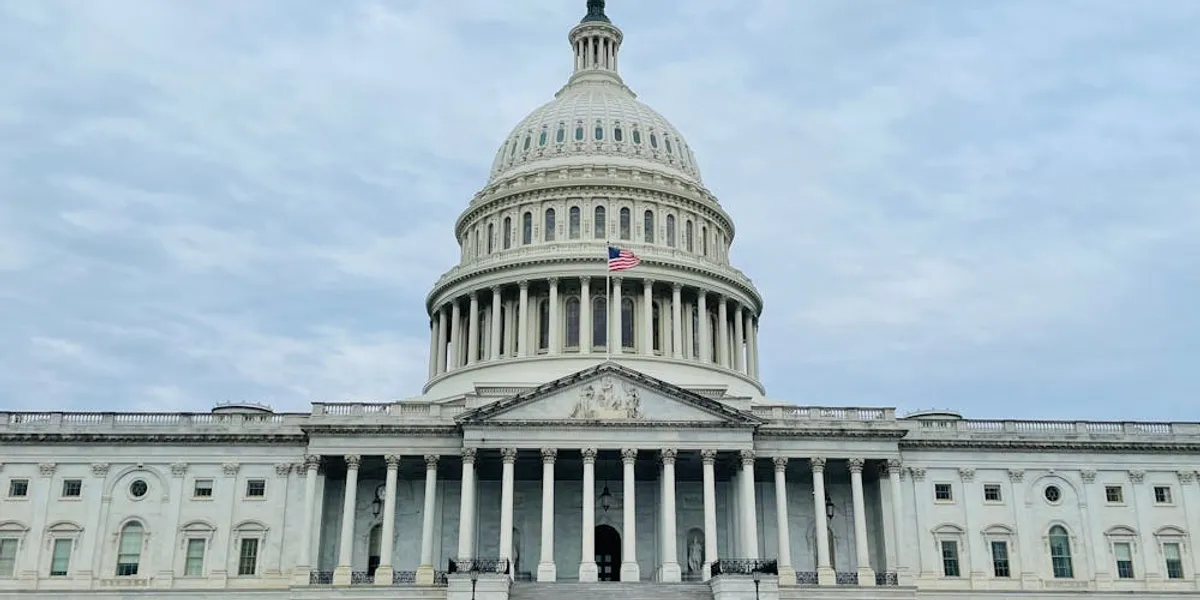
Federal Reserve Chair Jerome Powell did something on Wednesday that no central bank chief has done in modern memory: he sat in the Supreme Court chamber as justices weighed whether the President can dismiss a Federal Reserve governor at will. The case centres on Lisa Cook, a Fed governor appointed in 2022, whose potential removal has thrust the central bank's independence into the spotlight at precisely the moment when monetary policy decisions could determine whether America slides into recession or achieves the elusive soft landing. For investors holding everything from treasury bonds to technology stocks, the outcome of this case carries profound implications that extend far beyond Washington's marble corridors.
The legal battle emerged after the previous administration attempted to remove Cook from her position on the Federal Reserve Board of Governors, arguing that the President possesses broad authority to dismiss executive branch officials. Cook challenged this action, and the case has wound its way through federal courts before landing at the Supreme Court. The central question before the justices is whether Fed governors enjoy protection from arbitrary dismissal, a safeguard that has underpinned the central bank's independence since the Federal Reserve Act established specific terms for board members. Powell's physical presence in the courtroom sent an unmistakable signal about how seriously the institution views threats to its autonomy, even though he declined to speak publicly about the case afterwards.
Markets have remained relatively stable since the Supreme Court agreed to hear arguments, with the S&P 500 holding near recent highs and the yield on ten-year Treasury notes hovering around 4.2 per cent. Yet this calm surface belies deeper concerns among institutional investors about what would happen if the high court ruled that presidents can remove Fed governors without cause. Such a decision would fundamentally alter the balance of power between political leaders and monetary policymakers, potentially making the Federal Reserve more susceptible to short-term political pressures.
Why Central Bank Independence Matters to Your Portfolio
The Federal Reserve's independence isn't merely an abstract principle debated in economics textbooks—it directly affects investment returns across asset classes. When central bankers can make decisions based solely on economic data rather than political considerations, markets gain predictability and confidence. This institutional credibility allows the Fed to anchor inflation expectations, which in turn influences everything from mortgage rates to corporate borrowing costs. Remove that independence, and suddenly the path of interest rates becomes far less specific, introducing volatility that investors despise.
Consider what happened during past periods when political pressure influenced monetary policy. In the 1970s, when presidents repeatedly pushed for easier money despite rising inflation, the result was stagflation that devastated portfolios. Stocks delivered negative real returns for much of the decade, whilst inflation eroded the purchasing power of fixed-income investments. It wasn't until Paul Volcker established genuine Fed independence in the early 1980s—enduring intense political criticism whilst raising rates to double-digit levels—that inflation was finally tamed and markets could function efficiently again.

"The market's apparent complacency about this case strikes me as misguided," says Michael Harrington, Chief Investment Officer at Thornbridge Capital Partners. "If the Supreme Court opens the door to political interference in Fed personnel decisions, we're looking at a fundamental repricing of risk across nearly every asset class."
This concern is echoed across Wall Street—as TheStreet reports, investors and economists globally are "deeply worried" about the prospect of the Fed becoming a political tool, with acutely damaging implications for interest rates, inflation, and the dollar.
The timing of this legal challenge couldn't be more consequential for monetary policy.

The Federal Reserve currently finds itself navigating treacherous terrain, with inflation still above its 2 per cent target whilst economic growth shows signs of moderating. The Fed funds rate is restrictive, and policymakers are debating when they might begin cutting rates without reigniting inflation. These delicate judgements require technical expertise and a willingness to make unpopular decisions—precisely the circumstances where political pressure could prove most damaging.
Lisa Cook herself brings a valuable perspective to the Fed's deliberations as an economist who has studied financial crises and their aftermath. Her research has examined how discrimination affects innovation and economic growth, providing insights that inform the Fed's employment mandate. Whether one agrees or disagrees with her policy views, the principle at stake transcends any individual governor. If presidents can dismiss Fed officials who advocate positions they dislike, future governors might hesitate to vote their conscience, knowing their job security depends on pleasing whoever occupies the White House.
Market Implications Beyond the Immediate Decision
Wall Street analysts are already gaming out scenarios depending on how the Supreme Court rules. A decision favouring the Fed's current structure would likely be met with relief, perhaps triggering a modest rally in both stocks and bonds as uncertainty lifts. Treasury yields might decline slightly as investors gain confidence that monetary policy will remain predictable. Conversely, a ruling that weakens Fed governors' job protections could send shockwaves through fixed-income markets, potentially widening term premiums as investors demand higher compensation for increased policy uncertainty.
Currency markets are watching closely as well. The dollar's status as the world's reserve currency rests partly on confidence in American institutions, including an independent Federal Reserve. Foreign central banks hold over seven trillion dollars in U.S. Treasury securities, a staggering sum that reflects trust in the stability of American monetary policy. Anything that undermines that confidence could gradually erode demand for dollar-denominated assets, with profound long-term consequences for American borrowing costs and living standards.
"We're advising clients to consider this case as part of their broader risk assessment," notes Patricia Yamamoto, Senior Market Strategist at Riverside Financial Group. "The immediate market reaction may be muted, but the long-term implications for portfolio construction could be substantial if the institutional framework governing monetary policy changes."
A coalition of former Treasury Secretaries, Fed governors, and prominent economists underscored this point in a Supreme Court filing, warning that "less independent central banks around the world have at times prioritised small, short-run gains, resulting in substantial long-term harm and inferior economic performance overall."
Beyond the binary question of the court's ruling, Powell's attendance itself carries symbolic weight. Central bank chairs typically maintain studied neutrality on political matters, avoiding even the appearance of taking sides in partisan disputes. By showing up on Wednesday, Powell demonstrated that this case transcends normal political boundaries—it strikes at the heart of what allows the Federal Reserve to function effectively. That willingness to take a public stand, however subtle, suggests the stakes are even higher than many investors may realise.
The Supreme Court is expected to issue its decision by June, leaving months of uncertainty ahead. During this period, investors should monitor whether political rhetoric about the Fed intensifies and whether other challenges to central bank independence emerge. The coming months will test whether America's commitment to independent monetary policy remains as strong as it was when previous generations established these institutional safeguards. For portfolios built on the assumption of predictable, data-driven Fed policy, the outcome matters immensely. Powell's unprecedented courtroom appearance has made one thing clear: the Federal Reserve understands what's at stake, even if markets haven't fully priced in the risks yet.
Disclaimer: The views and recommendations made above are those of individual analysts or brokerage companies, and not of Winvesta. We advise investors to check with certified experts before making any investment decisions.
Ready to earn on every trade?
Invest in 11,000+ US stocks & ETFs

Federal Reserve Chair Jerome Powell did something on Wednesday that no central bank chief has done in modern memory: he sat in the Supreme Court chamber as justices weighed whether the President can dismiss a Federal Reserve governor at will. The case centres on Lisa Cook, a Fed governor appointed in 2022, whose potential removal has thrust the central bank's independence into the spotlight at precisely the moment when monetary policy decisions could determine whether America slides into recession or achieves the elusive soft landing. For investors holding everything from treasury bonds to technology stocks, the outcome of this case carries profound implications that extend far beyond Washington's marble corridors.
The legal battle emerged after the previous administration attempted to remove Cook from her position on the Federal Reserve Board of Governors, arguing that the President possesses broad authority to dismiss executive branch officials. Cook challenged this action, and the case has wound its way through federal courts before landing at the Supreme Court. The central question before the justices is whether Fed governors enjoy protection from arbitrary dismissal, a safeguard that has underpinned the central bank's independence since the Federal Reserve Act established specific terms for board members. Powell's physical presence in the courtroom sent an unmistakable signal about how seriously the institution views threats to its autonomy, even though he declined to speak publicly about the case afterwards.
Markets have remained relatively stable since the Supreme Court agreed to hear arguments, with the S&P 500 holding near recent highs and the yield on ten-year Treasury notes hovering around 4.2 per cent. Yet this calm surface belies deeper concerns among institutional investors about what would happen if the high court ruled that presidents can remove Fed governors without cause. Such a decision would fundamentally alter the balance of power between political leaders and monetary policymakers, potentially making the Federal Reserve more susceptible to short-term political pressures.
Why Central Bank Independence Matters to Your Portfolio
The Federal Reserve's independence isn't merely an abstract principle debated in economics textbooks—it directly affects investment returns across asset classes. When central bankers can make decisions based solely on economic data rather than political considerations, markets gain predictability and confidence. This institutional credibility allows the Fed to anchor inflation expectations, which in turn influences everything from mortgage rates to corporate borrowing costs. Remove that independence, and suddenly the path of interest rates becomes far less specific, introducing volatility that investors despise.
Consider what happened during past periods when political pressure influenced monetary policy. In the 1970s, when presidents repeatedly pushed for easier money despite rising inflation, the result was stagflation that devastated portfolios. Stocks delivered negative real returns for much of the decade, whilst inflation eroded the purchasing power of fixed-income investments. It wasn't until Paul Volcker established genuine Fed independence in the early 1980s—enduring intense political criticism whilst raising rates to double-digit levels—that inflation was finally tamed and markets could function efficiently again.
"The market's apparent complacency about this case strikes me as misguided," says Michael Harrington, Chief Investment Officer at Thornbridge Capital Partners. "If the Supreme Court opens the door to political interference in Fed personnel decisions, we're looking at a fundamental repricing of risk across nearly every asset class."
This concern is echoed across Wall Street—as TheStreet reports, investors and economists globally are "deeply worried" about the prospect of the Fed becoming a political tool, with acutely damaging implications for interest rates, inflation, and the dollar.
The timing of this legal challenge couldn't be more consequential for monetary policy.
The Federal Reserve currently finds itself navigating treacherous terrain, with inflation still above its 2 per cent target whilst economic growth shows signs of moderating. The Fed funds rate is restrictive, and policymakers are debating when they might begin cutting rates without reigniting inflation. These delicate judgements require technical expertise and a willingness to make unpopular decisions—precisely the circumstances where political pressure could prove most damaging.
Lisa Cook herself brings a valuable perspective to the Fed's deliberations as an economist who has studied financial crises and their aftermath. Her research has examined how discrimination affects innovation and economic growth, providing insights that inform the Fed's employment mandate. Whether one agrees or disagrees with her policy views, the principle at stake transcends any individual governor. If presidents can dismiss Fed officials who advocate positions they dislike, future governors might hesitate to vote their conscience, knowing their job security depends on pleasing whoever occupies the White House.
Market Implications Beyond the Immediate Decision
Wall Street analysts are already gaming out scenarios depending on how the Supreme Court rules. A decision favouring the Fed's current structure would likely be met with relief, perhaps triggering a modest rally in both stocks and bonds as uncertainty lifts. Treasury yields might decline slightly as investors gain confidence that monetary policy will remain predictable. Conversely, a ruling that weakens Fed governors' job protections could send shockwaves through fixed-income markets, potentially widening term premiums as investors demand higher compensation for increased policy uncertainty.
Currency markets are watching closely as well. The dollar's status as the world's reserve currency rests partly on confidence in American institutions, including an independent Federal Reserve. Foreign central banks hold over seven trillion dollars in U.S. Treasury securities, a staggering sum that reflects trust in the stability of American monetary policy. Anything that undermines that confidence could gradually erode demand for dollar-denominated assets, with profound long-term consequences for American borrowing costs and living standards.
"We're advising clients to consider this case as part of their broader risk assessment," notes Patricia Yamamoto, Senior Market Strategist at Riverside Financial Group. "The immediate market reaction may be muted, but the long-term implications for portfolio construction could be substantial if the institutional framework governing monetary policy changes."
A coalition of former Treasury Secretaries, Fed governors, and prominent economists underscored this point in a Supreme Court filing, warning that "less independent central banks around the world have at times prioritised small, short-run gains, resulting in substantial long-term harm and inferior economic performance overall."
Beyond the binary question of the court's ruling, Powell's attendance itself carries symbolic weight. Central bank chairs typically maintain studied neutrality on political matters, avoiding even the appearance of taking sides in partisan disputes. By showing up on Wednesday, Powell demonstrated that this case transcends normal political boundaries—it strikes at the heart of what allows the Federal Reserve to function effectively. That willingness to take a public stand, however subtle, suggests the stakes are even higher than many investors may realise.
The Supreme Court is expected to issue its decision by June, leaving months of uncertainty ahead. During this period, investors should monitor whether political rhetoric about the Fed intensifies and whether other challenges to central bank independence emerge. The coming months will test whether America's commitment to independent monetary policy remains as strong as it was when previous generations established these institutional safeguards. For portfolios built on the assumption of predictable, data-driven Fed policy, the outcome matters immensely. Powell's unprecedented courtroom appearance has made one thing clear: the Federal Reserve understands what's at stake, even if markets haven't fully priced in the risks yet.
Disclaimer: The views and recommendations made above are those of individual analysts or brokerage companies, and not of Winvesta. We advise investors to check with certified experts before making any investment decisions.
Ready to earn on every trade?
Invest in 11,000+ US stocks & ETFs


