AMD's Meta deal: The AI chip war just got more competitive
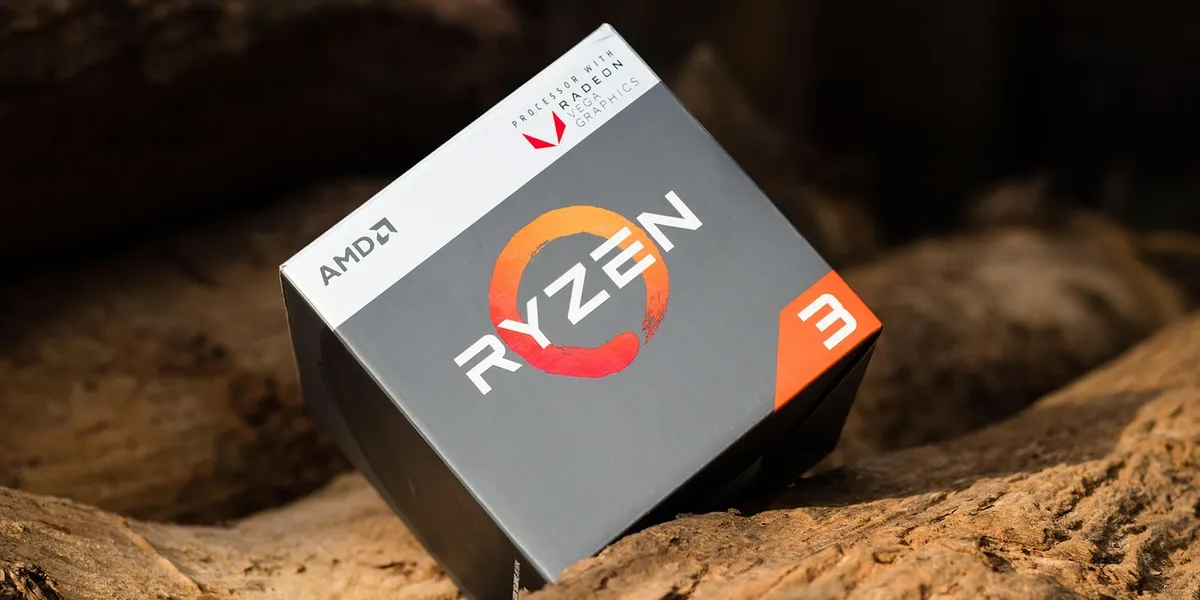
Advanced Micro Devices shook up the semiconductor landscape on Tuesday with news that sent its shares soaring: a long-term agreement to supply Meta Platforms with computing power for artificial intelligence workloads. The announcement marks a pivotal moment in the intensifying battle for AI chip supremacy, potentially loosening Nvidia's iron grip on a market that's reshaping technology portfolios across Wall Street. For investors who've watched AMD struggle to gain meaningful traction in the AI boom, whilst Nvidia captured headlines and market share, this Meta partnership represents the breakthrough they've been waiting for. The deal comes with an unusual twist—AMD granted Meta warrants for up to 10% of the chip maker's stock—but that dilution concern quickly faded as investors focused on what matters most: AMD finally landing a marquee customer in the white-hot AI infrastructure market.
The timing couldn't be more crucial for AMD shareholders. Over the past eighteen months, Nvidia has dominated AI chip sales, with its H100 and H200 graphics processing units becoming the gold standard for training large language models and running AI inference workloads. This dominance propelled Nvidia's market capitalisation past two trillion dollars, whilst AMD's MI300 series chips struggled to gain significant adoption despite competitive specifications. Meta's commitment changes that calculus dramatically. As one of the world's largest technology companies,s spending tens of billions annually on data centre infrastructure, Meta's endorsement validates AMD's AI strategy and opens doors that were previously locked tight. The partnership signals that major cloud customers are actively seeking alternatives to Nvidia, driven by supply constraints, pricing pressures, and a strategic desire to avoid single-vendor dependence in such a critical technology layer.
Breaking Nvidia's Stranglehold on AI Infrastructure
The semiconductor industry has witnessed concentration levels in AI chips that make even the most monopolistic markets look competitive by comparison. NVIDIA controlled an estimated 80-90% of AI training chip sales throughout 2024 and 2025, with customers often waiting months for hardware allocations whilst paying premium prices.

This bottleneck became so severe that it influenced strategic decisions at Microsoft, Amazon, Alphabet, and Meta—all of whom began developing custom silicon internally whilst simultaneously courting AMD as a viable alternative supplier. The Meta deal validates this multi-sourcing strategy and demonstrates that AMD's technical capabilities have reached the threshold where hyperscale customers will commit substantial capital and engineering resources to integration efforts.
AMD's MI300X accelerator, the chip likely central to the Meta agreement, offers compelling specifications: 192 gigabytes of high-bandwidth memory compared to Nvidia's H200 with 141 gigabytes, and competitive performance on large language model inference workloads that represent Meta's core AI use cases. The company has invested heavily in software development, building out its ROCm platform to rival Nvidia's CUDA ecosystem—the software layer that's historically been Nvidia's most formidable competitive moat. Meta's willingness to adopt AMD chips at scale suggests this software gap has narrowed considerably, removing a critical barrier that's kept AMD on the sidelines of the AI revolution despite possessing capable hardware.
"This partnership fundamentally alters the competitive dynamics in AI semiconductors," says Marcus Chen, Senior Technology Analyst at Thornton Research Partners. "Meta isn't making a token purchase for negotiating leverage with Nvidia—they're committing to AMD as a primary supplier with multi-year volume guarantees. That's the validation AMD needed to attract additional hyperscale customers."
AMD CEO Lisa Su validated this assessment in her CNBC interview, calling the Meta partnership "one of the most transformational deals" in the chipmaker's history—a multi-year, multi-generation commitment involving custom MI450 GPUs specifically optimised for Meta's Llama model workloads, a level of customisation that, according to analyst Patrick Bajarin, Nvidia hasn't matched.
The warrant structure deserves careful consideration from investors evaluating the deal's net impact. Granting Meta the option to acquire up to 10% of AMD represents potential dilution that would normally concern shareholders. Yet the stock's positive reaction suggests the market views this as acceptable collateral to secure such a transformative customer relationship. Warrants of this nature typically include strike prices above current market levels and vest over extended periods, meaning Meta must make the partnership successful for the warrants to generate value. This alignment of interests actually strengthens the deal's strategic logic—Meta now has financial incentive beyond operational considerations to ensure AMD's chips perform exceptionally well in their infrastructure, potentially leading to expanded adoption and public endorsements that attract additional customers.
Portfolio Implications Beyond the Headlines
For investors holding semiconductor positions, this development demands portfolio reassessment. The AI chip market has operated as a near-monopoly, with Nvidia capturing the overwhelming majority of profit dollars whilst AMD, Intel, and custom silicon efforts split the remainder. The Meta deal suggests a transition toward oligopoly—still concentrated but with multiple viable suppliers commanding significant market share. This shift carries profound implications for relative valuations. NVIDIA trades at approximately 35 times forward earnings, a premium that's been justified by its dominant market position and explosive growth trajectory. If AMD can convert this Meta partnership into a sustainable 20-30% share of the AI accelerator market, its current valuation multiple of roughly 28 times forward earnings looks considerably more attractive, particularly given the company's stronger position in traditional data centre CPUs and gaming graphics cards.

The ripple effects extend beyond AMD and Nvidia to the broader technology sector. Meta's capital expenditure guidance for 2026 exceeds $ 40 billion, with AI infrastructure as the largest component.

This AMD partnership likely means those billions will flow toward a more diversified supplier base, potentially constraining Nvidia's revenue growth rates whilst accelerating AMD's trajectory. For investors in the "Magnificent Seven" technology stocks, Meta's move validates concerns about Nvidia's sustainability at current growth rates. It underscores the importance of monitoring capital-allocation decisions across hyperscale customers. Microsoft's Azure, Amazon's AWS, and Alphabet's Google Cloud collectively represent even larger infrastructure budgets than Meta. If they follow similar diversification strategies, the AI chip market could look radically different by year-end.
"We're witnessing the maturation of the AI infrastructure market," notes Jennifer Kowalski, Chief Investment Strategist at Ashford Capital Management. "Early-stage technology adoption typically starts with single-vendor dominance, then transitions toward competitive equilibrium as customers demand supply security and pricing transparency. AMD's Meta win accelerates that transition considerably."
Market analysts are reaching the same conclusion. As Investing.com noted in its coverage of the deal, Meta's move to split its AI compute across two vendors signals that "the era of single-supplier dependence is ending"—a tectonic shift that could see AMD's AI accelerator market share climb from 9% in 2025 to over 15% by year-end 2026, giving other hyperscalers like Microsoft and Alphabet a green light to follow suit.
The implications extend into related semiconductor segments as well. AMD's success in landing Meta creates positive momentum for its entire product portfolio, including EPYC server processors that compete with Intel's Xeon chips in traditional workloads. Large customers typically prefer integrated solutions from fewer vendors when possible, meaning Meta's commitment to AMD AI chips could expand into broader data centre processor adoption. This creates a double benefit for AMD—capturing high-margin AI accelerator revenue whilst potentially gaining share in the larger but more mature server CPU market. For Intel shareholders watching their company struggle in both categories, the AMD-Meta partnership represents another worrying sign that their competitive position continues deteriorating across critical data centre segments.
Looking ahead, investors should monitor several key indicators that will determine whether this partnership delivers on its transformative potential. Meta's quarterly commentary on AI infrastructure deployment will provide clues about AMD chip adoption rates and performance satisfaction. AMD's data centre revenue growth, reported quarterly, will show whether its relationship with Meta translates into financial impact. And competitive responses from Nvidia—whether through pricing adjustments, product acceleration, or their own strategic partnerships—will shape the broader market dynamics. The AI chip war just entered a new phase, with Meta placing a substantial bet that AMD can deliver the computing power needed for the next generation of artificial intelligence. For investors, the question isn't whether AMD has arrived as a credible Nvidia competitor—Tuesday's announcement settled that debate—but rather how quickly the market will rebalance and what that means for portfolio positioning in the world's most consequential technology sector.
Disclaimer: The views and recommendations made above are those of individual analysts or brokerage companies, and not of Winvesta. We advise investors to check with certified experts before making any investment decisions.
Ready to earn on every trade?
Invest in 11,000+ US stocks & ETFs

Advanced Micro Devices shook up the semiconductor landscape on Tuesday with news that sent its shares soaring: a long-term agreement to supply Meta Platforms with computing power for artificial intelligence workloads. The announcement marks a pivotal moment in the intensifying battle for AI chip supremacy, potentially loosening Nvidia's iron grip on a market that's reshaping technology portfolios across Wall Street. For investors who've watched AMD struggle to gain meaningful traction in the AI boom, whilst Nvidia captured headlines and market share, this Meta partnership represents the breakthrough they've been waiting for. The deal comes with an unusual twist—AMD granted Meta warrants for up to 10% of the chip maker's stock—but that dilution concern quickly faded as investors focused on what matters most: AMD finally landing a marquee customer in the white-hot AI infrastructure market.
The timing couldn't be more crucial for AMD shareholders. Over the past eighteen months, Nvidia has dominated AI chip sales, with its H100 and H200 graphics processing units becoming the gold standard for training large language models and running AI inference workloads. This dominance propelled Nvidia's market capitalisation past two trillion dollars, whilst AMD's MI300 series chips struggled to gain significant adoption despite competitive specifications. Meta's commitment changes that calculus dramatically. As one of the world's largest technology companies,s spending tens of billions annually on data centre infrastructure, Meta's endorsement validates AMD's AI strategy and opens doors that were previously locked tight. The partnership signals that major cloud customers are actively seeking alternatives to Nvidia, driven by supply constraints, pricing pressures, and a strategic desire to avoid single-vendor dependence in such a critical technology layer.
Breaking Nvidia's Stranglehold on AI Infrastructure
The semiconductor industry has witnessed concentration levels in AI chips that make even the most monopolistic markets look competitive by comparison. NVIDIA controlled an estimated 80-90% of AI training chip sales throughout 2024 and 2025, with customers often waiting months for hardware allocations whilst paying premium prices.
This bottleneck became so severe that it influenced strategic decisions at Microsoft, Amazon, Alphabet, and Meta—all of whom began developing custom silicon internally whilst simultaneously courting AMD as a viable alternative supplier. The Meta deal validates this multi-sourcing strategy and demonstrates that AMD's technical capabilities have reached the threshold where hyperscale customers will commit substantial capital and engineering resources to integration efforts.
AMD's MI300X accelerator, the chip likely central to the Meta agreement, offers compelling specifications: 192 gigabytes of high-bandwidth memory compared to Nvidia's H200 with 141 gigabytes, and competitive performance on large language model inference workloads that represent Meta's core AI use cases. The company has invested heavily in software development, building out its ROCm platform to rival Nvidia's CUDA ecosystem—the software layer that's historically been Nvidia's most formidable competitive moat. Meta's willingness to adopt AMD chips at scale suggests this software gap has narrowed considerably, removing a critical barrier that's kept AMD on the sidelines of the AI revolution despite possessing capable hardware.
"This partnership fundamentally alters the competitive dynamics in AI semiconductors," says Marcus Chen, Senior Technology Analyst at Thornton Research Partners. "Meta isn't making a token purchase for negotiating leverage with Nvidia—they're committing to AMD as a primary supplier with multi-year volume guarantees. That's the validation AMD needed to attract additional hyperscale customers."
AMD CEO Lisa Su validated this assessment in her CNBC interview, calling the Meta partnership "one of the most transformational deals" in the chipmaker's history—a multi-year, multi-generation commitment involving custom MI450 GPUs specifically optimised for Meta's Llama model workloads, a level of customisation that, according to analyst Patrick Bajarin, Nvidia hasn't matched.
The warrant structure deserves careful consideration from investors evaluating the deal's net impact. Granting Meta the option to acquire up to 10% of AMD represents potential dilution that would normally concern shareholders. Yet the stock's positive reaction suggests the market views this as acceptable collateral to secure such a transformative customer relationship. Warrants of this nature typically include strike prices above current market levels and vest over extended periods, meaning Meta must make the partnership successful for the warrants to generate value. This alignment of interests actually strengthens the deal's strategic logic—Meta now has financial incentive beyond operational considerations to ensure AMD's chips perform exceptionally well in their infrastructure, potentially leading to expanded adoption and public endorsements that attract additional customers.
Portfolio Implications Beyond the Headlines
For investors holding semiconductor positions, this development demands portfolio reassessment. The AI chip market has operated as a near-monopoly, with Nvidia capturing the overwhelming majority of profit dollars whilst AMD, Intel, and custom silicon efforts split the remainder. The Meta deal suggests a transition toward oligopoly—still concentrated but with multiple viable suppliers commanding significant market share. This shift carries profound implications for relative valuations. NVIDIA trades at approximately 35 times forward earnings, a premium that's been justified by its dominant market position and explosive growth trajectory. If AMD can convert this Meta partnership into a sustainable 20-30% share of the AI accelerator market, its current valuation multiple of roughly 28 times forward earnings looks considerably more attractive, particularly given the company's stronger position in traditional data centre CPUs and gaming graphics cards.
The ripple effects extend beyond AMD and Nvidia to the broader technology sector. Meta's capital expenditure guidance for 2026 exceeds $ 40 billion, with AI infrastructure as the largest component.
This AMD partnership likely means those billions will flow toward a more diversified supplier base, potentially constraining Nvidia's revenue growth rates whilst accelerating AMD's trajectory. For investors in the "Magnificent Seven" technology stocks, Meta's move validates concerns about Nvidia's sustainability at current growth rates. It underscores the importance of monitoring capital-allocation decisions across hyperscale customers. Microsoft's Azure, Amazon's AWS, and Alphabet's Google Cloud collectively represent even larger infrastructure budgets than Meta. If they follow similar diversification strategies, the AI chip market could look radically different by year-end.
"We're witnessing the maturation of the AI infrastructure market," notes Jennifer Kowalski, Chief Investment Strategist at Ashford Capital Management. "Early-stage technology adoption typically starts with single-vendor dominance, then transitions toward competitive equilibrium as customers demand supply security and pricing transparency. AMD's Meta win accelerates that transition considerably."
Market analysts are reaching the same conclusion. As Investing.com noted in its coverage of the deal, Meta's move to split its AI compute across two vendors signals that "the era of single-supplier dependence is ending"—a tectonic shift that could see AMD's AI accelerator market share climb from 9% in 2025 to over 15% by year-end 2026, giving other hyperscalers like Microsoft and Alphabet a green light to follow suit.
The implications extend into related semiconductor segments as well. AMD's success in landing Meta creates positive momentum for its entire product portfolio, including EPYC server processors that compete with Intel's Xeon chips in traditional workloads. Large customers typically prefer integrated solutions from fewer vendors when possible, meaning Meta's commitment to AMD AI chips could expand into broader data centre processor adoption. This creates a double benefit for AMD—capturing high-margin AI accelerator revenue whilst potentially gaining share in the larger but more mature server CPU market. For Intel shareholders watching their company struggle in both categories, the AMD-Meta partnership represents another worrying sign that their competitive position continues deteriorating across critical data centre segments.
Looking ahead, investors should monitor several key indicators that will determine whether this partnership delivers on its transformative potential. Meta's quarterly commentary on AI infrastructure deployment will provide clues about AMD chip adoption rates and performance satisfaction. AMD's data centre revenue growth, reported quarterly, will show whether its relationship with Meta translates into financial impact. And competitive responses from Nvidia—whether through pricing adjustments, product acceleration, or their own strategic partnerships—will shape the broader market dynamics. The AI chip war just entered a new phase, with Meta placing a substantial bet that AMD can deliver the computing power needed for the next generation of artificial intelligence. For investors, the question isn't whether AMD has arrived as a credible Nvidia competitor—Tuesday's announcement settled that debate—but rather how quickly the market will rebalance and what that means for portfolio positioning in the world's most consequential technology sector.
Disclaimer: The views and recommendations made above are those of individual analysts or brokerage companies, and not of Winvesta. We advise investors to check with certified experts before making any investment decisions.
Ready to earn on every trade?
Invest in 11,000+ US stocks & ETFs


