What is market volatility? Understanding its impact on your investments
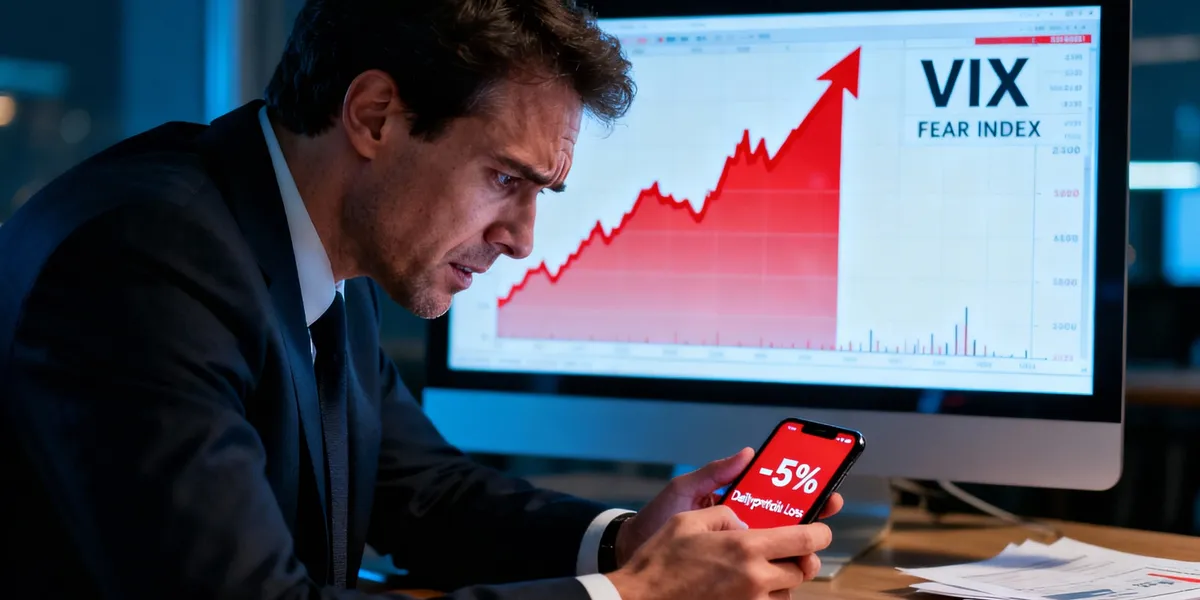
Imagine checking your portfolio and seeing a 5% drop in a single day. You refresh the app. The numbers haven’t budged. Your heart races, and panic creeps in—what just happened? That’s the reality for many investors when faced with a volatile stock market.
Whether you're investing for the long term or actively trading, sudden price swings can raise unsettling questions. Should you sell? Hold? Buy more? The emotional rollercoaster of a volatile stock market often leads people to make snap decisions—ones they may later regret. But what if you understood what was behind those fluctuations and had a plan?
Volatility isn’t just market noise—it reflects uncertainty, investor sentiment, and sometimes bigger economic forces at work. It can be intimidating, but it doesn’t have to control your strategy. And that’s where tools like the VIX come in. You’ve probably heard of the “fear index,” but what is it really tracking?
In this blog, we’ll explain what market volatility is and why it matters to you as an investor. We’ll look at how it affects stock prices and investor behaviour, when you should be concerned, and practical ways to handle it. You’ll also learn about the VIX—what it is, how to read it, and how VIX shares or related products might help protect your portfolio.
If market swings make you uneasy, you’re not alone. But with the right information and tools, you can respond thoughtfully—instead of reactively—and invest with greater confidence in any market condition.
What is market volatility, and why does it matter?
Understanding volatility in the market
Market volatility refers to how much and how quickly the price of an asset—like a stock—changes over time. If prices swing sharply in a short period, the market is considered volatile. For example, if a stock climbs 4% one day and falls 5% the next, that's high volatility. On the other hand, gradual changes suggest low volatility.
Volatility doesn’t always mean something is wrong. It often reflects uncertainty—about company performance, interest rates, elections, or global events. That uncertainty pushes investors to react strongly, leading to big price moves. Some of those reactions are based on emotion, not data, which adds even more noise to the market.
To track this, many investors look to the VIX. So, VIX, what is it? The VIX is a real-time market index that measures the market’s expectations for volatility over the next 30 days. It’s based on S&P 500 option prices. A high VIX usually means fear is rising; a low VIX suggests confidence or calm.
Types of volatility: historical vs. implied
There are two main ways to look at volatility: historical and implied. Historical volatility looks backwards. It measures how much a stock’s price has moved over the past days or weeks. Implied volatility looks forward. It estimates how much the market thinks prices will move in the near future, based on options prices.
For example, if Apple Inc. stock has a history of sharp ups and downs, that’s historical volatility. But if many traders suddenly pay more for options on Apple, expecting big moves, implied volatility increases—even if the stock hasn’t moved much yet.
Implied volatility is helpful for investors' planning. It can affect option pricing and signal where risks or opportunities may lie.
Why it’s critical for investors
Understanding volatility helps you avoid panic-driven mistakes. It puts price swings in context. If you expect some movement, a dip won’t surprise you. You’ll know it might be temporary—especially during earnings seasons or economic announcements.
Volatility also affects how you manage risk. If you're retired and depend on steady returns, you might want less exposure to volatile assets. If you’re younger and investing long-term, you can tolerate more volatility in pursuit of higher gains.
Plus, volatility creates opportunity. Traders often profit from short-term swings. Long-term investors may find better entry points during downturns. But to act wisely, you’ve got to understand how these price shifts impact stocks and investor decisions—which we’ll explore next.
How market volatility impacts stock prices and investor behaviour
Price fluctuations in volatile conditions
In a volatile stock market, prices can shift dramatically within minutes or hours. A company’s stock might surge 6% in the morning and give up all those gains by the afternoon. These swings often aren’t tied to changes in a company’s fundamentals, but rather to shifting investor sentiment or broader market fear.
This fast movement can reward short-term traders—but it often challenges long-term investors. Volatility increases uncertainty, making it harder to value stocks accurately. That’s why even strong companies like Microsoft or Amazon can dip 10% during market sell-offs driven by fear, not facts.
These unpredictable price movements often create entry points for disciplined investors, but they also raise the chance of timing mistakes if emotions take over.
The role of fear and speculation
Emotions move markets more than most people realise. When headlines signal economic trouble, fear spreads fast, and panic selling begins. As more investors sell, prices fall further, reinforcing the fear. It becomes a feedback loop.
Speculative trading adds another layer to this. In times of uncertainty, traders might pile into risky bets or exit positions quickly. This adds to price swings without necessarily reflecting long-term value. It’s why a tech IPO can soar 80% on day one—and drop 40% the next week.
To gauge market sentiment, investors turn to indicators such as the VIX. When this “fear gauge” spikes, it shows traders expect bigger short-term moves in the S&P 500. High readings usually indicate market stress.
Market volatility and trading volume
Volatility usually comes with rising trading volume. More investors buy and sell quickly, trying to profit or protect their portfolio. This surge in activity increases liquidity—but also drives faster price changes.
Think of it like a busy street during a storm—more cars, faster decisions, and higher chances of collisions. In the market, that means erratic pricing and short-lived rallies or dips.
Understanding these dynamics helps you avoid getting swept up in the noise. In the next section, we’ll show when volatility should concern investors—and when it’s just part of the ride.
When should investors worry about volatility?
Interpreting the VIX index stock price
The VIX index, often called the “fear index,” measures expected volatility in the S&P 500 over the next 30 days. When the VIX index stock price stays below 15, markets are generally calm. When it rises above 30, fear takes over, and sharp moves are likely.
But a high VIX doesn’t always mean a crash is coming. For example, in March 2020, the VIX jumped above 80 during the COVID-19 sell-off. That signalled extreme fear and a major downturn. By contrast, a VIX spike to 25 during a Federal Reserve announcement might reflect short-term nerves.
It helps to view the VIX as a thermometer for market stress—not a perfect forecast, but a useful signal. If the VIX steadily rises alongside falling stock prices, it may be time to reassess your risk exposure.
Short-term spikes vs. long-term trends
All markets have short bursts of volatility. A sudden drop after earnings, a weak jobs report, or geopolitical news can all cause temporary swings. Often, these settle within days or weeks.
But sustained volatility over several months might signal deeper problems. For example, in 2008, volatility stayed elevated for nearly a year as the global financial crisis unfolded. That wasn’t just noise—it reflected systemic risk.
You should watch for patterns. Is the market bouncing unpredictably every week, or is it trending downward with few signs of recovery? The first might be volatility without long-term impact. The second could require changes to your investment approach.
Economic or geopolitical triggers
Major events often cause unexpected market shocks. Interest rate hikes, inflation spikes, or wars can all spark a volatile stock market. The VIX tends to react quickly to headlines, even if the long-term outcomes are unclear.
For example, during the 2016 U.S. election and the 2022 Ukraine invasion, volatility spiked immediately. Uncertainty around inflation and central bank policy continues to impact markets today.
As an investor, focus on the cause behind volatility. If it's based on temporary news, you might ride it out. If it's tied to structural risks, you may need to rebalance your portfolio. Next, we’ll explore simple strategies that help manage volatility effectively.
Strategies to manage volatility risk in your investments
Diversification as a shield
One of the simplest ways to reduce the impact of a volatile stock market is diversification. It spreads your risk across different assets, sectors, or regions.
If tech stocks drop 10% in a week, but your portfolio also includes healthcare, energy, and international equities, the losses may be cushioned. In 2022, for example, energy stocks outperformed while tech lagged. A balanced mix would’ve helped reduce swings.
Diversification also includes bonds or alternative assets. When equities are volatile, high-quality bonds often hold or gain value. For retail investors, index funds or ETFs that cover multiple industries offer an easy way to diversify.
- Include global exposure to reduce reliance on one economy
- Mix growth stocks with dividend-paying or value stocks
- Balance equity holdings with fixed-income instruments
Using VIX shares as hedging tools
While the VIX measures expected market volatility, you can't buy it directly. But VIX shares or ETFs based on VIX futures let you hedge against turbulence.
These instruments tend to rise when markets fall, acting like insurance. For example, during the March 2020 crash, VIX ETFs surged over 30% in a few days while the S&P 500 dropped sharply. Some traders use them tactically when volatility surges.
However, VIX-related products aren't designed for long-term investing. They lose value over time when volatility falls. If you use these tools, keep positions small and short-term.
More importantly, keep perspective. A long-term focus, disciplined allocation, and regular rebalancing can help smooth your investment experience—even when markets shake.
Now, let’s answer common investor questions about the VIX index and how it relates to market volatility.
Disclaimer: The views and recommendations made above are those of individual analysts or brokerage companies, and not of Winvesta. We advise investors to check with certified experts before making any investment decisions.
Ready to earn on every trade?
Invest in 11,000+ US stocks & ETFs

Imagine checking your portfolio and seeing a 5% drop in a single day. You refresh the app. The numbers haven’t budged. Your heart races, and panic creeps in—what just happened? That’s the reality for many investors when faced with a volatile stock market.
Whether you're investing for the long term or actively trading, sudden price swings can raise unsettling questions. Should you sell? Hold? Buy more? The emotional rollercoaster of a volatile stock market often leads people to make snap decisions—ones they may later regret. But what if you understood what was behind those fluctuations and had a plan?
Volatility isn’t just market noise—it reflects uncertainty, investor sentiment, and sometimes bigger economic forces at work. It can be intimidating, but it doesn’t have to control your strategy. And that’s where tools like the VIX come in. You’ve probably heard of the “fear index,” but what is it really tracking?
In this blog, we’ll explain what market volatility is and why it matters to you as an investor. We’ll look at how it affects stock prices and investor behaviour, when you should be concerned, and practical ways to handle it. You’ll also learn about the VIX—what it is, how to read it, and how VIX shares or related products might help protect your portfolio.
If market swings make you uneasy, you’re not alone. But with the right information and tools, you can respond thoughtfully—instead of reactively—and invest with greater confidence in any market condition.
What is market volatility, and why does it matter?
Understanding volatility in the market
Market volatility refers to how much and how quickly the price of an asset—like a stock—changes over time. If prices swing sharply in a short period, the market is considered volatile. For example, if a stock climbs 4% one day and falls 5% the next, that's high volatility. On the other hand, gradual changes suggest low volatility.
Volatility doesn’t always mean something is wrong. It often reflects uncertainty—about company performance, interest rates, elections, or global events. That uncertainty pushes investors to react strongly, leading to big price moves. Some of those reactions are based on emotion, not data, which adds even more noise to the market.
To track this, many investors look to the VIX. So, VIX, what is it? The VIX is a real-time market index that measures the market’s expectations for volatility over the next 30 days. It’s based on S&P 500 option prices. A high VIX usually means fear is rising; a low VIX suggests confidence or calm.
Types of volatility: historical vs. implied
There are two main ways to look at volatility: historical and implied. Historical volatility looks backwards. It measures how much a stock’s price has moved over the past days or weeks. Implied volatility looks forward. It estimates how much the market thinks prices will move in the near future, based on options prices.
For example, if Apple Inc. stock has a history of sharp ups and downs, that’s historical volatility. But if many traders suddenly pay more for options on Apple, expecting big moves, implied volatility increases—even if the stock hasn’t moved much yet.
Implied volatility is helpful for investors' planning. It can affect option pricing and signal where risks or opportunities may lie.
Why it’s critical for investors
Understanding volatility helps you avoid panic-driven mistakes. It puts price swings in context. If you expect some movement, a dip won’t surprise you. You’ll know it might be temporary—especially during earnings seasons or economic announcements.
Volatility also affects how you manage risk. If you're retired and depend on steady returns, you might want less exposure to volatile assets. If you’re younger and investing long-term, you can tolerate more volatility in pursuit of higher gains.
Plus, volatility creates opportunity. Traders often profit from short-term swings. Long-term investors may find better entry points during downturns. But to act wisely, you’ve got to understand how these price shifts impact stocks and investor decisions—which we’ll explore next.
How market volatility impacts stock prices and investor behaviour
Price fluctuations in volatile conditions
In a volatile stock market, prices can shift dramatically within minutes or hours. A company’s stock might surge 6% in the morning and give up all those gains by the afternoon. These swings often aren’t tied to changes in a company’s fundamentals, but rather to shifting investor sentiment or broader market fear.
This fast movement can reward short-term traders—but it often challenges long-term investors. Volatility increases uncertainty, making it harder to value stocks accurately. That’s why even strong companies like Microsoft or Amazon can dip 10% during market sell-offs driven by fear, not facts.
These unpredictable price movements often create entry points for disciplined investors, but they also raise the chance of timing mistakes if emotions take over.
The role of fear and speculation
Emotions move markets more than most people realise. When headlines signal economic trouble, fear spreads fast, and panic selling begins. As more investors sell, prices fall further, reinforcing the fear. It becomes a feedback loop.
Speculative trading adds another layer to this. In times of uncertainty, traders might pile into risky bets or exit positions quickly. This adds to price swings without necessarily reflecting long-term value. It’s why a tech IPO can soar 80% on day one—and drop 40% the next week.
To gauge market sentiment, investors turn to indicators such as the VIX. When this “fear gauge” spikes, it shows traders expect bigger short-term moves in the S&P 500. High readings usually indicate market stress.
Market volatility and trading volume
Volatility usually comes with rising trading volume. More investors buy and sell quickly, trying to profit or protect their portfolio. This surge in activity increases liquidity—but also drives faster price changes.
Think of it like a busy street during a storm—more cars, faster decisions, and higher chances of collisions. In the market, that means erratic pricing and short-lived rallies or dips.
Understanding these dynamics helps you avoid getting swept up in the noise. In the next section, we’ll show when volatility should concern investors—and when it’s just part of the ride.
When should investors worry about volatility?
Interpreting the VIX index stock price
The VIX index, often called the “fear index,” measures expected volatility in the S&P 500 over the next 30 days. When the VIX index stock price stays below 15, markets are generally calm. When it rises above 30, fear takes over, and sharp moves are likely.
But a high VIX doesn’t always mean a crash is coming. For example, in March 2020, the VIX jumped above 80 during the COVID-19 sell-off. That signalled extreme fear and a major downturn. By contrast, a VIX spike to 25 during a Federal Reserve announcement might reflect short-term nerves.
It helps to view the VIX as a thermometer for market stress—not a perfect forecast, but a useful signal. If the VIX steadily rises alongside falling stock prices, it may be time to reassess your risk exposure.
Short-term spikes vs. long-term trends
All markets have short bursts of volatility. A sudden drop after earnings, a weak jobs report, or geopolitical news can all cause temporary swings. Often, these settle within days or weeks.
But sustained volatility over several months might signal deeper problems. For example, in 2008, volatility stayed elevated for nearly a year as the global financial crisis unfolded. That wasn’t just noise—it reflected systemic risk.
You should watch for patterns. Is the market bouncing unpredictably every week, or is it trending downward with few signs of recovery? The first might be volatility without long-term impact. The second could require changes to your investment approach.
Economic or geopolitical triggers
Major events often cause unexpected market shocks. Interest rate hikes, inflation spikes, or wars can all spark a volatile stock market. The VIX tends to react quickly to headlines, even if the long-term outcomes are unclear.
For example, during the 2016 U.S. election and the 2022 Ukraine invasion, volatility spiked immediately. Uncertainty around inflation and central bank policy continues to impact markets today.
As an investor, focus on the cause behind volatility. If it's based on temporary news, you might ride it out. If it's tied to structural risks, you may need to rebalance your portfolio. Next, we’ll explore simple strategies that help manage volatility effectively.
Strategies to manage volatility risk in your investments
Diversification as a shield
One of the simplest ways to reduce the impact of a volatile stock market is diversification. It spreads your risk across different assets, sectors, or regions.
If tech stocks drop 10% in a week, but your portfolio also includes healthcare, energy, and international equities, the losses may be cushioned. In 2022, for example, energy stocks outperformed while tech lagged. A balanced mix would’ve helped reduce swings.
Diversification also includes bonds or alternative assets. When equities are volatile, high-quality bonds often hold or gain value. For retail investors, index funds or ETFs that cover multiple industries offer an easy way to diversify.
- Include global exposure to reduce reliance on one economy
- Mix growth stocks with dividend-paying or value stocks
- Balance equity holdings with fixed-income instruments
Using VIX shares as hedging tools
While the VIX measures expected market volatility, you can't buy it directly. But VIX shares or ETFs based on VIX futures let you hedge against turbulence.
These instruments tend to rise when markets fall, acting like insurance. For example, during the March 2020 crash, VIX ETFs surged over 30% in a few days while the S&P 500 dropped sharply. Some traders use them tactically when volatility surges.
However, VIX-related products aren't designed for long-term investing. They lose value over time when volatility falls. If you use these tools, keep positions small and short-term.
More importantly, keep perspective. A long-term focus, disciplined allocation, and regular rebalancing can help smooth your investment experience—even when markets shake.
Now, let’s answer common investor questions about the VIX index and how it relates to market volatility.
Disclaimer: The views and recommendations made above are those of individual analysts or brokerage companies, and not of Winvesta. We advise investors to check with certified experts before making any investment decisions.
Ready to earn on every trade?
Invest in 11,000+ US stocks & ETFs


