NASDAQ AI stocks: Artificial intelligence investments for Indians
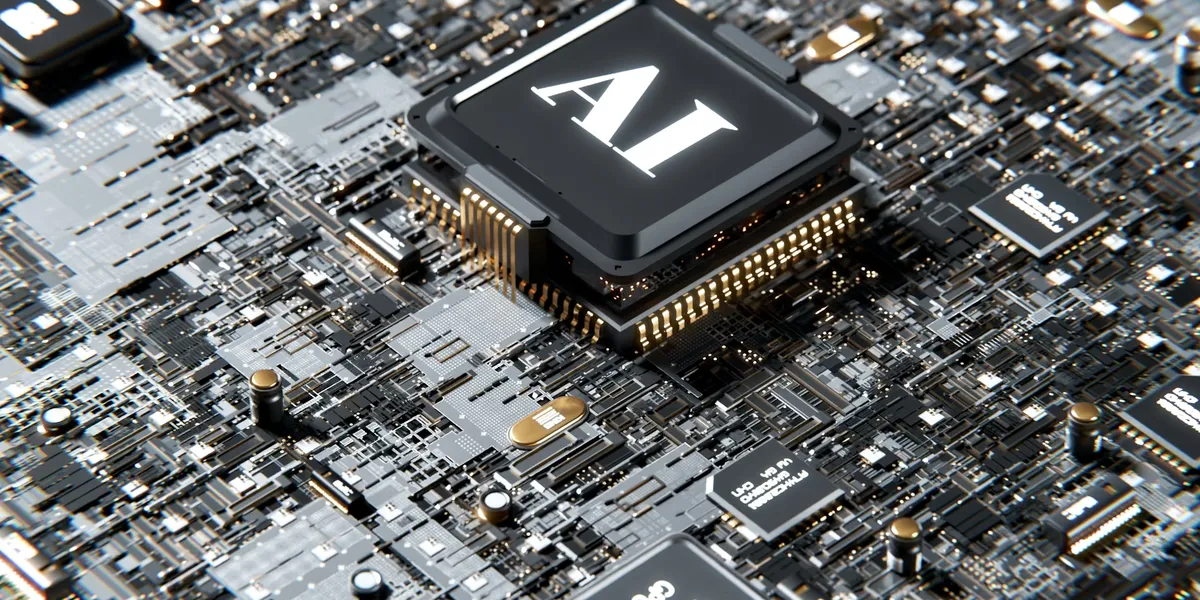
Artificial intelligence powers the apps you use, the ads you see, and the search results you read every day. NASDAQ hosts the world's most important AI companies, and their combined market value now exceeds $12 trillion. That figure equals roughly four times India's entire GDP. For Indian investors, this creates a rare wealth-creation window backed by decades of projected growth.
The global AI market stood at roughly $244 billion in 2025. Grand View Research projects it will reach $1.8 trillion by 2030 at a 36.6% compound annual growth rate. Indian investors can access these AI stocks and NASDAQ India opportunities through direct investing platforms or domestic mutual funds under the RBI's $250,000 annual LRS limit.
Here is your complete guide to the best NASDAQ AI stocks worth watching in 2026.
NVIDIA leads the AI chip revolution

NVIDIA dominates AI hardware like no other company in recent tech history. It controls 85–92% of the global AI GPU market. Q3 FY2026 results showed $57 billion in total revenue, up 62% year over year. Data centre revenue alone hit $51.2 billion, roughly 90% of total sales.
The Blackwell GPU architecture became the primary revenue driver by mid-2025. At CES 2026, CEO Jensen Huang unveiled the next-generation Rubin platform. NVIDIA claims Rubin delivers 3.5x faster training and 5x faster inference than Blackwell. Every primary cloud provider has committed to serve as a launch partner for Rubin chips, which are expected to ship in late 2026.
The NVIDIA AI investment case remains strong despite the stock's massive run. The stock gained 39% in calendar 2025 after a 171% surge in 2024. At a trailing P/E of roughly 43 times and a forward P/E near 27 times, it trades below its five-year average of 73 times. Q4 FY2026 guidance of $65 billion implies an annualised run rate above $260 billion. The PEG ratio is 1.22.
Competitive threats exist from AMD's MI350 chips and custom silicon from Google and Amazon. However, NVIDIA's CUDA software ecosystem and decade-long developer loyalty create a moat that rivals struggle to breach.
Microsoft bets big on cloud AI and OpenAI
The Microsoft AI strategy centres on its 27% ownership stake in OpenAI and the Azure cloud platform. OpenAI is committed to purchasing $250 billion of incremental Azure services as part of its restructuring deal.
Azure grew 39% in Q2 FY2026, with AI services contributing roughly 13 percentage points of that growth. Microsoft Cloud revenue crossed $50 billion in a single quarter for the first time. Microsoft 365 Copilot reached 15 million paid seats, up 160% year over year. GitHub Copilot crossed 1 million subscribers.
Record quarterly capital expenditure of $37.5 billion raised investor concerns about returns on massive infrastructure spending. The stock dropped 7–10% after Q2 earnings, despite beating estimates across all metrics.
At a trailing P/E of roughly 26 times, Microsoft trades below its five-year average of 32.5 times. This makes it the most reasonably valued mega-cap AI stock on NASDAQ. For investors seeking AI exposure with lower volatility, Microsoft warrants a close look.
Alphabet surprises everyone with its AI turnaround
Alphabet delivered the most dramatic AI comeback story of 2025. Its stock surged 65–73% for the year, beating every other mega-cap tech name. The Gemini 3 launch in November 2025 achieved state-of-the-art results across multiple benchmarks. In January 2026, Applechose Gemini over ChatGPT for its next-generation Siri
Q4 2025 results were outstanding. Revenue reached $113.8 billion, up 18% year over year. Google Cloud reported $17.66 billion in quarterly revenue, up 48%, with a backlog of $240 billion. The Gemini app now has over 750 million monthly active users.
DeepMind scored remarkable research breakthroughs in 2025. These included a gold-medal performance at the International Mathematical Olympiad and a quantum computing advance published in Nature. Alphabet also reduced Gemini 3 serving costs by 78% over the year.
The stock trades at roughly 32 times trailing earnings, a premium to its historical average of 23–25 times. However, the Apple deal and momentum in Google Cloud justify the re-rating. Alphabet guided 2026 capital expenditure at $175–185 billion, nearly double 2025 levels.
Meta turns AI into an advertising superpower.
Meta takes a different approach to AI than its peers. Instead of selling AI as a product, it uses artificial intelligence to supercharge its $201 billion advertising business.
Full-year 2025 revenue hit $201 billion, up 22%. AI-powered ad recommendation systems drove measurable gains across its platforms. A new runtime model produced a 3% increase in conversion rates across Instagram Feed, Stories, and Reels. Model unification under the Lattice framework delivered a 12% jump in ad quality scores.
Llama 4, released in April 2025, introduced a mixture-of-experts architecture. The Scout model runs at 109 billion parameters. Maverick operates at 400 billion parameters and powers the Meta AI assistant. Llama is the dominant open-source AI model ecosystem worldwide.
Reality Labs continued to lose money, with $19.2 billion in operating losses in 2025. However, Meta shifted its focutord Ray-Ban smart glasses, which saw sales triple. At a trailing P/E of roughly 28 times and a forward P/E near 22 times, Meta offers the best value among AI mega-caps.
Pure play AI companies offer high risk and high reward
Beyond mega-caps, NASDAQ hosts several pure-play AI companies at different stages of maturity.
Palantir Technologies reported FY2025 revenue of $4.48 billion, up 56% year over year. Its AI Platform became the go-to enterprise solution, with US commercial revenue more than doubling. FY2026 guidance of $7.18 billion shattered expectations. However, with a trailing P/E of roughly 221x, Palantir is the most expensive software stock on the market.
SoundHound AI focuses on voice AI for restaurants and automobiles. Q3 2025 revenue reached $42 million with a $1.2 billion contractual backlog. The company remains deeply unprofitable and trades around $7 per share.
UiPath quietly turned a corner in agentic automation. It achieved its first GAAP-profitable quarter in Q3 FY2026, with $411 million in revenue. Its Screen Agent ranked number one on the OSWorld benchmark in January 2026. At roughly $12 per share, UiPath offers reasonable risk-reward among pure-play names.
C3.ai remains the most troubled pure-play after a disastrous Q1 FY2026 earnings miss. The company pivots toward federal and defence contracts under new leadership. At roughly $10 per share, it carries significant execution risk.
AI ETF options give you diversified exposure.

Indian investors who prefer to spread risk across multiple AI stocks can choose from several AI ETF options available on US stock trading platforms.
The Global X AI and Technology ETF (AIQ) is the largest at roughly $7.6 billion in assets. It holds 89 stocks and returned 37.9% in 2025 with an expense ratio of 0.68%.
The Roundhill Generative AI and Technology ETF (CHAT) delivered the best 2025 returns at roughly 52.6%. This actively managed fund focuses purely on generative AI companies. Its expense ratio of 0.75% is the highest among AI ETFs.
The iShares Future AI and Tech ETF (ARTY) offers the lowest expense ratio at 0.47%. It returned 30% in 2025 and holds companies like Micron, TSMC, and AMD.
The First Trust NASDAQ AI and Robotics ETF (ROBT) offers broad diversification with 100 holdings. Its tiered approach classifies stocks as Engagers, Enablers, or Enhancers. The 1.86% dividend yield is notably the highest among AI ETFs.
These ETFs are well-suited for investors seeking exposure to the entire AI value chain without picking individual winners.
The long-term AI opportunity stretches across decades.
The AI investment thesis extends far beyond 2026. Agentic AI, where autonomous systems execute multi-step tasks without human input, is the dominant theme this year. Gartner predicts a third of enterprise software will include agentic AI by 2028, up from less than 1% in 2024. The generative AI market specifically will grow from $16.9 billion in 2024 to $109.4 billion by 2030 at a 37.6% CAGR.
The AI chip market alone will reach $226–333 billion by 2030. AMD CEO Lisa Su raised her estimate of the AI accelerator chip total addressable market to $1 trillion by 2030. PwC estimates that AI could contribute $15.7 trillion to the global economy by 2030, exceeding the combined GDP of China and India. The combined 2026 AI capital expenditure from just Alphabet, Meta, and Microsoft approaches $400 billion. These companies are betting their futures on artificial intelligence infrastructure at a scale never seen before.
How Indians can invest in NASDAQ AI stocks
The regulatory framework centres on RBI's Liberalised Remittance Scheme (LRS), which permits each Indian resident to remit up to $250,000 per financial year.
Learn how LRS works for US stock investing before you start.
Budget 2025 raised the TCS-free threshold for investment remittances to ₹10 lakh. Long-term capital gains on US stocks held over 24 months attract a flat 12.5% tax rate.
Direct investing platforms such as Winvesta, INDmoney, and Groww offer fractional shares starting at $1. Interactive Brokers suits advanced traders seeking the lowest forex costs. The emerging GIFT City route enables trading in roughly 50 of the top US stocks through Indian demat accounts. One critical risk to note: the US estate tax of 40% applies to non-US persons holding US assets exceeding $60,000. The mutual fund route avoids this risk entirely.
The mutual fund route remains popular despite constraints.
See the complete list of Indian mutual funds with NASDAQ exposure currently available.
The Navi NASDAQ 100 FoF charges just 0.23% in expenses and accepts SIPs from ₹100. The Kotak NASDAQ 100 FoF invests through an Ireland-domiciled ETF, avoiding US estate tax entirely.
Indian investors also benefit from a structural currency tailwind. The rupee has depreciated 4–5% annually against the dollar over the past decade. This adds to returns when you convert dollar gains back to rupees.
For investors with a five-year horizon, NASDAQ AI stocks represent one of the most compelling wealth-creation opportunities of this generation. Start with what matches your risk appetite, hold for the long term, and let compounding do the heavy lifting.
Disclaimer: The views and recommendations made above are those of individual analysts or brokerage companies, and not of Winvesta. We advise investors to check with certified experts before making any investment decisions.
Ready to earn on every trade?
Invest in 11,000+ US stocks & ETFs

Table of Contents
Artificial intelligence powers the apps you use, the ads you see, and the search results you read every day. NASDAQ hosts the world's most important AI companies, and their combined market value now exceeds $12 trillion. That figure equals roughly four times India's entire GDP. For Indian investors, this creates a rare wealth-creation window backed by decades of projected growth.
The global AI market stood at roughly $244 billion in 2025. Grand View Research projects it will reach $1.8 trillion by 2030 at a 36.6% compound annual growth rate. Indian investors can access these AI stocks and NASDAQ India opportunities through direct investing platforms or domestic mutual funds under the RBI's $250,000 annual LRS limit.
Here is your complete guide to the best NASDAQ AI stocks worth watching in 2026.
NVIDIA leads the AI chip revolution
NVIDIA dominates AI hardware like no other company in recent tech history. It controls 85–92% of the global AI GPU market. Q3 FY2026 results showed $57 billion in total revenue, up 62% year over year. Data centre revenue alone hit $51.2 billion, roughly 90% of total sales.
The Blackwell GPU architecture became the primary revenue driver by mid-2025. At CES 2026, CEO Jensen Huang unveiled the next-generation Rubin platform. NVIDIA claims Rubin delivers 3.5x faster training and 5x faster inference than Blackwell. Every primary cloud provider has committed to serve as a launch partner for Rubin chips, which are expected to ship in late 2026.
The NVIDIA AI investment case remains strong despite the stock's massive run. The stock gained 39% in calendar 2025 after a 171% surge in 2024. At a trailing P/E of roughly 43 times and a forward P/E near 27 times, it trades below its five-year average of 73 times. Q4 FY2026 guidance of $65 billion implies an annualised run rate above $260 billion. The PEG ratio is 1.22.
Competitive threats exist from AMD's MI350 chips and custom silicon from Google and Amazon. However, NVIDIA's CUDA software ecosystem and decade-long developer loyalty create a moat that rivals struggle to breach.
Microsoft bets big on cloud AI and OpenAI
The Microsoft AI strategy centres on its 27% ownership stake in OpenAI and the Azure cloud platform. OpenAI is committed to purchasing $250 billion of incremental Azure services as part of its restructuring deal.
Azure grew 39% in Q2 FY2026, with AI services contributing roughly 13 percentage points of that growth. Microsoft Cloud revenue crossed $50 billion in a single quarter for the first time. Microsoft 365 Copilot reached 15 million paid seats, up 160% year over year. GitHub Copilot crossed 1 million subscribers.
Record quarterly capital expenditure of $37.5 billion raised investor concerns about returns on massive infrastructure spending. The stock dropped 7–10% after Q2 earnings, despite beating estimates across all metrics.
At a trailing P/E of roughly 26 times, Microsoft trades below its five-year average of 32.5 times. This makes it the most reasonably valued mega-cap AI stock on NASDAQ. For investors seeking AI exposure with lower volatility, Microsoft warrants a close look.
Alphabet surprises everyone with its AI turnaround
Alphabet delivered the most dramatic AI comeback story of 2025. Its stock surged 65–73% for the year, beating every other mega-cap tech name. The Gemini 3 launch in November 2025 achieved state-of-the-art results across multiple benchmarks. In January 2026, Applechose Gemini over ChatGPT for its next-generation Siri
Q4 2025 results were outstanding. Revenue reached $113.8 billion, up 18% year over year. Google Cloud reported $17.66 billion in quarterly revenue, up 48%, with a backlog of $240 billion. The Gemini app now has over 750 million monthly active users.
DeepMind scored remarkable research breakthroughs in 2025. These included a gold-medal performance at the International Mathematical Olympiad and a quantum computing advance published in Nature. Alphabet also reduced Gemini 3 serving costs by 78% over the year.
The stock trades at roughly 32 times trailing earnings, a premium to its historical average of 23–25 times. However, the Apple deal and momentum in Google Cloud justify the re-rating. Alphabet guided 2026 capital expenditure at $175–185 billion, nearly double 2025 levels.
Meta turns AI into an advertising superpower.
Meta takes a different approach to AI than its peers. Instead of selling AI as a product, it uses artificial intelligence to supercharge its $201 billion advertising business.
Full-year 2025 revenue hit $201 billion, up 22%. AI-powered ad recommendation systems drove measurable gains across its platforms. A new runtime model produced a 3% increase in conversion rates across Instagram Feed, Stories, and Reels. Model unification under the Lattice framework delivered a 12% jump in ad quality scores.
Llama 4, released in April 2025, introduced a mixture-of-experts architecture. The Scout model runs at 109 billion parameters. Maverick operates at 400 billion parameters and powers the Meta AI assistant. Llama is the dominant open-source AI model ecosystem worldwide.
Reality Labs continued to lose money, with $19.2 billion in operating losses in 2025. However, Meta shifted its focutord Ray-Ban smart glasses, which saw sales triple. At a trailing P/E of roughly 28 times and a forward P/E near 22 times, Meta offers the best value among AI mega-caps.
Pure play AI companies offer high risk and high reward
Beyond mega-caps, NASDAQ hosts several pure-play AI companies at different stages of maturity.
Palantir Technologies reported FY2025 revenue of $4.48 billion, up 56% year over year. Its AI Platform became the go-to enterprise solution, with US commercial revenue more than doubling. FY2026 guidance of $7.18 billion shattered expectations. However, with a trailing P/E of roughly 221x, Palantir is the most expensive software stock on the market.
SoundHound AI focuses on voice AI for restaurants and automobiles. Q3 2025 revenue reached $42 million with a $1.2 billion contractual backlog. The company remains deeply unprofitable and trades around $7 per share.
UiPath quietly turned a corner in agentic automation. It achieved its first GAAP-profitable quarter in Q3 FY2026, with $411 million in revenue. Its Screen Agent ranked number one on the OSWorld benchmark in January 2026. At roughly $12 per share, UiPath offers reasonable risk-reward among pure-play names.
C3.ai remains the most troubled pure-play after a disastrous Q1 FY2026 earnings miss. The company pivots toward federal and defence contracts under new leadership. At roughly $10 per share, it carries significant execution risk.
AI ETF options give you diversified exposure.
Indian investors who prefer to spread risk across multiple AI stocks can choose from several AI ETF options available on US stock trading platforms.
The Global X AI and Technology ETF (AIQ) is the largest at roughly $7.6 billion in assets. It holds 89 stocks and returned 37.9% in 2025 with an expense ratio of 0.68%.
The Roundhill Generative AI and Technology ETF (CHAT) delivered the best 2025 returns at roughly 52.6%. This actively managed fund focuses purely on generative AI companies. Its expense ratio of 0.75% is the highest among AI ETFs.
The iShares Future AI and Tech ETF (ARTY) offers the lowest expense ratio at 0.47%. It returned 30% in 2025 and holds companies like Micron, TSMC, and AMD.
The First Trust NASDAQ AI and Robotics ETF (ROBT) offers broad diversification with 100 holdings. Its tiered approach classifies stocks as Engagers, Enablers, or Enhancers. The 1.86% dividend yield is notably the highest among AI ETFs.
These ETFs are well-suited for investors seeking exposure to the entire AI value chain without picking individual winners.
The long-term AI opportunity stretches across decades.
The AI investment thesis extends far beyond 2026. Agentic AI, where autonomous systems execute multi-step tasks without human input, is the dominant theme this year. Gartner predicts a third of enterprise software will include agentic AI by 2028, up from less than 1% in 2024. The generative AI market specifically will grow from $16.9 billion in 2024 to $109.4 billion by 2030 at a 37.6% CAGR.
The AI chip market alone will reach $226–333 billion by 2030. AMD CEO Lisa Su raised her estimate of the AI accelerator chip total addressable market to $1 trillion by 2030. PwC estimates that AI could contribute $15.7 trillion to the global economy by 2030, exceeding the combined GDP of China and India. The combined 2026 AI capital expenditure from just Alphabet, Meta, and Microsoft approaches $400 billion. These companies are betting their futures on artificial intelligence infrastructure at a scale never seen before.
How Indians can invest in NASDAQ AI stocks
The regulatory framework centres on RBI's Liberalised Remittance Scheme (LRS), which permits each Indian resident to remit up to $250,000 per financial year.
Learn how LRS works for US stock investing before you start.
Budget 2025 raised the TCS-free threshold for investment remittances to ₹10 lakh. Long-term capital gains on US stocks held over 24 months attract a flat 12.5% tax rate.
Direct investing platforms such as Winvesta, INDmoney, and Groww offer fractional shares starting at $1. Interactive Brokers suits advanced traders seeking the lowest forex costs. The emerging GIFT City route enables trading in roughly 50 of the top US stocks through Indian demat accounts. One critical risk to note: the US estate tax of 40% applies to non-US persons holding US assets exceeding $60,000. The mutual fund route avoids this risk entirely.
The mutual fund route remains popular despite constraints.
See the complete list of Indian mutual funds with NASDAQ exposure currently available.
The Navi NASDAQ 100 FoF charges just 0.23% in expenses and accepts SIPs from ₹100. The Kotak NASDAQ 100 FoF invests through an Ireland-domiciled ETF, avoiding US estate tax entirely.
Indian investors also benefit from a structural currency tailwind. The rupee has depreciated 4–5% annually against the dollar over the past decade. This adds to returns when you convert dollar gains back to rupees.
For investors with a five-year horizon, NASDAQ AI stocks represent one of the most compelling wealth-creation opportunities of this generation. Start with what matches your risk appetite, hold for the long term, and let compounding do the heavy lifting.
Disclaimer: The views and recommendations made above are those of individual analysts or brokerage companies, and not of Winvesta. We advise investors to check with certified experts before making any investment decisions.
Ready to earn on every trade?
Invest in 11,000+ US stocks & ETFs


