FMCG stock analysis: Moats and market share
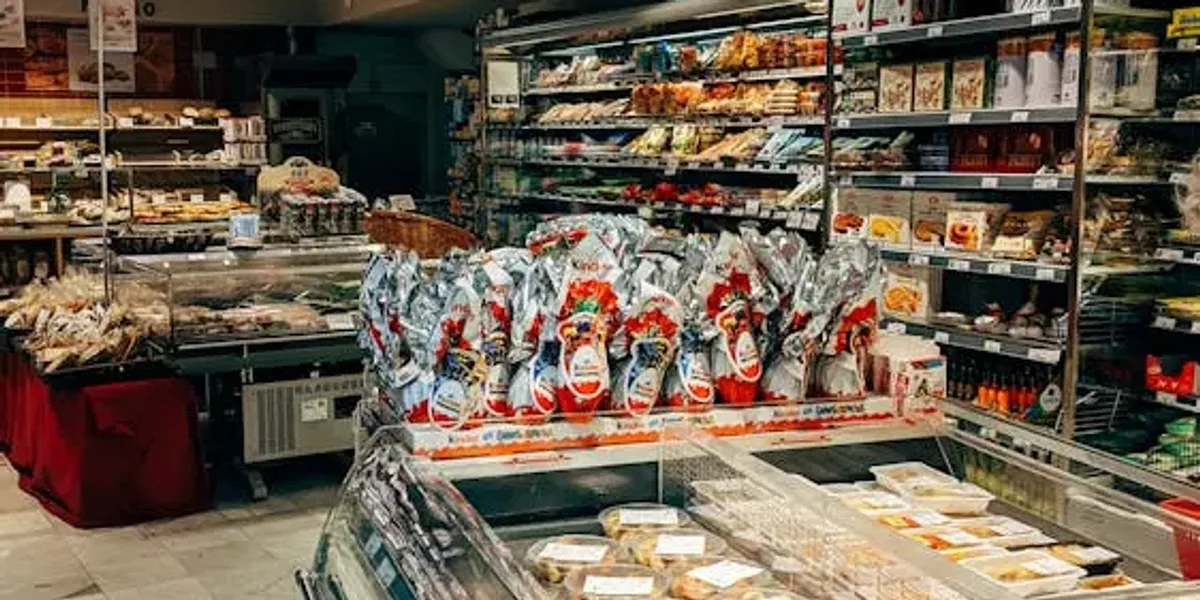
The US FMCG sector offers Indian investors access to some of the world's strongest brands. However, 2025-2026 presents a pivotal inflexion point. After three years of aggressive, price-led growth, consumer staples companies now face the reckoning: volume declines, private label gaining share to an all-time high of 21.3%, and GLP-1 weight-loss drugs reshaping consumption patterns among 23% of US households.
Yet within this challenging environment, certain companies demonstrate the durable competitive moats that Warren Buffett calls "economic castles" protected by sustainable advantages. Companies like Coca-Cola, Procter & Gamble, and Colgate-Palmolive have proven their pricing power through the recent inflationary cycle. This guide examines how Indian investors can identify, measure, andcapitalisee on these moats while avoiding value traps masquerading as defensive plays.
Mastering fundamental analysis tools for Indian investors lays the foundation for evaluating specialised consumer-goods metrics.
Understanding brand moats in FMCG investing
A brand moat in FMCG represents the psychological barrier that protects a company's pricing power and market share from competitive assault. Warren Buffett defines it best: if you have the power to raise prices without losing business to a competitor, you have a very good business.
Coca-Cola exemplifies the ultimate brand moat. According to Interbrand's Best Global Brands 2024, Coca-Cola ranks seventh globally with a brand value of $61.2 billion, growing 5% year-over-year. Kantar BrandZ values it even higher at $98.7 billion, making it the world's most valuable food and beverage brand. The company's Brand Strength Index of 93.4 out of 100 represents the highest score among the top 50 non-alcoholic beverage brands.
This strength translates directly to business results. Coca-Cola delivers 1.9 billion servings daily across 200+ countries and commands a 46% share of the US carbonated soft drinks market. Between 2022 and 2024, Coca-Cola implemented 6-8% annual price increases while maintaining stable North American volumes and expanding gross margins to 62.4% in Q2 2025.
The brand moat test is elegantly simple: when a company raises prices, do consumers stay? Procter & Gamble raised prices by 10% in Q1 2023 and 9% across FY2023. Volumes declined only 3% before recovering, while gross margins expanded 350 basis points to 51.4% by FY2024.
Kantar's Brand Footprint study shows Coca-Cola has been the most-chosen FMCG brand globally for 12 consecutive years, with 8.3 billion Consumer Reach Points. Colgate ranks second with 4.4 billion Consumer Reach Points, demonstrating exceptional brand loyalty: 67% of users remain with the brand for 5+ years.
Distribution networks as competitive fortresses
Distribution represents perhaps the most underappreciated moat in FMCG. An upstart competitor faces significant financial losses as it seeks to achieve the scale and density required to absorb the substantial capital expenditures and fixed costs associated with a global delivery network.
Coca-Cola's bottling system spans 200-225 independent partners, 700,000+ employees, and reaches 24 million retail customer outlets globally. The asset-light franchise model enables 29%+ operating margins while partners bear capital-intensive distribution investments. The company operates more than 52,000 Coca-Cola Freestyle machines in the US, offering 165+ drink varieties.
PepsiCo's Frito-Lay Direct Store Delivery system represents the largest in North America: nearly 15,000 routes making over 500,000 weekly service calls to approximately 315,000 customers. The operation employs 25,000+ frontline workers across 200+ distribution centres with a fleet of 23,000 vehicles, including the largest commercial EV truck fleet in the US.
The economic advantage is substantial. DSD products experience 2-4% lower out-of-stock rates than warehouse-delivered alternatives. DSD represents only 24% of grocery unit sales but generates 53% of category profits.
E-commerce distribution has evolved rapidly. FMCG e-commerce grew 11% in 2024, with pet care achieving 30% online penetration, consumer health at 23%, and beauty/personal care at 22%. US online grocery sales reached $327.7 billion in 2025, projected to hit $363.8 billion in 2026. Walmart dominates with 31.6% market share, followed by Amazon at 22.6%.
Market share trends reveal competitive positioning.

Market share stability indicates moat durability. In FMCG, dominant positions often persist for decades because consumer habits are sticky and shelf-space relationships compound over time.
Carbonated soft drinks remain a Coca-Cola duopoly. Coca-Cola Company holds approximately 46% of the US market, a share that has remained stable for decades. PepsiCo holds 24-25%, declining slightly. Keurig Dr Pepper holds approximately 21%. Private label and others hold 8-10%. Notably, Dr Pepper tied Pepsi's individual brand share at 8.3% in 2023-2024, marking a significant competitive shift.
Frito-Lay dominates snacks with a commanding share. The US salty snacks market share stands at approximately 60%. Potato chips market share under the Lay's brand reaches 41%. The US savoury snacks overall market share is 40%, while the global savoury snacks share is 30%. However, Frito-Lay lost 50 basis points of market share in the 12 weeks ending June 2024 as consumer price sensitivity increased.
Oral care demonstrates exceptional concentration. Colgate-Palmolive holds 41.4% global toothpaste share and 32.2% global manual toothbrush share. The top 3 companies control approximately 70% of the combined market share. Private label penetration remains remarkably low at only 3% in oral care.
Pet food shows a high concentration among the top players. Nestlé Purina holds approximately 32% of the global market, with $22.5 billion in revenue. Mars Petcare holds approximately 29% of the market, with $22.0 billion in revenue. Hill's from Colgate accounts for approximately 6% of revenue, at $4.4 billion. The top 5 control approximately 82% of the market, making it one of the most concentrated FMCG categories.
Private label penetration reached all-time highs in 2024-2025. Dollar market share reached 21.2-21.3%, a record high. Unit market share reached 23.2-23.5%. Dollar sales reached $271 billion in 2024, projected to reach $280-283 billion in 2025. Now 60% of shoppers trust store brands, and 71% rate quality equal to or better than national brands.
Volume versus value growth reveals sustainability.y
The distinction between volume growth and value growth is critical for FMCG investors. Volume-led growth indicates genuine demand expansion. Price-led growth risks consumer pushback and eventual erosion.
The 2022-2024 cycle was overwhelmingly price-driven. Bain & company found that three-quarters of 2023's growth came from price increases. In the US and Europe, price increases accounted for 95% of revenue growth. This created vulnerability as consumers increasingly pushed back.
Procter & Gamble's transition illustrates the pattern. FY2024 organic sales grew 4% with flat volume, 4% price, and flat mix. FY2025 organic sales grew 2% with 1% volume, 1% price, and flat mix. Q1 FY2026 organic sales grew 2% with balanced contributions. The shift from purely pricing-led to more balanced contributions shows healthier dynamics.
PepsiCo faces the most concerning volume trends. Frito-Lay North America volumes declined 2% in Q2 2024, 1.5% in Q3 2024, and 2% in Q4 2024. Beverages North America volumes declined 5% in Q2 2024, 3% in Q3 2024, and 6% in Q4 2024. CEO Ramon Laguarta acknowledged consumer pushback and the need to give value back to consumers.
Unilever stands out as the volume growth leader. Full-year 2024 underlying sales grew 4.2% with 2.9% volume growth and only 1.3% pricing. Power Brands achieved 5.3% underlying sales growth, with 3.8% volume growth. This represents four consecutive quarters of underlying volume growth above 2%.
Raw material costs are driving margin volatility.
Commodity costs are a critical factor in FMCG profitability. The 2024-2025 period presented extreme divergence across inputs.
The cocoa crisis reached historic proportions. Prices reached an all-time high of $12,931 per metric ton in December 2024, representing a 300-400% increase from the 2022 baseline of around $2,000 per metric ton. West Africa supplies 60-70% of global cocoa, but production declined 14% in the 2023-24 season to 4.2 million metric tons. Inventory levels fell to their lowest in 46 years.
The impact on chocolate companies is severe. Mondelez expects 2025 EPS to decline 10-15% with a gross margin hit of 650 basis points in Q4 2024. Hershey expects EPS to decline 30-40% and gross margin to be hit by 650-700 basis points. Mondelez estimates cocoa costs will increase by 91% in 2025, with an additional 12% in 2026.
Coffee prices reached record highs. Arabica exceeded $4 per pound for the first time in February 2025, up 70% year-over-year. Robusta almost doubled in 2024, reaching its highest levels in 30 years. The drought in Brazil and the heat waves in Vietnam drove the surge.
Diversified companies show resilience. P&G expects approximately $200 million after-tax headwind from unfavourable commodity costs in FY2026, but productivity savings of 240 basis points more than offset this. Coca-Cola expanded its underlying gross margin by approximately 170 basis points in FY2024 despite higher commodity costs through strong pricing and stable input management.
Pricing power separates winners from losers.

Pricing power represents the clearest manifestation of a brand moat. The ability to raise prices without losing proportionate volume distinguishes companies with genuine competitive advantages.
Coca-Cola demonstrates exceptional pricing power. Q1 2025 organic revenue growth reached 6%, driven primarily by price and mix. Q2 2025 gross margins expanded to 62.4%, up 160 basis points year-over-year. Operating margins surged to 34.1%, up 320 basis points year-over-year. Coca-Cola Zero Sugar grew 9% volume full-year 2024 and 13% in Q4. Price elasticity studies show that 10% soft drink price increase leads to only 6-8% consumption decline.
Colgate-Palmolive maintains pricing discipline with volume. FY2024 organic sales grew 7.4% with positive volume contribution. Q4 2024 volume growth reached 2.5%, with mid-single digit growth in Oral Care specifically. Gross profit margin expanded to 60.3% in Q4 2024. The company achieved its sixth consecutive year of 3-5%+ organic growth.
P&G's pricing power is proven but reaching limits. FY2023 prices increased 9% while volumes fell only 3%. US private-label share remained relatively steady at 16% despite aggressive price increases. Gross margin reached 51.4%, expanding 350 basis points driven by productivity, pricing, and lower commodity costs.
Weaker pricing power indicators appear at other companies. PepsiCo reports volumes declined 2-6% despite price increases, with evident consumer pushback. Mondelez reports a 11% decline in chocolate volume in Q3 2025, as cocoa pricing passed through. General Mills shows volume struggles across most categories despite pricing.
Current valuations for major FMCG stocks
Consumer staples valuations have compressed during 2024-2025 as investors rotated toward AI and technology stocks. The sector traded at approximately 7% discount to the S&P 500 forward P/E as of January 2026, which is unusual for traditionally premium-valued defensive stocks.
Understanding essential financial ratios for Indian investors helps decode these FMCG valuation dynamics and identify attractive entry points.
Procter & Gamble trades at a TTM P/E of 21.4 and a forward P/E of 20.1 with a dividend yield of 2.82% and a 69-year dividend increase streak. Coca-Cola trades at a TTM P/E of 23.7 and a forward P/E of 21.2 with a dividend yield of 2.84% and a 63-year dividend increase streak. PepsiCo trades at a TTM P/E of 18.6 and a forward P/E of 17.8 with a dividend yield of approximately 3.5% and a 51-year dividend increase streak.
Colgate-Palmolive trades at a TTM P/E of 23.7 and a forward P/E of 22.5 with a dividend yield of 2.54% and a 54-year dividend increase streak. General Mills trades at a TTM P/E of 9.7 and a forward P/E of approximately 10, with a dividend yield of 5.48% and a 7-year dividend increase streak. Kraft Heinz trades at a TTM P/E of 13.0 with a dividend yield of 6.75%.
Six mega-cap FMCG stocks qualify as Dividend Kings with 50+ consecutive years of dividend increases. P&G leads with 69 years, followed by Coca-Cola with 63 years, Colgate-Palmolive with 54 years, and PepsiCo with 51 years. For Indian investors seeking stable income with currency diversification, these represent among the safest dividend streams globally.
Value opportunities include General Mills at a P/E of 9.7 with a yield of 5.48% and Kraft Heinz at a P/E of 13 with a yield of 6.75%. Both trade at meaningful discounts to sector averages.
Major company profiles for January 2026
Procter & Gamble generated $84 billion in revenue in FY2024. The company operates across five segments: Fabric & Home Care (35%), Baby/Feminine/Family Care (24%), Beauty (18%), Health Care (14%), and Grooming (8%). P&G owns 20+ billion-dollar brands, including Tide, Pampers, Gillette, Charmin, and Pantene. FY2024 core EPS reached $6.59, up 12% year-over-year, withan operating cash flow of $19.8 billion. The geographic split shows North America at 52%, Europe at 22%, and Greater China at 7%.
Coca-Cola generated $47 billion in revenue in FY2024. Organic revenue grew 12% for FY2024, with Q4 accelerating to 14%. Unit case volume grew 1% globally, led by Brazil, India, and Mexico. Coca-Cola Zero Sugar delivered 9% volume growth for the full yearand 13% in Q4 across all regions. The company generates $10.8 billion of free cash flow annually. Operating margin reached 34.1% in recent quarters.
PepsiCo generated $92 billion in revenue in FY2024. The company's diversification, with snacks accounting for 43% of operating profit and beverages 15%, provides stability. However, both segments face volume pressure. Frito-Lay North America volumes declined 2-3% throughout 2024, while PBNA volumes fell 3-6%. International operations performed better with Latin America up 10% revenue.
Colgate-Palmolive generated $20.1 billionin revenue in FY2024. The company crossed $20 billion for the first time in its history, achieving 7.4% organic sales growth across all divisions. Oral care accounts for 42% of sales and a 41.4% global toothpaste market share. International markets account for approximately 70% of revenue, with strong exposure to emerging markets. GAAP EPS jumped 27% to $3.51.
Red flags that signal trouble for FMCG investments
Persistent volume declines represent the clearest warning sign. Q1 2025 saw average volume decline 1.0% across major CPG players, with 6 of 11 companies posting flat or declining volumes. PepsiCo's continued volume weakness of -1.3% in Q1 2025, despite pricing moderation, suggests structural demand challenges.
Over-reliance on pricing without volume support indicates unsustainable growth. When organic growth comes primarily from price versus volume, consumer demand is eroding.
Private label share gains in core categories threaten branded positioning. The bakery's private-label share. is 56.7%. Beverages show 4.8% growth. Refrigerated foods show 13% growth. Frozen foods show 3.8% growth.
High US concentration creates vulnerability to domestic softness—companies with 55%+ US revenue face greater exposure than globally diversified competitors with strong emerging market presence.
Financial warning signs include operating profit declining meaningfully, gross margin compression without commodity justification, excessive promotional dependency when 20-30% of weekly sales require discounts, and debt from prior acquisitions limiting strategic flexibility.
GLP-1 drugs represent a structural headwind for snack-heavy portfolios. Currently, 23% of US households have a GLP-1 user. By 2030, GLP-1 user households are projected to represent 35% of all food and beverage units sold. Cornell University research found that households with GLP-1 users cut grocery spending by 6%. The categories most affected include savoury snacks, down approximately 10%, and sweets, down up to 11.1%.
Companies with genuine brand moats have proven their pricing power through the 2022-2025 inflationary cycle while maintaining or recovering volumes. These Dividend Kings offer Indian investors stable, growing income streams with 50-69 years of consecutive dividend increases, providing both currency diversification and defensive portfolio positioning.
Coca-Cola emerges as best-positioned, one with an exceptional brand moat, proven pricing power (62.4% gross margin), volume growth in key products, lower GLP-1 exposure than snack companies, and stronger emerging-market diversification than PepsiCo. Procter & Gamble offers the most diversified FMCG exposure across categories with 20+ billion-dollar brands and industry-leading productivity savings.
For Indian investors, the familiar brands offer not just product recognition but proven competitive durability. The brands that dominate Indian shelves represent the same moats that protect shareholder value in developed markets. As India's consumption story unfolds, these global FMCG giants will participate directly. At the same time, their US operations provide the defensive foundation that has made consumer staples a cornerstone of conservative investment portfolios for generations.
Disclaimer: The views and recommendations made above are those of individual analysts or brokerage companies, and not of Winvesta. We advise investors to check with certified experts before making any investment decisions.
Ready to earn on every trade?
Invest in 11,000+ US stocks & ETFs

Table of Contents
The US FMCG sector offers Indian investors access to some of the world's strongest brands. However, 2025-2026 presents a pivotal inflexion point. After three years of aggressive, price-led growth, consumer staples companies now face the reckoning: volume declines, private label gaining share to an all-time high of 21.3%, and GLP-1 weight-loss drugs reshaping consumption patterns among 23% of US households.
Yet within this challenging environment, certain companies demonstrate the durable competitive moats that Warren Buffett calls "economic castles" protected by sustainable advantages. Companies like Coca-Cola, Procter & Gamble, and Colgate-Palmolive have proven their pricing power through the recent inflationary cycle. This guide examines how Indian investors can identify, measure, andcapitalisee on these moats while avoiding value traps masquerading as defensive plays.
Mastering fundamental analysis tools for Indian investors lays the foundation for evaluating specialised consumer-goods metrics.
Understanding brand moats in FMCG investing
A brand moat in FMCG represents the psychological barrier that protects a company's pricing power and market share from competitive assault. Warren Buffett defines it best: if you have the power to raise prices without losing business to a competitor, you have a very good business.
Coca-Cola exemplifies the ultimate brand moat. According to Interbrand's Best Global Brands 2024, Coca-Cola ranks seventh globally with a brand value of $61.2 billion, growing 5% year-over-year. Kantar BrandZ values it even higher at $98.7 billion, making it the world's most valuable food and beverage brand. The company's Brand Strength Index of 93.4 out of 100 represents the highest score among the top 50 non-alcoholic beverage brands.
This strength translates directly to business results. Coca-Cola delivers 1.9 billion servings daily across 200+ countries and commands a 46% share of the US carbonated soft drinks market. Between 2022 and 2024, Coca-Cola implemented 6-8% annual price increases while maintaining stable North American volumes and expanding gross margins to 62.4% in Q2 2025.
The brand moat test is elegantly simple: when a company raises prices, do consumers stay? Procter & Gamble raised prices by 10% in Q1 2023 and 9% across FY2023. Volumes declined only 3% before recovering, while gross margins expanded 350 basis points to 51.4% by FY2024.
Kantar's Brand Footprint study shows Coca-Cola has been the most-chosen FMCG brand globally for 12 consecutive years, with 8.3 billion Consumer Reach Points. Colgate ranks second with 4.4 billion Consumer Reach Points, demonstrating exceptional brand loyalty: 67% of users remain with the brand for 5+ years.
Distribution networks as competitive fortresses
Distribution represents perhaps the most underappreciated moat in FMCG. An upstart competitor faces significant financial losses as it seeks to achieve the scale and density required to absorb the substantial capital expenditures and fixed costs associated with a global delivery network.
Coca-Cola's bottling system spans 200-225 independent partners, 700,000+ employees, and reaches 24 million retail customer outlets globally. The asset-light franchise model enables 29%+ operating margins while partners bear capital-intensive distribution investments. The company operates more than 52,000 Coca-Cola Freestyle machines in the US, offering 165+ drink varieties.
PepsiCo's Frito-Lay Direct Store Delivery system represents the largest in North America: nearly 15,000 routes making over 500,000 weekly service calls to approximately 315,000 customers. The operation employs 25,000+ frontline workers across 200+ distribution centres with a fleet of 23,000 vehicles, including the largest commercial EV truck fleet in the US.
The economic advantage is substantial. DSD products experience 2-4% lower out-of-stock rates than warehouse-delivered alternatives. DSD represents only 24% of grocery unit sales but generates 53% of category profits.
E-commerce distribution has evolved rapidly. FMCG e-commerce grew 11% in 2024, with pet care achieving 30% online penetration, consumer health at 23%, and beauty/personal care at 22%. US online grocery sales reached $327.7 billion in 2025, projected to hit $363.8 billion in 2026. Walmart dominates with 31.6% market share, followed by Amazon at 22.6%.
Market share trends reveal competitive positioning.
Market share stability indicates moat durability. In FMCG, dominant positions often persist for decades because consumer habits are sticky and shelf-space relationships compound over time.
Carbonated soft drinks remain a Coca-Cola duopoly. Coca-Cola Company holds approximately 46% of the US market, a share that has remained stable for decades. PepsiCo holds 24-25%, declining slightly. Keurig Dr Pepper holds approximately 21%. Private label and others hold 8-10%. Notably, Dr Pepper tied Pepsi's individual brand share at 8.3% in 2023-2024, marking a significant competitive shift.
Frito-Lay dominates snacks with a commanding share. The US salty snacks market share stands at approximately 60%. Potato chips market share under the Lay's brand reaches 41%. The US savoury snacks overall market share is 40%, while the global savoury snacks share is 30%. However, Frito-Lay lost 50 basis points of market share in the 12 weeks ending June 2024 as consumer price sensitivity increased.
Oral care demonstrates exceptional concentration. Colgate-Palmolive holds 41.4% global toothpaste share and 32.2% global manual toothbrush share. The top 3 companies control approximately 70% of the combined market share. Private label penetration remains remarkably low at only 3% in oral care.
Pet food shows a high concentration among the top players. Nestlé Purina holds approximately 32% of the global market, with $22.5 billion in revenue. Mars Petcare holds approximately 29% of the market, with $22.0 billion in revenue. Hill's from Colgate accounts for approximately 6% of revenue, at $4.4 billion. The top 5 control approximately 82% of the market, making it one of the most concentrated FMCG categories.
Private label penetration reached all-time highs in 2024-2025. Dollar market share reached 21.2-21.3%, a record high. Unit market share reached 23.2-23.5%. Dollar sales reached $271 billion in 2024, projected to reach $280-283 billion in 2025. Now 60% of shoppers trust store brands, and 71% rate quality equal to or better than national brands.
Volume versus value growth reveals sustainability.y
The distinction between volume growth and value growth is critical for FMCG investors. Volume-led growth indicates genuine demand expansion. Price-led growth risks consumer pushback and eventual erosion.
The 2022-2024 cycle was overwhelmingly price-driven. Bain & company found that three-quarters of 2023's growth came from price increases. In the US and Europe, price increases accounted for 95% of revenue growth. This created vulnerability as consumers increasingly pushed back.
Procter & Gamble's transition illustrates the pattern. FY2024 organic sales grew 4% with flat volume, 4% price, and flat mix. FY2025 organic sales grew 2% with 1% volume, 1% price, and flat mix. Q1 FY2026 organic sales grew 2% with balanced contributions. The shift from purely pricing-led to more balanced contributions shows healthier dynamics.
PepsiCo faces the most concerning volume trends. Frito-Lay North America volumes declined 2% in Q2 2024, 1.5% in Q3 2024, and 2% in Q4 2024. Beverages North America volumes declined 5% in Q2 2024, 3% in Q3 2024, and 6% in Q4 2024. CEO Ramon Laguarta acknowledged consumer pushback and the need to give value back to consumers.
Unilever stands out as the volume growth leader. Full-year 2024 underlying sales grew 4.2% with 2.9% volume growth and only 1.3% pricing. Power Brands achieved 5.3% underlying sales growth, with 3.8% volume growth. This represents four consecutive quarters of underlying volume growth above 2%.
Raw material costs are driving margin volatility.
Commodity costs are a critical factor in FMCG profitability. The 2024-2025 period presented extreme divergence across inputs.
The cocoa crisis reached historic proportions. Prices reached an all-time high of $12,931 per metric ton in December 2024, representing a 300-400% increase from the 2022 baseline of around $2,000 per metric ton. West Africa supplies 60-70% of global cocoa, but production declined 14% in the 2023-24 season to 4.2 million metric tons. Inventory levels fell to their lowest in 46 years.
The impact on chocolate companies is severe. Mondelez expects 2025 EPS to decline 10-15% with a gross margin hit of 650 basis points in Q4 2024. Hershey expects EPS to decline 30-40% and gross margin to be hit by 650-700 basis points. Mondelez estimates cocoa costs will increase by 91% in 2025, with an additional 12% in 2026.
Coffee prices reached record highs. Arabica exceeded $4 per pound for the first time in February 2025, up 70% year-over-year. Robusta almost doubled in 2024, reaching its highest levels in 30 years. The drought in Brazil and the heat waves in Vietnam drove the surge.
Diversified companies show resilience. P&G expects approximately $200 million after-tax headwind from unfavourable commodity costs in FY2026, but productivity savings of 240 basis points more than offset this. Coca-Cola expanded its underlying gross margin by approximately 170 basis points in FY2024 despite higher commodity costs through strong pricing and stable input management.
Pricing power separates winners from losers.
Pricing power represents the clearest manifestation of a brand moat. The ability to raise prices without losing proportionate volume distinguishes companies with genuine competitive advantages.
Coca-Cola demonstrates exceptional pricing power. Q1 2025 organic revenue growth reached 6%, driven primarily by price and mix. Q2 2025 gross margins expanded to 62.4%, up 160 basis points year-over-year. Operating margins surged to 34.1%, up 320 basis points year-over-year. Coca-Cola Zero Sugar grew 9% volume full-year 2024 and 13% in Q4. Price elasticity studies show that 10% soft drink price increase leads to only 6-8% consumption decline.
Colgate-Palmolive maintains pricing discipline with volume. FY2024 organic sales grew 7.4% with positive volume contribution. Q4 2024 volume growth reached 2.5%, with mid-single digit growth in Oral Care specifically. Gross profit margin expanded to 60.3% in Q4 2024. The company achieved its sixth consecutive year of 3-5%+ organic growth.
P&G's pricing power is proven but reaching limits. FY2023 prices increased 9% while volumes fell only 3%. US private-label share remained relatively steady at 16% despite aggressive price increases. Gross margin reached 51.4%, expanding 350 basis points driven by productivity, pricing, and lower commodity costs.
Weaker pricing power indicators appear at other companies. PepsiCo reports volumes declined 2-6% despite price increases, with evident consumer pushback. Mondelez reports a 11% decline in chocolate volume in Q3 2025, as cocoa pricing passed through. General Mills shows volume struggles across most categories despite pricing.
Current valuations for major FMCG stocks
Consumer staples valuations have compressed during 2024-2025 as investors rotated toward AI and technology stocks. The sector traded at approximately 7% discount to the S&P 500 forward P/E as of January 2026, which is unusual for traditionally premium-valued defensive stocks.
Understanding essential financial ratios for Indian investors helps decode these FMCG valuation dynamics and identify attractive entry points.
Procter & Gamble trades at a TTM P/E of 21.4 and a forward P/E of 20.1 with a dividend yield of 2.82% and a 69-year dividend increase streak. Coca-Cola trades at a TTM P/E of 23.7 and a forward P/E of 21.2 with a dividend yield of 2.84% and a 63-year dividend increase streak. PepsiCo trades at a TTM P/E of 18.6 and a forward P/E of 17.8 with a dividend yield of approximately 3.5% and a 51-year dividend increase streak.
Colgate-Palmolive trades at a TTM P/E of 23.7 and a forward P/E of 22.5 with a dividend yield of 2.54% and a 54-year dividend increase streak. General Mills trades at a TTM P/E of 9.7 and a forward P/E of approximately 10, with a dividend yield of 5.48% and a 7-year dividend increase streak. Kraft Heinz trades at a TTM P/E of 13.0 with a dividend yield of 6.75%.
Six mega-cap FMCG stocks qualify as Dividend Kings with 50+ consecutive years of dividend increases. P&G leads with 69 years, followed by Coca-Cola with 63 years, Colgate-Palmolive with 54 years, and PepsiCo with 51 years. For Indian investors seeking stable income with currency diversification, these represent among the safest dividend streams globally.
Value opportunities include General Mills at a P/E of 9.7 with a yield of 5.48% and Kraft Heinz at a P/E of 13 with a yield of 6.75%. Both trade at meaningful discounts to sector averages.
Major company profiles for January 2026
Procter & Gamble generated $84 billion in revenue in FY2024. The company operates across five segments: Fabric & Home Care (35%), Baby/Feminine/Family Care (24%), Beauty (18%), Health Care (14%), and Grooming (8%). P&G owns 20+ billion-dollar brands, including Tide, Pampers, Gillette, Charmin, and Pantene. FY2024 core EPS reached $6.59, up 12% year-over-year, withan operating cash flow of $19.8 billion. The geographic split shows North America at 52%, Europe at 22%, and Greater China at 7%.
Coca-Cola generated $47 billion in revenue in FY2024. Organic revenue grew 12% for FY2024, with Q4 accelerating to 14%. Unit case volume grew 1% globally, led by Brazil, India, and Mexico. Coca-Cola Zero Sugar delivered 9% volume growth for the full yearand 13% in Q4 across all regions. The company generates $10.8 billion of free cash flow annually. Operating margin reached 34.1% in recent quarters.
PepsiCo generated $92 billion in revenue in FY2024. The company's diversification, with snacks accounting for 43% of operating profit and beverages 15%, provides stability. However, both segments face volume pressure. Frito-Lay North America volumes declined 2-3% throughout 2024, while PBNA volumes fell 3-6%. International operations performed better with Latin America up 10% revenue.
Colgate-Palmolive generated $20.1 billionin revenue in FY2024. The company crossed $20 billion for the first time in its history, achieving 7.4% organic sales growth across all divisions. Oral care accounts for 42% of sales and a 41.4% global toothpaste market share. International markets account for approximately 70% of revenue, with strong exposure to emerging markets. GAAP EPS jumped 27% to $3.51.
Red flags that signal trouble for FMCG investments
Persistent volume declines represent the clearest warning sign. Q1 2025 saw average volume decline 1.0% across major CPG players, with 6 of 11 companies posting flat or declining volumes. PepsiCo's continued volume weakness of -1.3% in Q1 2025, despite pricing moderation, suggests structural demand challenges.
Over-reliance on pricing without volume support indicates unsustainable growth. When organic growth comes primarily from price versus volume, consumer demand is eroding.
Private label share gains in core categories threaten branded positioning. The bakery's private-label share. is 56.7%. Beverages show 4.8% growth. Refrigerated foods show 13% growth. Frozen foods show 3.8% growth.
High US concentration creates vulnerability to domestic softness—companies with 55%+ US revenue face greater exposure than globally diversified competitors with strong emerging market presence.
Financial warning signs include operating profit declining meaningfully, gross margin compression without commodity justification, excessive promotional dependency when 20-30% of weekly sales require discounts, and debt from prior acquisitions limiting strategic flexibility.
GLP-1 drugs represent a structural headwind for snack-heavy portfolios. Currently, 23% of US households have a GLP-1 user. By 2030, GLP-1 user households are projected to represent 35% of all food and beverage units sold. Cornell University research found that households with GLP-1 users cut grocery spending by 6%. The categories most affected include savoury snacks, down approximately 10%, and sweets, down up to 11.1%.
Companies with genuine brand moats have proven their pricing power through the 2022-2025 inflationary cycle while maintaining or recovering volumes. These Dividend Kings offer Indian investors stable, growing income streams with 50-69 years of consecutive dividend increases, providing both currency diversification and defensive portfolio positioning.
Coca-Cola emerges as best-positioned, one with an exceptional brand moat, proven pricing power (62.4% gross margin), volume growth in key products, lower GLP-1 exposure than snack companies, and stronger emerging-market diversification than PepsiCo. Procter & Gamble offers the most diversified FMCG exposure across categories with 20+ billion-dollar brands and industry-leading productivity savings.
For Indian investors, the familiar brands offer not just product recognition but proven competitive durability. The brands that dominate Indian shelves represent the same moats that protect shareholder value in developed markets. As India's consumption story unfolds, these global FMCG giants will participate directly. At the same time, their US operations provide the defensive foundation that has made consumer staples a cornerstone of conservative investment portfolios for generations.
Disclaimer: The views and recommendations made above are those of individual analysts or brokerage companies, and not of Winvesta. We advise investors to check with certified experts before making any investment decisions.
Ready to earn on every trade?
Invest in 11,000+ US stocks & ETFs


