Rupee devaluation: How Indian freelancers earn 40% more in 2026
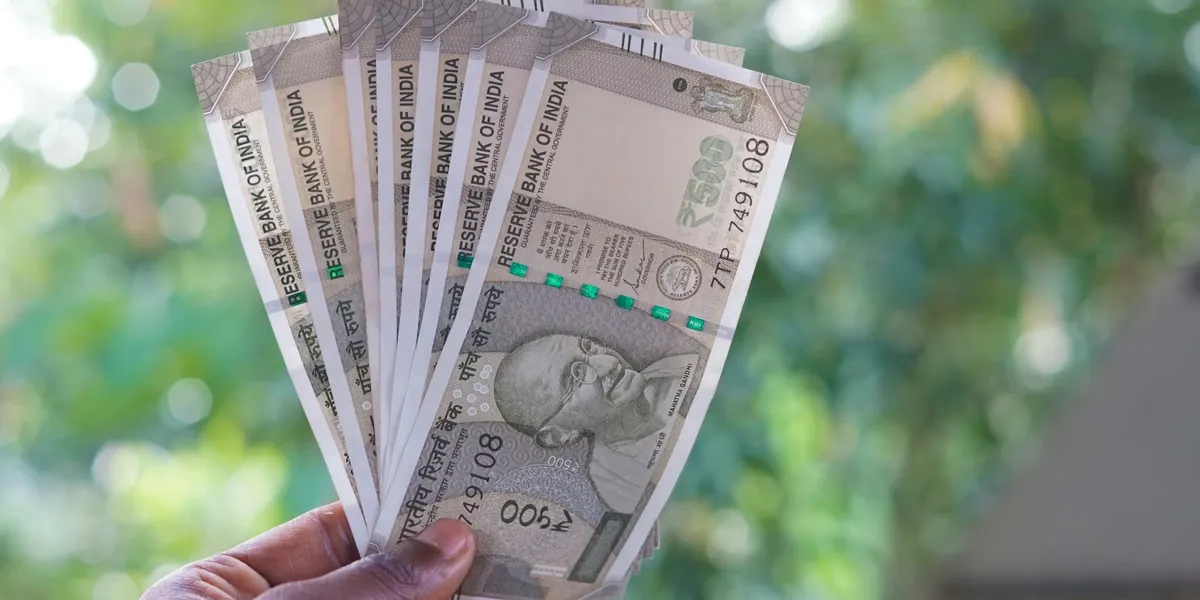
The Indian rupee breached ₹91 against the US dollar in January 2026, reaching an all-time low of ₹92.04 on January 28. Headlines screamed panic. Currency traders scrambled. But for India's 15 million freelancers earning in dollars, this crash hides a genuine opportunity.
Every rupee the dollar gains puts more money in your bank account without a single extra hour of work. A freelancer billing $3,000 per month now earns ₹2.88 lakh more per year than in early 2024. That is a 9.6% raise handed to you by macroeconomics.
A freelancer billing $3,000 per month now earns ₹2.88 lakh more per year than in early 2024. That is a 9.6% raise handed to you by macroeconomics. And it's not just freelancers — see how a weak rupee affects your foreign education dreams to understand just how far-reaching this depreciation really is.

The catch? Most freelancers lose a chunk of this windfall to hidden fees, poor timing of conversions, and tax mistakes. This guide shows you how to keep every rupee you deserve.
Why rupee devaluation benefits Indian freelancers in 2026
Five forces are pushing the rupee down in 2026, and none of them shows signs of reversing soon.
The Reserve Bank of India cut interest rates by a cumulative 125 basis points in 2025, slashing the repo rate from 6.50% to 5.25%. The US Federal Reserve cut only 75 basis points during the same period. This gap makes dollar assets more attractive than rupee assets, pulling capital out of India.
India's trade deficit hit a record $41.68 billion in October 2025. Imports surged 16.6% year-on-year to $76.1 billion, with gold imports alone jumping nearly 200%. Every dollar spent on imports increases demand for the greenback and further weakens the rupee.
Foreign portfolio investors pulled over ₹1.57 lakh crore from Indian equities in 2025. That marked the largest annual outflow on record. In January 2026, they sold another ₹29,300 crore worth of shares. When foreign investors exit, they convert rupees back to dollars, adding downward pressure on the currency.
US trade tariffs of 50% on Indian exports hammered sectors such as gems, textiles, and agriculture. These tariffs cut export earnings and reduced dollar inflows into India. Meanwhile, crude oil hit six-month highs in February 2026 amid US-Iran tensions, further raising India's import bill.
Analyst forecasts remain divided. Standard Chartered and MUFG aim to hit ₹93 per dollar by December 2026. SBI Research expects a recovery to ₹87. Either way, the rupee's depreciation has a strongly positive impact on freelancers who earn in foreign currency.
Weak Rupee Freelancer Earnings: The Real Numbers Behind Your Raise
The arithmetic of a weak rupee freelancer advantage is simple. When each dollar converts to more rupees, your income rises while your rent, groceries, and daily expenses stay the same.
Here are the numbers at current rates versus early 2024.
A freelancer earning $1,000 per month received ₹83,000 at the ₹83 rate in early 2024. At ₹91, that same $1,000 becomes ₹91,000. Over twelve months, you pocket an extra ₹96,000.
At $3,000 per month, the gap widens to ₹2.88 lakh per year. At $5,000 per month, you gain ₹4.80 lakh annually. These are real, spendable rupees landing in your account every single month.
India is the world's second-largest freelance market after the United States. Over 60% of cross-border projects for Indian freelancers come from the US, UK, and EU. The freelance platforms market alone grew at a 24% compound annual rate and is projected to reach $775 million by 2030. If you earn in dollars, the tailwind is structural, not temporary.
But this gain only counts if you actually receive those dollars efficiently. Most freelancers do not.
5 Ways to Maximise USD-INR Benefits as an Indian Freelancer
The platform you use to receive USD to INR freelancer payments is the single biggest lever you control. The gap between the cheapest and most expensive options at a $ 5,000-per-month income is ₹3 to ₹4 lakh.
₹ 5,000 per month is the most popular choice among Indian freelancers. It is also the most expensive. Between currency conversion fees of 3 to 4% above the mid-market rate and withdrawal charges, you lose roughly 7 to 8% on every payment. On a $1,000 invoice at ₹91, PayPal delivers around ₹83,000 to ₹84,000 instead of ₹91,000.
Payoneer costs 3 to 5% total, but still marks up exchange rates by 2 to 2.5%. It works well if you receive payouts from Upwork or Fiverr, where it integrates natively.
Wise charges just 0- 1% and converts at the real mid-market rate. For pure transparency and low fees, it remains one of the best options for freelancers who want to understand exactly what they pay.
India-first platforms such as Winvesta, Skydo, and Xflow charge around 1% with zero or near-zero markup on exchange rates. If you want to set one up today, explore Winvesta's multi-currency account for freelancers — it gives you a virtual US bank account, ACH payment support, and auto-generated e-FIRA certificates in one place. Many of them provide virtual US bank account details so your clients can pay via ACH transfers, which eliminates SWIFT fees. They also auto-generate e-FIRA certificates for RBI compliance, saving you hours of paperwork.
Still not convinced how much you're losing? Indian AI freelancers billing $200/hour are losing up to 15% of every payment to hidden fees — the same problem applies regardless of your niche or billing rate.
If you want to explore how to receive dollars in India with lower fees, switching from PayPal to a dedicated multi-currency account is the highest-impact change you can make today.
For a detailed comparison, read about the best ways for freelancers to receive international payments in India.
Currency Hedging for Indian Freelancers: Time Your Conversions Right
Receiving dollars efficiently is step one. Converting them at the right moment is step two. These forex tips for Indian freelancers can add another ₹50,000 to ₹1 lakh per year on moderate earnings.
Freelancers can legally hold foreign currency in an EEFC account at any authorised dealer bank in India.
For the detailed rules, see our guide to EEFC accounts for foreign currency earnings.
The rule is straightforward. You must convert the unused balance by the last day of the following calendar month. So funds received on March 10 must be converted by April 30 at the latest. No interest accrues, but forward contracts are allowed.
Most fintech platforms now offer 60-day hold windows that work the same way but with a simpler interface. You receive dollars, hold them for up to two months, and convert when the rate suits you.
A practical strategy is to stagger your conversions. Convert 30% of each payment to cover monthly expenses immediately. Convert another 30% at the midpoint of the holding window. Convert the remaining 40% just before the deadline. This approach averages out daily volatility without requiring you to predict the market.
Set rate alerts on platforms such as Wise or XE.com. Pick a target rate, say ₹91.50, and a floor rate, say ₹89.50. Convert automatically when either level triggers. Avoid converting on weekends or public holidays because banks use stale, less favourable rates when forex markets are closed.
If you pay for international tools, cloud hosting, or foreign contractors, consider paying those expenses directly from your dollar balance. This natural hedging reduces the amount you need to convert and protects you from rate swings on both sides.
For long-term contracts, build a 3-5% currency buffer into your USD pricing. If the rupee strengthens unexpectedly, the buffer absorbs the shock. If it weakens further, you pocket the extra margin.

Tax Rules Every Indian Freelancer Earning in USD Must Know
A weaker rupee means higher INR income, which could push you into a higher tax bracket. Knowing the rules helps you keep more of what you earn.
Under the new income tax regime for FY 2025-26, income up to ₹12 lakh is completely tax-free thanks to the Section 87A rebate. Above that, rates climb from 5% on income between ₹4 and 8 lakh up to 30% on income above ₹24 lakh.
Section 44ADA offers a powerful shortcut for professionals. If your gross receipts stay below ₹75 lakh and 95% or more of your payments are digital, you can declare just 50% of your income as taxable profit—no detailed bookkeeping required.
For a deeper breakdown, read our guide to freelancer taxes under Section 44ADA.
A freelancer earning ₹30 lakh would pay tax on only ₹15 lakh, which falls into the 15% slab under the new regime.
GST registration becomes mandatory once your annual turnover crosses ₹20 lakh. The good news is that services to foreign clients qualify as export of services, which are zero-rated at 0% GST. You must meet five conditions. The supplier must be in India. The recipient must be outside India. The place of supply must be outside India. Payment must come in convertible foreign exchange. And the supplier and recipient cannot be branches of the same entity.
File a Letter of Undertaking through Form RFD-11 at the start of each financial year. This lets you export without paying IGST upfront, which is far better for cash flow than paying and claiming refunds later.
Under FEMA rules updated in January 2026, all export proceeds must be remitted to India within 15 months of the invoice date. You need an e-FIRA certificate for every inward remittance.
Need the compliance basics? Here’s a simple guide to FIRA and e-FIRA for international payments.
Use the correct purpose codes when filing: P0802 for software consultancy, P0806 for information services, and P0807 for business consulting. Keep records for at least six years. Penalties for non-compliance can reach three times the transaction amount.
Indian Freelancer Currency Advantage: Five Moves to Make Right Now
The rupee's fall from ₹83 to ₹91 is not a temporary blip. India's trade deficit remains elevated, RBI rate cuts continue to widen the interest-rate gap with the US, and analyst consensus points toward ₹93 by late 2026. For freelancers earning in dollars, this is a structural tailwind.
Start by auditing your payment platform. If you still use PayPal, calculate exactly how much you lose each month in fees and FX markup. Compare that cost with alternatives offering multi-currency accounts with transparent rates.
Explore these top Wise alternatives for international payments to find the best fit.
Next, open an EEFC account or activate the hold feature on your fintech platform. Even a two-week delay in conversion during a falling rupee trend can add ₹5,000 to ₹10,000 per month.
Review your tax setup. If you qualify for Section 44ADA, file under the presumptive scheme this year and skip detailed expense tracking. If your turnover exceeds ₹20 lakh, ensure your LUT is filed to avoid paying IGST on exports.
Quote future contracts in USD, EUR, or GBP only. Never accept INR from foreign clients because it disqualifies your work from the GST export exemption and costs you the currency advantage.
Finally, raise your rates. The global freelance market is growing at 24% annually, and demand for Indian talent in AI, data science, and cloud engineering is surging. A weak rupee makes you more competitive internationally. Use that leverage to charge what your skills are worth rather than racing to the bottom on price.
The rupee crash is not something that happens to you. It is something you can turn into your biggest raise of 2026.
Disclaimer: The information provided in this blog is for general informational purposes only and does not constitute financial or legal advice. Winvesta makes no representations or warranties about the accuracy or suitability of the content and recommends consulting a professional before making any financial decisions.
Get paid globally. Keep more of it.
No FX markups. No GST. Funds in 1 day.

Table of Contents
The Indian rupee breached ₹91 against the US dollar in January 2026, reaching an all-time low of ₹92.04 on January 28. Headlines screamed panic. Currency traders scrambled. But for India's 15 million freelancers earning in dollars, this crash hides a genuine opportunity.
Every rupee the dollar gains puts more money in your bank account without a single extra hour of work. A freelancer billing $3,000 per month now earns ₹2.88 lakh more per year than in early 2024. That is a 9.6% raise handed to you by macroeconomics.
A freelancer billing $3,000 per month now earns ₹2.88 lakh more per year than in early 2024. That is a 9.6% raise handed to you by macroeconomics. And it's not just freelancers — see how a weak rupee affects your foreign education dreams to understand just how far-reaching this depreciation really is.
The catch? Most freelancers lose a chunk of this windfall to hidden fees, poor timing of conversions, and tax mistakes. This guide shows you how to keep every rupee you deserve.
Why rupee devaluation benefits Indian freelancers in 2026
Five forces are pushing the rupee down in 2026, and none of them shows signs of reversing soon.
The Reserve Bank of India cut interest rates by a cumulative 125 basis points in 2025, slashing the repo rate from 6.50% to 5.25%. The US Federal Reserve cut only 75 basis points during the same period. This gap makes dollar assets more attractive than rupee assets, pulling capital out of India.
India's trade deficit hit a record $41.68 billion in October 2025. Imports surged 16.6% year-on-year to $76.1 billion, with gold imports alone jumping nearly 200%. Every dollar spent on imports increases demand for the greenback and further weakens the rupee.
Foreign portfolio investors pulled over ₹1.57 lakh crore from Indian equities in 2025. That marked the largest annual outflow on record. In January 2026, they sold another ₹29,300 crore worth of shares. When foreign investors exit, they convert rupees back to dollars, adding downward pressure on the currency.
US trade tariffs of 50% on Indian exports hammered sectors such as gems, textiles, and agriculture. These tariffs cut export earnings and reduced dollar inflows into India. Meanwhile, crude oil hit six-month highs in February 2026 amid US-Iran tensions, further raising India's import bill.
Analyst forecasts remain divided. Standard Chartered and MUFG aim to hit ₹93 per dollar by December 2026. SBI Research expects a recovery to ₹87. Either way, the rupee's depreciation has a strongly positive impact on freelancers who earn in foreign currency.
Weak Rupee Freelancer Earnings: The Real Numbers Behind Your Raise
The arithmetic of a weak rupee freelancer advantage is simple. When each dollar converts to more rupees, your income rises while your rent, groceries, and daily expenses stay the same.
Here are the numbers at current rates versus early 2024.
A freelancer earning $1,000 per month received ₹83,000 at the ₹83 rate in early 2024. At ₹91, that same $1,000 becomes ₹91,000. Over twelve months, you pocket an extra ₹96,000.
At $3,000 per month, the gap widens to ₹2.88 lakh per year. At $5,000 per month, you gain ₹4.80 lakh annually. These are real, spendable rupees landing in your account every single month.
India is the world's second-largest freelance market after the United States. Over 60% of cross-border projects for Indian freelancers come from the US, UK, and EU. The freelance platforms market alone grew at a 24% compound annual rate and is projected to reach $775 million by 2030. If you earn in dollars, the tailwind is structural, not temporary.
But this gain only counts if you actually receive those dollars efficiently. Most freelancers do not.
5 Ways to Maximise USD-INR Benefits as an Indian Freelancer
The platform you use to receive USD to INR freelancer payments is the single biggest lever you control. The gap between the cheapest and most expensive options at a $ 5,000-per-month income is ₹3 to ₹4 lakh.
₹ 5,000 per month is the most popular choice among Indian freelancers. It is also the most expensive. Between currency conversion fees of 3 to 4% above the mid-market rate and withdrawal charges, you lose roughly 7 to 8% on every payment. On a $1,000 invoice at ₹91, PayPal delivers around ₹83,000 to ₹84,000 instead of ₹91,000.
Payoneer costs 3 to 5% total, but still marks up exchange rates by 2 to 2.5%. It works well if you receive payouts from Upwork or Fiverr, where it integrates natively.
Wise charges just 0- 1% and converts at the real mid-market rate. For pure transparency and low fees, it remains one of the best options for freelancers who want to understand exactly what they pay.
India-first platforms such as Winvesta, Skydo, and Xflow charge around 1% with zero or near-zero markup on exchange rates. If you want to set one up today, explore Winvesta's multi-currency account for freelancers — it gives you a virtual US bank account, ACH payment support, and auto-generated e-FIRA certificates in one place. Many of them provide virtual US bank account details so your clients can pay via ACH transfers, which eliminates SWIFT fees. They also auto-generate e-FIRA certificates for RBI compliance, saving you hours of paperwork.
Still not convinced how much you're losing? Indian AI freelancers billing $200/hour are losing up to 15% of every payment to hidden fees — the same problem applies regardless of your niche or billing rate.
If you want to explore how to receive dollars in India with lower fees, switching from PayPal to a dedicated multi-currency account is the highest-impact change you can make today.
For a detailed comparison, read about the best ways for freelancers to receive international payments in India.
Currency Hedging for Indian Freelancers: Time Your Conversions Right
Receiving dollars efficiently is step one. Converting them at the right moment is step two. These forex tips for Indian freelancers can add another ₹50,000 to ₹1 lakh per year on moderate earnings.
Freelancers can legally hold foreign currency in an EEFC account at any authorised dealer bank in India.
For the detailed rules, see our guide to EEFC accounts for foreign currency earnings.
The rule is straightforward. You must convert the unused balance by the last day of the following calendar month. So funds received on March 10 must be converted by April 30 at the latest. No interest accrues, but forward contracts are allowed.
Most fintech platforms now offer 60-day hold windows that work the same way but with a simpler interface. You receive dollars, hold them for up to two months, and convert when the rate suits you.
A practical strategy is to stagger your conversions. Convert 30% of each payment to cover monthly expenses immediately. Convert another 30% at the midpoint of the holding window. Convert the remaining 40% just before the deadline. This approach averages out daily volatility without requiring you to predict the market.
Set rate alerts on platforms such as Wise or XE.com. Pick a target rate, say ₹91.50, and a floor rate, say ₹89.50. Convert automatically when either level triggers. Avoid converting on weekends or public holidays because banks use stale, less favourable rates when forex markets are closed.
If you pay for international tools, cloud hosting, or foreign contractors, consider paying those expenses directly from your dollar balance. This natural hedging reduces the amount you need to convert and protects you from rate swings on both sides.
For long-term contracts, build a 3-5% currency buffer into your USD pricing. If the rupee strengthens unexpectedly, the buffer absorbs the shock. If it weakens further, you pocket the extra margin.
Tax Rules Every Indian Freelancer Earning in USD Must Know
A weaker rupee means higher INR income, which could push you into a higher tax bracket. Knowing the rules helps you keep more of what you earn.
Under the new income tax regime for FY 2025-26, income up to ₹12 lakh is completely tax-free thanks to the Section 87A rebate. Above that, rates climb from 5% on income between ₹4 and 8 lakh up to 30% on income above ₹24 lakh.
Section 44ADA offers a powerful shortcut for professionals. If your gross receipts stay below ₹75 lakh and 95% or more of your payments are digital, you can declare just 50% of your income as taxable profit—no detailed bookkeeping required.
For a deeper breakdown, read our guide to freelancer taxes under Section 44ADA.
A freelancer earning ₹30 lakh would pay tax on only ₹15 lakh, which falls into the 15% slab under the new regime.
GST registration becomes mandatory once your annual turnover crosses ₹20 lakh. The good news is that services to foreign clients qualify as export of services, which are zero-rated at 0% GST. You must meet five conditions. The supplier must be in India. The recipient must be outside India. The place of supply must be outside India. Payment must come in convertible foreign exchange. And the supplier and recipient cannot be branches of the same entity.
File a Letter of Undertaking through Form RFD-11 at the start of each financial year. This lets you export without paying IGST upfront, which is far better for cash flow than paying and claiming refunds later.
Under FEMA rules updated in January 2026, all export proceeds must be remitted to India within 15 months of the invoice date. You need an e-FIRA certificate for every inward remittance.
Need the compliance basics? Here’s a simple guide to FIRA and e-FIRA for international payments.
Use the correct purpose codes when filing: P0802 for software consultancy, P0806 for information services, and P0807 for business consulting. Keep records for at least six years. Penalties for non-compliance can reach three times the transaction amount.
Indian Freelancer Currency Advantage: Five Moves to Make Right Now
The rupee's fall from ₹83 to ₹91 is not a temporary blip. India's trade deficit remains elevated, RBI rate cuts continue to widen the interest-rate gap with the US, and analyst consensus points toward ₹93 by late 2026. For freelancers earning in dollars, this is a structural tailwind.
Start by auditing your payment platform. If you still use PayPal, calculate exactly how much you lose each month in fees and FX markup. Compare that cost with alternatives offering multi-currency accounts with transparent rates.
Explore these top Wise alternatives for international payments to find the best fit.
Next, open an EEFC account or activate the hold feature on your fintech platform. Even a two-week delay in conversion during a falling rupee trend can add ₹5,000 to ₹10,000 per month.
Review your tax setup. If you qualify for Section 44ADA, file under the presumptive scheme this year and skip detailed expense tracking. If your turnover exceeds ₹20 lakh, ensure your LUT is filed to avoid paying IGST on exports.
Quote future contracts in USD, EUR, or GBP only. Never accept INR from foreign clients because it disqualifies your work from the GST export exemption and costs you the currency advantage.
Finally, raise your rates. The global freelance market is growing at 24% annually, and demand for Indian talent in AI, data science, and cloud engineering is surging. A weak rupee makes you more competitive internationally. Use that leverage to charge what your skills are worth rather than racing to the bottom on price.
The rupee crash is not something that happens to you. It is something you can turn into your biggest raise of 2026.
Disclaimer: The information provided in this blog is for general informational purposes only and does not constitute financial or legal advice. Winvesta makes no representations or warranties about the accuracy or suitability of the content and recommends consulting a professional before making any financial decisions.
Get paid globally. Keep more of it.
No FX markups. No GST. Funds in 1 day.


