Trade credit insurance: ₹1 lakh protects ₹50 lakh in exports
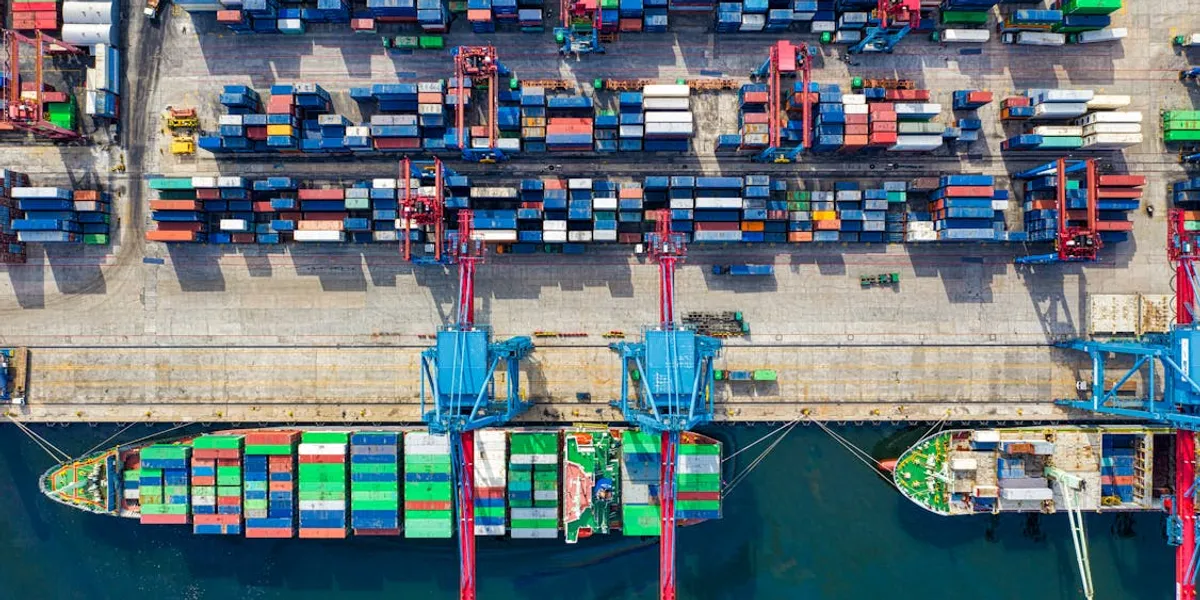
India exported over ₹28 lakh crore in goods and services in FY2024. That number is a source of national pride. But behind it sits a quieter number — the receivables that never came back. International buyers default. Companies go bankrupt. Political events block cross-border payments. Most Indian exporters carry this risk with no protection at all. A financial tool called trade credit insurance exists precisely to solve this problem. Fewer than 5% of eligible Indian SME exporters use it. That gap is the story this post tries to fix.
Non-payment risk in export invoices: What Indian exporters face
When you ship goods or deliver services to an international buyer on credit terms, you are extending a loan. The buyer receives the value upfront. Payment comes in 30, 60, or 90 days. That window is where the risk lives.
International buyers default for three reasons. Commercial default happens when a company becomes insolvent or refuses to pay. Protracted default happens when payments stretch far beyond agreed terms — sometimes six months or more — without a formal insolvency event. Political risk covers situations where a buyer is willing to pay but a government action, currency restriction, or conflict blocks the transfer.
For a small Indian exporter with ₹50 lakh in outstanding receivables, a single default can unravel months of work. You cannot quickly approach an overseas court. Recovery through international legal channels is slow, expensive, and rarely complete. Recovery rates on international bad debts often fall below 20% after factoring in legal costs and time delays.
Most exporters know this risk exists. They diversify their buyer base, chase payments carefully, and keep fingers crossed. That is not risk management. That is optimism.
What trade credit insurance actually does

Trade credit insurance is a policy that compensates you when your international buyer does not pay. You pay a small annual premium based on your insured export receivables. If a covered buyer defaults, the insurer typically reimburses 85 to 90% of the unpaid invoice value, depending on the policy variant and risk tier.
The policy covers three categories of loss. Insolvency — where the buyer has filed for bankruptcy or a court has formally declared them unable to pay debts. Protracted default — where payment is overdue beyond a defined waiting period, typically 90 to 180 days, without formal insolvency being declared. And political risk — government-imposed payment blocks, war, currency restrictions, or expropriation in the buyer's country.
The core logic is risk transfer. Instead of absorbing the full loss from a default, you share it with an insurer that specialises in assessing buyer and country risk. You pay a manageable annual premium. The insurer absorbs the catastrophic tail risk. Your cash flow survives even when a major buyer does not.
ECGC: The government-backed option built for Indian exporters
ECGC Limited is India's primary trade credit insurer. Fully owned by the Government of India and operating under the Ministry of Commerce and Industry, ECGC exists specifically to make export risk insurance accessible and affordable for Indian businesses.
ECGC offers several policy types. Three are most relevant for SME exporters.
The Standard Policy covers multiple buyers across multiple shipments over a 12-month policy period. It protects against both commercial and political risk. This is the flagship product for any exporter with a regular flow of international orders. Coverage under the Standard Policy typically applies to 85–90% of commercial risk losses and up to 90–100% of political risk losses, depending on the scheme variant and period.
The Specific Shipment Policy covers a single high-value transaction rather than an ongoing export book. Premium is calculated per shipment rather than annually. It suits exporters who ship infrequently but want protection on one significant deal.
The Services Policy covers IT companies, software exporters, and professional services providers — one of India's fastest-growing and most underpenetrated export categories for insurance. It covers non-payment by overseas clients on services contracts.
ECGC classifies destination countries by risk tier. Exports to the US, UK, EU, Australia, Singapore, and Japan fall in lower-risk categories with lower premiums. Exports to certain markets in Africa, South Asia, and politically volatile regions attract higher rates.
How ECGC pricing works, and what you actually pay
The Standard Policy premium typically ranges from 0.3% to 0.9% of insured export turnover, though exact rates vary by destination country risk tier and claims history. The exact rate depends on the countries you export to and your claims history with ECGC.
For a typical SME exporting ₹3 to 5 crore annually to low-to-medium risk markets, the annual premium falls between ₹50,000 and ₹1.5 lakh. The minimum annual premium under the Standard Policy starts from approximately ₹5,000 to ₹10,000, making it accessible even for exporters with modest turnovers.
Before shipping to any buyer, you must apply for a credit limit approval from ECGC. ECGC assesses the buyer — their financials, country risk, and payment history — and approves a maximum coverage limit for that buyer. Your claim will only be honoured up to that approved limit. Apply for credit limits early; ECGC's buyer assessment process typically takes two to four weeks.
One important detail: ECGC requires the exporter to retain 10 to 15% of any loss as co-insurance. You cannot insure recklessly and then claim everything. This design keeps exporters genuinely selective about the buyers they take on, which benefits the overall quality of the insured portfolio.
ECGC claim example: ₹1.2 lakh premium, ₹42.5 lakh recovered
Let's make this concrete with an illustrative example using plausible ECGC rates and cover percentages — actual terms will vary by policy.
Priya runs a textile export business in Surat. Her annual export turnover is ₹4 crore. Her largest client is a mid-size US retailer. She has shipped ₹50 lakh worth of goods on 60-day payment terms.
Without ECGC: The US retailer files for Chapter 11 bankruptcy before the payment due date. Priya is an unsecured overseas creditor in a US bankruptcy proceeding. Recovery, if any, takes two to four years. After legal fees and delays, she recovers perhaps ₹5 to 8 lakh — less than 15% of the invoice value.
With ECGC Standard Policy: Priya pays ₹1.2 lakh annually to cover her ₹4 crore export book. The US retailer had an approved ECGC credit limit of ₹60 lakh. She reports the overdue payment within 30 days of the due date. ECGC investigates, confirms the insolvency event, and processes the claim. Priya receives ₹42.5 lakh — 85% of the ₹50 lakh loss — within the claim settlement timeline.
The annual premium of ₹1.2 lakh recovered ₹42.5 lakh in a single claim. That is 35 years of premiums recovered in one payout. This is the maths fewer than 5% of Indian exporters have run.
Private alternatives: Allianz Trade, Atradius, and Coface

ECGC is not the only option available to Indian exporters. Three major global insurers are active in India's trade credit insurance market.
Allianz Trade (formerly Euler Hermes) is the world's largest trade credit insurer by premium volume. It offers real-time buyer monitoring, faster credit limit approvals, and access to a global buyer database covering over 80 million companies. Premiums run higher — typically 0.5% to 1.2% of insured turnover — but the claims process is often faster and the buyer intelligence considerably deeper.
Atradius is particularly strong across European and North American markets. It suits exporters with heavy exposure to Western buyers. Atradius provides early warning signals when a covered buyer's financial health deteriorates, giving exporters time to reduce exposure before a formal default event.
Coface operates strongly in emerging markets — Southeast Asia, the Middle East, and Africa — making it a good fit for Indian exporters diversifying into non-traditional geographies.
When does a private insurer make more sense than ECGC? Consider going private if your export turnover exceeds ₹10 crore annually, if you need faster claim turnarounds to protect working capital, or if you need a consolidated global policy across multiple group entities. For most Indian SME exporters below ₹10 crore in annual exports, ECGC remains the most cost-effective and practically accessible starting point.
Which Indian businesses need trade credit insurance
Any Indian business with international receivables above ₹50 lakh should evaluate trade credit insurance seriously. The profile is wide.
IT services companies billing overseas clients monthly are prime candidates. So are manufacturers of textiles, chemicals, engineering goods, pharmaceuticals, and auto components. Trading companies with exposure across multiple emerging markets carry the broadest country risk. Freelancers and consultants with large single-client international contracts carry concentrated non-payment risk with no diversification buffer.
The test is straightforward: if your business cannot absorb the loss of your single largest outstanding international invoice, you need this coverage. ECGC's Standard Policy is designed precisely for that risk profile.
How to apply for ECGC coverage
The application process involves five steps.
Register on the ECGC portal at ecgc.in using your IEC code, PAN, and basic export details. Complete the Standard Policy proposal form, which covers your export markets, buyer types, and projected annual turnover. Submit supporting documents including your IEC certificate, last two years of audited financials, and bank certificates of export realisation.
Await ECGC's assessment and policy issuance, which typically takes two to four weeks from submission. Once the policy is active, submit individual credit limit applications for each buyer before shipping to them. ECGC will assess each buyer and approve a limit within one to two weeks.
The process is more document-heavy than private alternatives. ECGC's premiums more than compensate for the paperwork.
How to build a complete export risk protection strategy
Trade credit insurance is one layer — not the whole answer.
A robust export risk strategy pairs ECGC coverage with smart export payment terms: front-load payments for new buyers, use Letters of Credit for high-value orders, and avoid 100% open-account terms with unfamiliar clients.
Add a multi-currency account to hold export proceeds in USD, GBP, or EUR before converting. This protects your receivable value from currency risk even after insurance covers the default risk. Many Indian exporters also overlook hidden charges eating into export earnings — SWIFT fees, bank conversion spreads, and intermediary deductions — that reduce every payment you receive before it reaches your account.
Finally, maintain clean FIRA documentation for every export transaction. FIRA records are essential for ECGC claim processing, GST refund claims, and RBI compliance. Gaps in documentation can delay or complicate claim settlements significantly.
This stack — insurance, payment terms, FX strategy, and clean documentation — converts export risk from a silent liability into a managed, bounded exposure. The first step is simply acknowledging the risk exists.
Disclaimer: The information provided in this blog is for general informational purposes only and does not constitute financial or legal advice. Winvesta makes no representations or warranties about the accuracy or suitability of the content and recommends consulting a professional before making any financial decisions.
Get paid globally. Keep more of it.
No FX markups. No GST. Funds in 1 day.

Table of Contents
India exported over ₹28 lakh crore in goods and services in FY2024. That number is a source of national pride. But behind it sits a quieter number — the receivables that never came back. International buyers default. Companies go bankrupt. Political events block cross-border payments. Most Indian exporters carry this risk with no protection at all. A financial tool called trade credit insurance exists precisely to solve this problem. Fewer than 5% of eligible Indian SME exporters use it. That gap is the story this post tries to fix.
Non-payment risk in export invoices: What Indian exporters face
When you ship goods or deliver services to an international buyer on credit terms, you are extending a loan. The buyer receives the value upfront. Payment comes in 30, 60, or 90 days. That window is where the risk lives.
International buyers default for three reasons. Commercial default happens when a company becomes insolvent or refuses to pay. Protracted default happens when payments stretch far beyond agreed terms — sometimes six months or more — without a formal insolvency event. Political risk covers situations where a buyer is willing to pay but a government action, currency restriction, or conflict blocks the transfer.
For a small Indian exporter with ₹50 lakh in outstanding receivables, a single default can unravel months of work. You cannot quickly approach an overseas court. Recovery through international legal channels is slow, expensive, and rarely complete. Recovery rates on international bad debts often fall below 20% after factoring in legal costs and time delays.
Most exporters know this risk exists. They diversify their buyer base, chase payments carefully, and keep fingers crossed. That is not risk management. That is optimism.
What trade credit insurance actually does
Trade credit insurance is a policy that compensates you when your international buyer does not pay. You pay a small annual premium based on your insured export receivables. If a covered buyer defaults, the insurer typically reimburses 85 to 90% of the unpaid invoice value, depending on the policy variant and risk tier.
The policy covers three categories of loss. Insolvency — where the buyer has filed for bankruptcy or a court has formally declared them unable to pay debts. Protracted default — where payment is overdue beyond a defined waiting period, typically 90 to 180 days, without formal insolvency being declared. And political risk — government-imposed payment blocks, war, currency restrictions, or expropriation in the buyer's country.
The core logic is risk transfer. Instead of absorbing the full loss from a default, you share it with an insurer that specialises in assessing buyer and country risk. You pay a manageable annual premium. The insurer absorbs the catastrophic tail risk. Your cash flow survives even when a major buyer does not.
ECGC: The government-backed option built for Indian exporters
ECGC Limited is India's primary trade credit insurer. Fully owned by the Government of India and operating under the Ministry of Commerce and Industry, ECGC exists specifically to make export risk insurance accessible and affordable for Indian businesses.
ECGC offers several policy types. Three are most relevant for SME exporters.
The Standard Policy covers multiple buyers across multiple shipments over a 12-month policy period. It protects against both commercial and political risk. This is the flagship product for any exporter with a regular flow of international orders. Coverage under the Standard Policy typically applies to 85–90% of commercial risk losses and up to 90–100% of political risk losses, depending on the scheme variant and period.
The Specific Shipment Policy covers a single high-value transaction rather than an ongoing export book. Premium is calculated per shipment rather than annually. It suits exporters who ship infrequently but want protection on one significant deal.
The Services Policy covers IT companies, software exporters, and professional services providers — one of India's fastest-growing and most underpenetrated export categories for insurance. It covers non-payment by overseas clients on services contracts.
ECGC classifies destination countries by risk tier. Exports to the US, UK, EU, Australia, Singapore, and Japan fall in lower-risk categories with lower premiums. Exports to certain markets in Africa, South Asia, and politically volatile regions attract higher rates.
How ECGC pricing works, and what you actually pay
The Standard Policy premium typically ranges from 0.3% to 0.9% of insured export turnover, though exact rates vary by destination country risk tier and claims history. The exact rate depends on the countries you export to and your claims history with ECGC.
For a typical SME exporting ₹3 to 5 crore annually to low-to-medium risk markets, the annual premium falls between ₹50,000 and ₹1.5 lakh. The minimum annual premium under the Standard Policy starts from approximately ₹5,000 to ₹10,000, making it accessible even for exporters with modest turnovers.
Before shipping to any buyer, you must apply for a credit limit approval from ECGC. ECGC assesses the buyer — their financials, country risk, and payment history — and approves a maximum coverage limit for that buyer. Your claim will only be honoured up to that approved limit. Apply for credit limits early; ECGC's buyer assessment process typically takes two to four weeks.
One important detail: ECGC requires the exporter to retain 10 to 15% of any loss as co-insurance. You cannot insure recklessly and then claim everything. This design keeps exporters genuinely selective about the buyers they take on, which benefits the overall quality of the insured portfolio.
ECGC claim example: ₹1.2 lakh premium, ₹42.5 lakh recovered
Let's make this concrete with an illustrative example using plausible ECGC rates and cover percentages — actual terms will vary by policy.
Priya runs a textile export business in Surat. Her annual export turnover is ₹4 crore. Her largest client is a mid-size US retailer. She has shipped ₹50 lakh worth of goods on 60-day payment terms.
Without ECGC: The US retailer files for Chapter 11 bankruptcy before the payment due date. Priya is an unsecured overseas creditor in a US bankruptcy proceeding. Recovery, if any, takes two to four years. After legal fees and delays, she recovers perhaps ₹5 to 8 lakh — less than 15% of the invoice value.
With ECGC Standard Policy: Priya pays ₹1.2 lakh annually to cover her ₹4 crore export book. The US retailer had an approved ECGC credit limit of ₹60 lakh. She reports the overdue payment within 30 days of the due date. ECGC investigates, confirms the insolvency event, and processes the claim. Priya receives ₹42.5 lakh — 85% of the ₹50 lakh loss — within the claim settlement timeline.
The annual premium of ₹1.2 lakh recovered ₹42.5 lakh in a single claim. That is 35 years of premiums recovered in one payout. This is the maths fewer than 5% of Indian exporters have run.
Private alternatives: Allianz Trade, Atradius, and Coface
ECGC is not the only option available to Indian exporters. Three major global insurers are active in India's trade credit insurance market.
Allianz Trade (formerly Euler Hermes) is the world's largest trade credit insurer by premium volume. It offers real-time buyer monitoring, faster credit limit approvals, and access to a global buyer database covering over 80 million companies. Premiums run higher — typically 0.5% to 1.2% of insured turnover — but the claims process is often faster and the buyer intelligence considerably deeper.
Atradius is particularly strong across European and North American markets. It suits exporters with heavy exposure to Western buyers. Atradius provides early warning signals when a covered buyer's financial health deteriorates, giving exporters time to reduce exposure before a formal default event.
Coface operates strongly in emerging markets — Southeast Asia, the Middle East, and Africa — making it a good fit for Indian exporters diversifying into non-traditional geographies.
When does a private insurer make more sense than ECGC? Consider going private if your export turnover exceeds ₹10 crore annually, if you need faster claim turnarounds to protect working capital, or if you need a consolidated global policy across multiple group entities. For most Indian SME exporters below ₹10 crore in annual exports, ECGC remains the most cost-effective and practically accessible starting point.
Which Indian businesses need trade credit insurance
Any Indian business with international receivables above ₹50 lakh should evaluate trade credit insurance seriously. The profile is wide.
IT services companies billing overseas clients monthly are prime candidates. So are manufacturers of textiles, chemicals, engineering goods, pharmaceuticals, and auto components. Trading companies with exposure across multiple emerging markets carry the broadest country risk. Freelancers and consultants with large single-client international contracts carry concentrated non-payment risk with no diversification buffer.
The test is straightforward: if your business cannot absorb the loss of your single largest outstanding international invoice, you need this coverage. ECGC's Standard Policy is designed precisely for that risk profile.
How to apply for ECGC coverage
The application process involves five steps.
Register on the ECGC portal at ecgc.in using your IEC code, PAN, and basic export details. Complete the Standard Policy proposal form, which covers your export markets, buyer types, and projected annual turnover. Submit supporting documents including your IEC certificate, last two years of audited financials, and bank certificates of export realisation.
Await ECGC's assessment and policy issuance, which typically takes two to four weeks from submission. Once the policy is active, submit individual credit limit applications for each buyer before shipping to them. ECGC will assess each buyer and approve a limit within one to two weeks.
The process is more document-heavy than private alternatives. ECGC's premiums more than compensate for the paperwork.
How to build a complete export risk protection strategy
Trade credit insurance is one layer — not the whole answer.
A robust export risk strategy pairs ECGC coverage with smart export payment terms: front-load payments for new buyers, use Letters of Credit for high-value orders, and avoid 100% open-account terms with unfamiliar clients.
Add a multi-currency account to hold export proceeds in USD, GBP, or EUR before converting. This protects your receivable value from currency risk even after insurance covers the default risk. Many Indian exporters also overlook hidden charges eating into export earnings — SWIFT fees, bank conversion spreads, and intermediary deductions — that reduce every payment you receive before it reaches your account.
Finally, maintain clean FIRA documentation for every export transaction. FIRA records are essential for ECGC claim processing, GST refund claims, and RBI compliance. Gaps in documentation can delay or complicate claim settlements significantly.
This stack — insurance, payment terms, FX strategy, and clean documentation — converts export risk from a silent liability into a managed, bounded exposure. The first step is simply acknowledging the risk exists.
Disclaimer: The information provided in this blog is for general informational purposes only and does not constitute financial or legal advice. Winvesta makes no representations or warranties about the accuracy or suitability of the content and recommends consulting a professional before making any financial decisions.
Get paid globally. Keep more of it.
No FX markups. No GST. Funds in 1 day.


