SCOTUS struck down US tariffs: What Indian exporters win
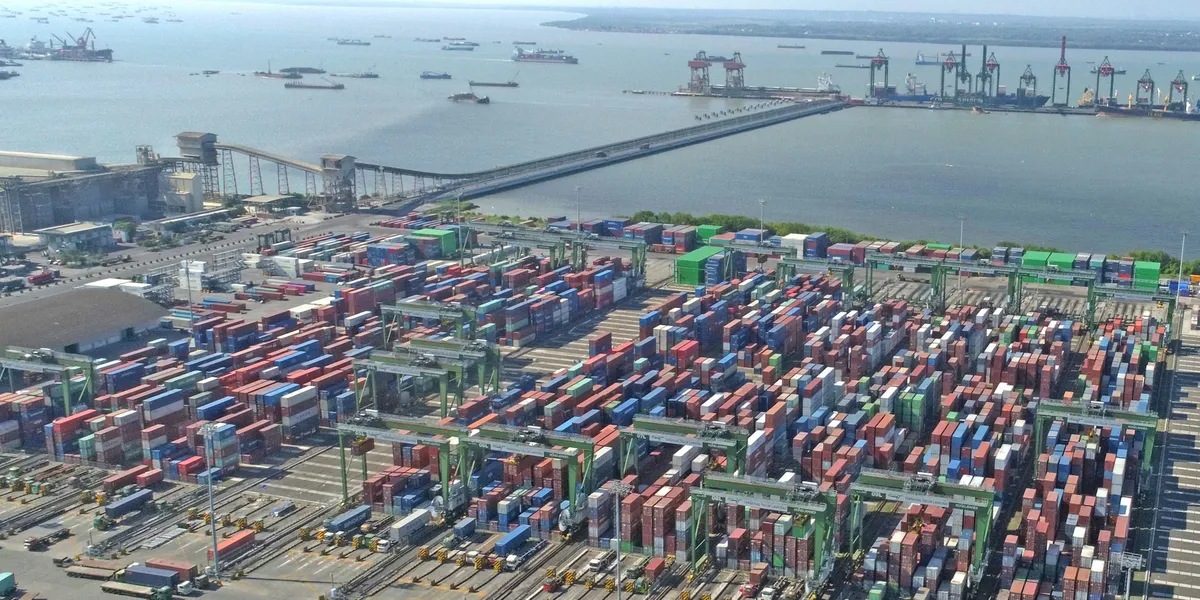
On February 20, 2026, the US Supreme Court struck down all tariffs imposed under the International Emergency Economic Powers Act. The 6-3 ruling in Learning Resources, Inc. v. Trump instantly slashed the effective duty on Indian goods from 50% to roughly 10–15%. For India's $86.5 billion export pipeline to America, this decision marks the biggest trade relief event in years.
The Court held that IEEPA's power to "regulate importation" does not include the authority to impose tariffs. Only Congress holds that taxing power under Article I of the Constitution. This ruling invalidated the entire framework behind President Trump's "reciprocal tariffs" that had battered global trade since early 2025.
Indian exporters across textiles, gems, chemicals, and engineering goods now face dramatically lower costs at the US border. Trade bodies like FIEO have called the ruling "welcome relief" for India's export community. But the story does not end here. A temporary replacement tariff, surviving Section 232 steel duties, and planned Section 301 investigations create a complex and fast-changing landscape ahead.
The case that rewrote American trade law
The ruling combined two separate legal challenges filed in spring 2025. Learning Resources, a family-owned toy company, sued in the DC District Court on April 22. V.O.S. Selections, a wine importer backed by the Liberty Justice Center and 12 state attorneys general, filed in the Court of International Trade on April 14. Both challenged IEEPA tariffs as unconstitutional.
The case moved at record speed through the courts. The Court of International Trade unanimously ruled IEEPA tariffs illegal on May 28, 2025. The Federal Circuit affirmed 7-4 on August 29. The Supreme Court granted expedited certiorari on September 9 and heard oral arguments on November 5.
Chief Justice Roberts authored the majority opinion. He noted that IEEPA contains no mention of tariffs or duties anywhere in its text. In the statute's nearly 50-year history, no president had ever used it to impose tariffs. Among its 99 verb-object combinations, only "regulate importation" was being stretched to cover taxation. The Court called this interpretation untenable.
Roberts and Justices Gorsuch and Barrett also applied the major questions doctrine. They argued Congress must speak clearly when delegating powers of vast economic significance. The IEEPA tariffs had raised an estimated $160–175 billion by the ruling date. That amount dwarfed every prior major question case. The three liberal justices agreed on the result but relied solely on the statutory text.
Justice Kavanaugh wrote a 63-page dissent joined by Thomas and Alito. He warned that the government may need to refund billions of dollars to importers. The dissent argued that tariffs are a traditional tool for regulating imports. Justice Gorsuch's 46-page concurrence sharply rebutted every dissenting argument.
The impact of the SCOTUS tariff ruling on India and dozens of other nations became clear within hours of the decision.
What was struck down — and what still stands
The ruling wiped out all IEEPA-based tariffs that had formed the backbone of America's trade policy since early 2025.
Gone are the "Liberation Day" reciprocal tariffs that hit India at rates as high as 50%. Gone are the 25% fentanyl-related levies on Canada and Mexico. Gone is the punitive 25% tariff on imports of Russian crude oil.
Several tariff regimes survive intact. Section 232 duties remain at 50% on steel and aluminium, 25% on automobiles and auto parts, and 50% on copper. Section 301 tariffs targeting China also remain in effect. Antidumping and countervailing duties remain in effect. A new 125.87% countervailing duty on Indian solar cells, imposed on February 24, 2026, adds fresh pain for that specific sector.
Within hours of the ruling, Trump signed an executive order imposing a 10% global tariff under Section 122 of the Trade Act of 1974. He later announced plans to raise it to 15%. This replacement tariff carries built-in limits. Section 122 caps rates at 15% and restricts duration to 150 days. Unless Congress votes to extend, these tariffs expire around July 24, 2026.
USTR Jamieson Greer acknowledged the administration lost "the same flexibility that IEEPA" had provided. He announced plans to launch Section 301 investigations against most major trading partners on an accelerated timeline.
India's tariff journey: From 50% to 10% overnight
Indian exports rode a dramatic tariff rollercoaster before the ruling. In April 2025, the baseline IEEPA tariff started at 10%. The reciprocal rate for India jumped to 26% before settling into a 90-day pause. By August, the full 25% reciprocal duty kicked in. Then came the Russian oil penalty—an additional 25%—bringing the total to a crushing 50%.
On February 7, 2026, the US-India trade deal brought some relief. An interim bilateral agreement cut the rate to 18%. But the SCOTUS ruling, just 13 days later, delivered far greater savings. Indian goods now face only the 10–15% Section 122 rate.
According to the Global Trade Research Initiative, the average effective tariff on Indian exports now sits at roughly 13.4%. This accounts for Section 232 duties on steel and aluminium alongside the new baseline. The drop from 50% to 13.4% restores the price competitiveness that Indian exporters had lost over the past year.
Roughly 40% of India's export value to the US — including smartphones, petroleum products, and pharmaceuticals — was already exempt from reciprocal tariffs. The ruling frees the remaining 55% of exports, worth approximately $56.5 billion, from the old duty regime.
Which Indian export sectors win the biggest

India exported $86.51 billion in goods to the US in FY 2024-25. The US remains India's largest trading partner for the fourth straight year. India-US bilateral trade hit a record $131.84 billion. Several sectors now stand to gain the most from the sweeping tariff relief for Indian exports.
Textiles and apparel worth $2.5–3.3 billion emerge as the clearest winners. Cotton, silk, home textiles, and garments from Tiruppur, Surat, and Ludhiana faced the full 18–50% tariff with no exemptions. The drop to 10–15% restores their competitive edge against Bangladesh, Vietnam, and other low-cost producers.
Gems, jewellery, and diamonds worth roughly $10 billion form India's single largest export category to the US. The interim trade deal had promised eventual zero-tariff treatment. That status is now uncertain, but the current 10–15% rate beats the 25–50% these goods faced through most of 2025.
Engineering goods and machinery worth $6–7.1 billion see strong relief. Organic chemicals and auto parts worth $2.7–2.8 billion also benefit immediately. These industrial goods anchor India's manufactured exports to America.
Shrimp and seafood worth over $2 billion — frozen shrimp leads India's marine exports — and leather and footwear gain substantially. Pharmaceuticals worth $8.1–10.9 billion were already largely exempt, since India supplies about 50% of America's generic drug market. Still, the reduced uncertainty helps contract stability.
IT services are not directly tariffed as physical goods. But they benefit from improved stability in trade relations and reduced bilateral friction. Contract renewals, outsourcing decisions, and new deal pipelines all respond to the broader sentiment between both nations. NASSCOM-represented firms benefit from lower overall geopolitical tension. India's technology services exports to the US crossed $50 billion in FY25, making this sector a quiet but major beneficiary.
Solar cells and modules face a separate blow. The new 125.87% countervailing duty imposed on February 24 devastates this sector regardless of the SCOTUS ruling.
India's government plays the long game.
India's Commerce and Industry Ministry issued a measured response on February 21. It stated the government was "studying all these developments for their implications."
Commerce Minister Piyush Goyal spoke carefully at the News18 Rising Bharat Summit on February 27. He called the situation "evolving" and confirmed India remained "in dialogue with the administration in the US." He pointed to the rebalancing clause in the February 6 joint statement. That clause lets either country modify its commitments if tariffs change. The SCOTUS ruling triggers exactly this provision.
An Indian trade delegation led by chief negotiator Darpan Jain postponed its planned February visit to Washington. Bloomberg reported India now sees "more scope in negotiations." New Delhi is not abandoning the bilateral agreement but seeks better terms.
The Federation of Indian Export Organisations called the ruling "welcome relief." FIEO President SC Ralhan said it "restores greater predictability in bilateral trade." FIEO Director General Ajay Sahai added a note of caution: Indian goods now attract 10% tariffs from February 24, "but we are keeping our fingers crossed, as uncertainty is there."
The Global Trade Research Initiative urged India to reassess the interim deal in its entirety. GTRI founder Ajay Srivastava argued India should invoke the rebalancing clause to "either opt out of the deal or delay negotiations or seek fresh terms." Indian exporters looking to stack tariff savings with existing government export incentive schemes like RoDTEP, SEIS, and other export incentives can create significant cost advantages during this window.
The strategic calculus shifts in India's favour
The ruling changes India's negotiating position in three important ways.
First, the 18% rate India negotiated in the interim deal now exceeds the 10–15% universal rate everyone pays. India effectively struck a worse deal than doing nothing. Countries like Brazil, which refused to negotiate early, now look vindicated.
Second, the ruling strips away America's ability to use tariffs as a geopolitical lever. The Russia oil penalty tariff was IEEPA-based and has now been removed. Analysts expect India to keep purchasing Russian oil at 800,000–1 million barrels per day without facing American pushback.
Third, the 150-day expiration on Section 122 tariffs creates a ticking clock. Either Congress extends them before midterm elections — a politically uncertain move — or the tariffs vanish entirely by late July 2026.
India's exports to the US showed remarkable resilience even under the 50% regime. The country shipped $25.5 billion during September–December 2025, barely below the $25.8 billion in the same period of 2024. With tariffs slashed, volumes should accelerate. The timing aligns well with India's booming cross-border sales channel, as the country's e-commerce export sector is experiencing rapid growth, with projections reaching $300 billion by 2030.
What exporters should watch over the next 150 days?

The current situation offers a window of opportunity, not a permanent solution. Five key developments will shape the next six months.
The Section 122 tariff expires around July 24, 2026. If Congress does not act, the 10–15% duty disappears entirely. That outcome would be extraordinarily favourable for Indian goods.
USTR has announced accelerated Section 301 investigations against major trading partners. These could produce India-specific tariffs, though the formal process requires months of hearings and public comment.
An estimated $160–175 billion in IEEPA tariffs collected since early 2025 may be refundable. The process could take 12–18 months, but importers are already lining up to file claims.
India's invocation of the rebalancing clause could entirely reshape the interim day. The government can push for lower rates or broader exemptions from a position of strength.
Section 232 tariff reviews on steel at 50%, aluminium at 50%, and auto parts at 25% remain unchanged. Indian manufacturers in these sectors must continue planning around these costs.
The SCOTUS ruling in Learning Resources, Inc. v. Trump stands as the most significant judicial check on presidential trade authority in modern American history. The IEEPA tariffs India faced are now history. For Indian exporters, the immediate math works: effective rates dropped from 50% to roughly 13.4% on average. Yet the victory remains provisional. Indian businesses that combine this tariff relief window with government incentives and diversified market strategies will thrive — regardless of what Washington decides next.
Disclaimer: The information provided in this blog is for general informational purposes only and does not constitute financial or legal advice. Winvesta makes no representations or warranties about the accuracy or suitability of the content and recommends consulting a professional before making any financial decisions.
Get paid globally. Keep more of it.
No FX markups. No GST. Funds in 1 day.

Table of Contents
On February 20, 2026, the US Supreme Court struck down all tariffs imposed under the International Emergency Economic Powers Act. The 6-3 ruling in Learning Resources, Inc. v. Trump instantly slashed the effective duty on Indian goods from 50% to roughly 10–15%. For India's $86.5 billion export pipeline to America, this decision marks the biggest trade relief event in years.
The Court held that IEEPA's power to "regulate importation" does not include the authority to impose tariffs. Only Congress holds that taxing power under Article I of the Constitution. This ruling invalidated the entire framework behind President Trump's "reciprocal tariffs" that had battered global trade since early 2025.
Indian exporters across textiles, gems, chemicals, and engineering goods now face dramatically lower costs at the US border. Trade bodies like FIEO have called the ruling "welcome relief" for India's export community. But the story does not end here. A temporary replacement tariff, surviving Section 232 steel duties, and planned Section 301 investigations create a complex and fast-changing landscape ahead.
The case that rewrote American trade law
The ruling combined two separate legal challenges filed in spring 2025. Learning Resources, a family-owned toy company, sued in the DC District Court on April 22. V.O.S. Selections, a wine importer backed by the Liberty Justice Center and 12 state attorneys general, filed in the Court of International Trade on April 14. Both challenged IEEPA tariffs as unconstitutional.
The case moved at record speed through the courts. The Court of International Trade unanimously ruled IEEPA tariffs illegal on May 28, 2025. The Federal Circuit affirmed 7-4 on August 29. The Supreme Court granted expedited certiorari on September 9 and heard oral arguments on November 5.
Chief Justice Roberts authored the majority opinion. He noted that IEEPA contains no mention of tariffs or duties anywhere in its text. In the statute's nearly 50-year history, no president had ever used it to impose tariffs. Among its 99 verb-object combinations, only "regulate importation" was being stretched to cover taxation. The Court called this interpretation untenable.
Roberts and Justices Gorsuch and Barrett also applied the major questions doctrine. They argued Congress must speak clearly when delegating powers of vast economic significance. The IEEPA tariffs had raised an estimated $160–175 billion by the ruling date. That amount dwarfed every prior major question case. The three liberal justices agreed on the result but relied solely on the statutory text.
Justice Kavanaugh wrote a 63-page dissent joined by Thomas and Alito. He warned that the government may need to refund billions of dollars to importers. The dissent argued that tariffs are a traditional tool for regulating imports. Justice Gorsuch's 46-page concurrence sharply rebutted every dissenting argument.
The impact of the SCOTUS tariff ruling on India and dozens of other nations became clear within hours of the decision.
What was struck down — and what still stands
The ruling wiped out all IEEPA-based tariffs that had formed the backbone of America's trade policy since early 2025.
Gone are the "Liberation Day" reciprocal tariffs that hit India at rates as high as 50%. Gone are the 25% fentanyl-related levies on Canada and Mexico. Gone is the punitive 25% tariff on imports of Russian crude oil.
Several tariff regimes survive intact. Section 232 duties remain at 50% on steel and aluminium, 25% on automobiles and auto parts, and 50% on copper. Section 301 tariffs targeting China also remain in effect. Antidumping and countervailing duties remain in effect. A new 125.87% countervailing duty on Indian solar cells, imposed on February 24, 2026, adds fresh pain for that specific sector.
Within hours of the ruling, Trump signed an executive order imposing a 10% global tariff under Section 122 of the Trade Act of 1974. He later announced plans to raise it to 15%. This replacement tariff carries built-in limits. Section 122 caps rates at 15% and restricts duration to 150 days. Unless Congress votes to extend, these tariffs expire around July 24, 2026.
USTR Jamieson Greer acknowledged the administration lost "the same flexibility that IEEPA" had provided. He announced plans to launch Section 301 investigations against most major trading partners on an accelerated timeline.
India's tariff journey: From 50% to 10% overnight
Indian exports rode a dramatic tariff rollercoaster before the ruling. In April 2025, the baseline IEEPA tariff started at 10%. The reciprocal rate for India jumped to 26% before settling into a 90-day pause. By August, the full 25% reciprocal duty kicked in. Then came the Russian oil penalty—an additional 25%—bringing the total to a crushing 50%.
On February 7, 2026, the US-India trade deal brought some relief. An interim bilateral agreement cut the rate to 18%. But the SCOTUS ruling, just 13 days later, delivered far greater savings. Indian goods now face only the 10–15% Section 122 rate.
According to the Global Trade Research Initiative, the average effective tariff on Indian exports now sits at roughly 13.4%. This accounts for Section 232 duties on steel and aluminium alongside the new baseline. The drop from 50% to 13.4% restores the price competitiveness that Indian exporters had lost over the past year.
Roughly 40% of India's export value to the US — including smartphones, petroleum products, and pharmaceuticals — was already exempt from reciprocal tariffs. The ruling frees the remaining 55% of exports, worth approximately $56.5 billion, from the old duty regime.
Which Indian export sectors win the biggest
India exported $86.51 billion in goods to the US in FY 2024-25. The US remains India's largest trading partner for the fourth straight year. India-US bilateral trade hit a record $131.84 billion. Several sectors now stand to gain the most from the sweeping tariff relief for Indian exports.
Textiles and apparel worth $2.5–3.3 billion emerge as the clearest winners. Cotton, silk, home textiles, and garments from Tiruppur, Surat, and Ludhiana faced the full 18–50% tariff with no exemptions. The drop to 10–15% restores their competitive edge against Bangladesh, Vietnam, and other low-cost producers.
Gems, jewellery, and diamonds worth roughly $10 billion form India's single largest export category to the US. The interim trade deal had promised eventual zero-tariff treatment. That status is now uncertain, but the current 10–15% rate beats the 25–50% these goods faced through most of 2025.
Engineering goods and machinery worth $6–7.1 billion see strong relief. Organic chemicals and auto parts worth $2.7–2.8 billion also benefit immediately. These industrial goods anchor India's manufactured exports to America.
Shrimp and seafood worth over $2 billion — frozen shrimp leads India's marine exports — and leather and footwear gain substantially. Pharmaceuticals worth $8.1–10.9 billion were already largely exempt, since India supplies about 50% of America's generic drug market. Still, the reduced uncertainty helps contract stability.
IT services are not directly tariffed as physical goods. But they benefit from improved stability in trade relations and reduced bilateral friction. Contract renewals, outsourcing decisions, and new deal pipelines all respond to the broader sentiment between both nations. NASSCOM-represented firms benefit from lower overall geopolitical tension. India's technology services exports to the US crossed $50 billion in FY25, making this sector a quiet but major beneficiary.
Solar cells and modules face a separate blow. The new 125.87% countervailing duty imposed on February 24 devastates this sector regardless of the SCOTUS ruling.
India's government plays the long game.
India's Commerce and Industry Ministry issued a measured response on February 21. It stated the government was "studying all these developments for their implications."
Commerce Minister Piyush Goyal spoke carefully at the News18 Rising Bharat Summit on February 27. He called the situation "evolving" and confirmed India remained "in dialogue with the administration in the US." He pointed to the rebalancing clause in the February 6 joint statement. That clause lets either country modify its commitments if tariffs change. The SCOTUS ruling triggers exactly this provision.
An Indian trade delegation led by chief negotiator Darpan Jain postponed its planned February visit to Washington. Bloomberg reported India now sees "more scope in negotiations." New Delhi is not abandoning the bilateral agreement but seeks better terms.
The Federation of Indian Export Organisations called the ruling "welcome relief." FIEO President SC Ralhan said it "restores greater predictability in bilateral trade." FIEO Director General Ajay Sahai added a note of caution: Indian goods now attract 10% tariffs from February 24, "but we are keeping our fingers crossed, as uncertainty is there."
The Global Trade Research Initiative urged India to reassess the interim deal in its entirety. GTRI founder Ajay Srivastava argued India should invoke the rebalancing clause to "either opt out of the deal or delay negotiations or seek fresh terms." Indian exporters looking to stack tariff savings with existing government export incentive schemes like RoDTEP, SEIS, and other export incentives can create significant cost advantages during this window.
The strategic calculus shifts in India's favour
The ruling changes India's negotiating position in three important ways.
First, the 18% rate India negotiated in the interim deal now exceeds the 10–15% universal rate everyone pays. India effectively struck a worse deal than doing nothing. Countries like Brazil, which refused to negotiate early, now look vindicated.
Second, the ruling strips away America's ability to use tariffs as a geopolitical lever. The Russia oil penalty tariff was IEEPA-based and has now been removed. Analysts expect India to keep purchasing Russian oil at 800,000–1 million barrels per day without facing American pushback.
Third, the 150-day expiration on Section 122 tariffs creates a ticking clock. Either Congress extends them before midterm elections — a politically uncertain move — or the tariffs vanish entirely by late July 2026.
India's exports to the US showed remarkable resilience even under the 50% regime. The country shipped $25.5 billion during September–December 2025, barely below the $25.8 billion in the same period of 2024. With tariffs slashed, volumes should accelerate. The timing aligns well with India's booming cross-border sales channel, as the country's e-commerce export sector is experiencing rapid growth, with projections reaching $300 billion by 2030.
What exporters should watch over the next 150 days?
The current situation offers a window of opportunity, not a permanent solution. Five key developments will shape the next six months.
The Section 122 tariff expires around July 24, 2026. If Congress does not act, the 10–15% duty disappears entirely. That outcome would be extraordinarily favourable for Indian goods.
USTR has announced accelerated Section 301 investigations against major trading partners. These could produce India-specific tariffs, though the formal process requires months of hearings and public comment.
An estimated $160–175 billion in IEEPA tariffs collected since early 2025 may be refundable. The process could take 12–18 months, but importers are already lining up to file claims.
India's invocation of the rebalancing clause could entirely reshape the interim day. The government can push for lower rates or broader exemptions from a position of strength.
Section 232 tariff reviews on steel at 50%, aluminium at 50%, and auto parts at 25% remain unchanged. Indian manufacturers in these sectors must continue planning around these costs.
The SCOTUS ruling in Learning Resources, Inc. v. Trump stands as the most significant judicial check on presidential trade authority in modern American history. The IEEPA tariffs India faced are now history. For Indian exporters, the immediate math works: effective rates dropped from 50% to roughly 13.4% on average. Yet the victory remains provisional. Indian businesses that combine this tariff relief window with government incentives and diversified market strategies will thrive — regardless of what Washington decides next.
Disclaimer: The information provided in this blog is for general informational purposes only and does not constitute financial or legal advice. Winvesta makes no representations or warranties about the accuracy or suitability of the content and recommends consulting a professional before making any financial decisions.
Get paid globally. Keep more of it.
No FX markups. No GST. Funds in 1 day.


