SBI SWIFT code (SBININBB) – All branches & BIC code 2026
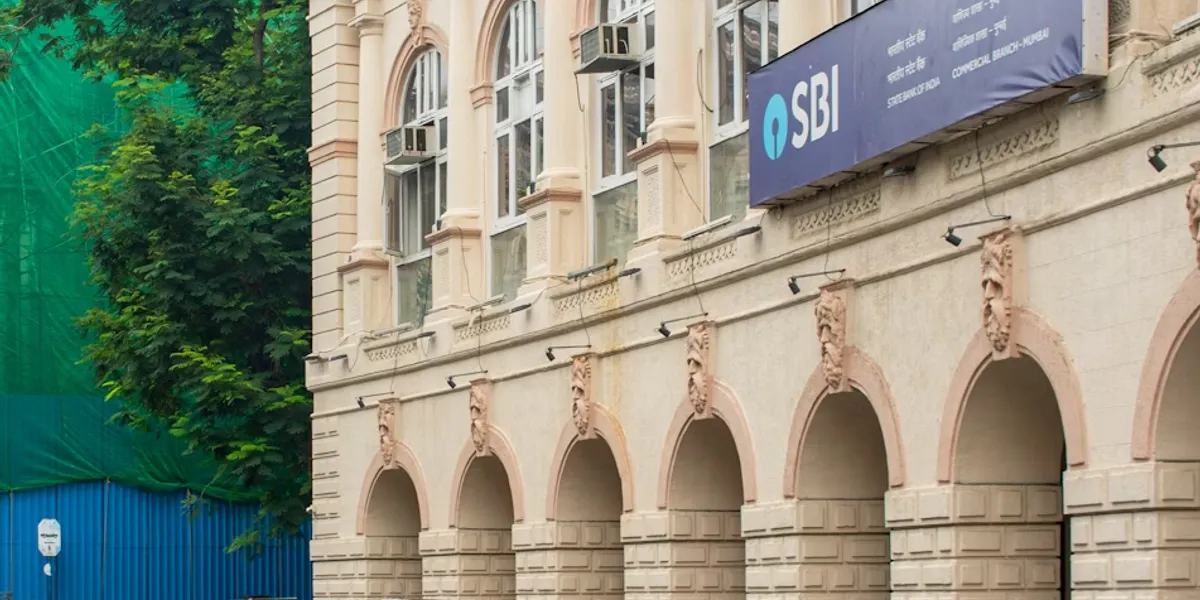
SBI's SWIFT code: SBININBBXXX
This is SBI's primary SWIFT/BIC code, registered to the head office at World Trade Centre, Cuffe Parade, Mumbai. It works for inward international remittances to any SBI account in India. Forex-enabled branches have unique 11-character codes (e.g., SBININBB011 for New Delhi), but SBININBBXXX is accepted as the default.
State Bank of India (SBI) is India's largest public sector bank, with over 22,000 branches across the country. Millions of Indians—freelancers, exporters, NRIs, and businesses—use SBI accounts to receive payments from abroad. Every international wire transfer to an SBI account requires a SWIFT code to identify the bank and route the funds correctly. This guide covers the primary SBI SWIFT code, branch-level codes for major cities, and exactly how to use them when receiving international payments.
What is a SWIFT code, and is it the same as a BIC code?
SWIFT stands for Society for Worldwide Interbank Financial Telecommunication—a global network connecting over 11,500 banks in more than 200 countries. A SWIFT code identifies a specific bank or branch in international wire transfers. Without it, foreign banks cannot route your payment. BIC stands for Bank Identifier Code. SWIFT and BIC refer to the same thing. You can use both terms interchangeably.
A SWIFT code is different from an IFSC code. IFSC is an 11-character code used only for domestic transfers within India—NEFT, RTGS, and IMPS. SWIFT codes handle international transfers exclusively. Never use an IFSC code where a SWIFT/BIC code is required.
How SBI processes international SWIFT transfers

SBI is an RBI-authorised Authorised Dealer (AD Category I) bank. This status allows it to legally process all inward and outward foreign exchange transactions under FEMA. SBI participates in the global SWIFT network and maintains correspondent banking relationships with major banks in the US, UK, Europe, and other regions. These arrangements let international payments travel through SBI's network and land in your account. SBI has SWIFT codes at both the head office level and individual branch levels for its forex-enabled branches.
How to decode the SBI SWIFT code
Every SBI SWIFT code follows a standard four-part format. Here is how each part breaks down:
SBIN – IN – BB – XXX
| Part | Characters | Meaning | SBI value |
|---|---|---|---|
| Bank code | 1–4 | Identifies the bank | SBIN = State Bank of India |
| Country code | 5–6 | Identifies the country | IN = India |
| Location code | 7–8 | Identifies the city/region | BB = Mumbai (head office) |
| Branch code | 9–11 | Identifies the specific branch | XXX = Head office (no branch) |
An 8-character code—or one ending in "XXX"—points to SBI's primary head office. An 11-character code with a specific three-digit suffix identifies a particular SBI branch. SBI's India SWIFT codes generally use "BB" as the location code; almost all forex-enabled branches follow the SBININBB + branch code format. The last three digits are what differ from branch to branch.
SBI SWIFT code: Head office and major branch codes
The main SBI SWIFT code accepted for international transfers is:
SBININBBXXX
This is SBI's head office code, registered at The Arcade, World Trade Centre, Cuffe Parade, Colaba, Mumbai – 400 005. For most retail inward remittances, this code is sufficient even if your account sits at a branch in another city. SBI routes the payment to your account using your account number.
Each forex-enabled SBI branch also has a unique 11-character SWIFT code. Here are the codes for major branches:
| City / Branch | SWIFT Code |
|---|---|
| Mumbai – Head Office (Cuffe Parade) | SBININBBXXX |
| New Delhi – Main Branch | SBININBB011 |
| Kolkata – Main Branch | SBININBB021 |
| Chennai – Main Branch | SBININBB031 |
| Bengaluru – Main Branch | SBININBB040 |
| Ahmedabad – Main Branch | SBININBB101 |
| Bhubaneswar – Main Branch | SBININBB270 |
| Hyderabad – Main Branch | SBININBB466 |
| Pune – Main Branch | SBININBB310 |
Important: Always verify your branch's SWIFT code before sharing it. Branch codes can change when branches merge or relocate. Check your passbook, log into YONO, or confirm directly with your branch's forex counter before every new transfer.
How to find your SBI branch SWIFT code
Not sure which SWIFT code your branch uses? Here are four reliable ways to find it.
1. Check your passbook or statement: SBI prints the branch SWIFT code on passbooks and statement headers for most forex-enabled branches. Look for "BIC" or "SWIFT" near the branch address section.
2. Log in to YONO or SBI net banking: Go to account details or the international banking section. The SWIFT code for your branch is usually listed there.
3. Call SBI customer care: Dial 1800-11-2211 (toll-free). Ask specifically for your branch's SWIFT/BIC code. Mention your branch name and account number to get the exact code.
4. Use an online SWIFT code finder: Winvesta's SBI SWIFT Code Finder lets you search by bank, city, and branch to get the verified code instantly.
Some SBI branches—particularly older rural branches—are not forex-enabled. These branches do not have their own SWIFT codes. In those cases, use SBININBBXXX as your default. SBI's head office routes the payment to your account number.
How to use the SBI SWIFT code for international payments
When someone abroad sends money to your SBI account, they need more than just the SWIFT code. Give your sender all these details together:
| Detail | What to provide |
|---|---|
| Beneficiary name | Full name as registered with SBI |
| Bank name | State Bank of India |
| Branch address | Your SBI branch address |
| Head office address | The Arcade, WTC, Cuffe Parade, Mumbai 400005 |
| SWIFT / BIC code | SBININBBXXX (or your branch-specific code) |
| Account number | Your full 11-digit SBI account number |
| IFSC code | Your branch IFSC code |
Some US banks also require an intermediary or correspondent bank's SWIFT code. SBI's correspondent banking arrangements handle this routing automatically for most corridors. If your sender's bank specifically requests intermediary details, contact your SBI branch's forex desk for current correspondent bank information.
For freelancers: How to receive international payments via SBI

If you are a freelancer—designer, developer, consultant, or content creator—and your overseas client wants to pay via wire transfer, share the full SBI payment details listed above. Your client's bank initiates a SWIFT transfer. It typically takes 2 to 5 business days for it to appear in your SBI account.
When the funds arrive, SBI converts the foreign currency to INR at its prevailing rate. The bank also charges a nominal inward remittance fee and applies a forex conversion markup.
After every inward SWIFT remittance, you can request a FIRA (Foreign Inward Remittance Advice) or a FIRC (Foreign Inward Remittance Certificate) from SBI. This document matters for your finances in three specific ways:
- Income tax filing: Your FIRC is proof of foreign income. Include it when filing your ITR.
- GST refund claims: If you are a GST-registered taxpayer providing zero-rated export services, you need the FIRC to claim input tax credit refunds.
- FEMA compliance: RBI requires all inward remittances to be documented with a valid purpose code. Your FIRC confirms the payment has been properly recorded.
Request your FIRC from the forex desk at your SBI branch after each transfer. For export credit customers, SBI issues this at no charge. Other customers pay approximately ₹200 per application, plus 18% GST.
For exporters: SWIFT codes, purpose codes, and FEMA compliance
Indian goods and services exporters must meet RBI and FEMA requirements for every inward remittance. Using the correct SBI SWIFT code is just the first step.
Purpose codes: Every international payment must carry an RBI purpose code. This tells SBI what the money is for. Common codes include P0802 for software and IT consulting services, P0101 for goods exports, and P0806 for professional and management consulting. Your bank assigns this code when funds arrive. Make sure your overseas client mentions the correct purpose in the transfer memo to avoid delays.
FIRC and eBRC: Services exporters rely on FIRA or FIRC as proof of receiving foreign exchange. Goods exporters additionally need an eBRC (Electronic Bank Realisation Certificate). SBI generates the eBRC through RBI's EDPMS system after matching the payment to the export shipment.
Realisation deadline: RBI requires export proceeds to be realised within nine months for goods and within twelve months for services.
Correspondent bank deductions: A SWIFT transfer from the US or UK often passes through one or two intermediary banks before reaching SBI. Each bank may deduct $10–$25 from the principal. Account for this gap when raising invoices to international clients.
Common mistakes that delay or block SBI SWIFT transfers
Getting the SWIFT code right matters, but small errors elsewhere can cause payments to bounce or stall in compliance holds. Watch out for these:
Wrong or outdated SWIFT code: Some branch-level SWIFT codes change when branches merge or relocate. Always verify the code before every new transfer, even if you have used it before.
Account name mismatch: The name you share must match exactly what is registered in your SBI account. Even a minor spelling difference can trigger a compliance hold at the receiving bank.
Incorrect account number: SBI account numbers are 11 digits long. A single wrong digit sends the payment to the wrong account or causes it to bounce back.
Missing purpose code: Some sending banks ask for a payment purpose in the transfer message. If your sender omits this, SBI may delay crediting the funds while requesting documentation.
Sharing IFSC instead of SWIFT: International clients sometimes confuse the two codes. An IFSC code will not work for cross-border transfers. Always share the SWIFT/BIC code for international payments.
Confusing IBAN with SWIFT: India does not use IBANs. HDFC, ICICI, SBI, and every other Indian bank use SWIFT codes for international transfers. When a foreign client asks for your IBAN, share your SBI SWIFT code and account number instead. See our IBAN guide for Indian banks to understand exactly what to tell clients who ask for an IBAN.
Why use Winvesta instead of SBI SWIFT for regular payments
SWIFT transfers through SBI are reliable and well-suited for occasional large transfers. But if you receive regular international payments as a freelancer, exporter, or remote professional, the costs accumulate. Traditional SWIFT fees, forex markups, and intermediary deductions can reduce a $1,000 payment by ₹5,000–₹7,000 or more before it reaches your account.
Multi-currency global collection accounts take a different approach. Platforms like Winvesta give you a local bank account number in the US, UK, Europe, Canada, or Australia. Your client makes a domestic transfer in their own currency. There are no SWIFT fees, no intermediary deductions, and settlement typically happens within one to two business days. Platforms like Winvesta typically provide automatic FIRA-style documentation for each transfer, eliminating the need to visit a branch.
Understanding your SBI SWIFT code stays essential—for large one-time transfers, backup payment routes, or clients who prefer bank wire. Use SBININBBXXX as your default, verify your branch code for specific transactions, and always confirm the code before sharing details with a new client.
Getting paid by overseas clients regularly? A Winvesta multi-currency account gives you local USD, GBP, and EUR account details, so clients pay you without SWIFT charges — payments from 180+ countries, credited in 1 day.
Disclaimer: The information provided in this blog is for general informational purposes only and does not constitute financial or legal advice. Winvesta makes no representations or warranties about the accuracy or suitability of the content and recommends consulting a professional before making any financial decisions.
Get paid globally. Keep more of it.
No FX markups. No GST. Funds in 1 day.

Table of Contents
SBI's SWIFT code: SBININBBXXX
This is SBI's primary SWIFT/BIC code, registered to the head office at World Trade Centre, Cuffe Parade, Mumbai. It works for inward international remittances to any SBI account in India. Forex-enabled branches have unique 11-character codes (e.g., SBININBB011 for New Delhi), but SBININBBXXX is accepted as the default.
State Bank of India (SBI) is India's largest public sector bank, with over 22,000 branches across the country. Millions of Indians—freelancers, exporters, NRIs, and businesses—use SBI accounts to receive payments from abroad. Every international wire transfer to an SBI account requires a SWIFT code to identify the bank and route the funds correctly. This guide covers the primary SBI SWIFT code, branch-level codes for major cities, and exactly how to use them when receiving international payments.
What is a SWIFT code, and is it the same as a BIC code?
SWIFT stands for Society for Worldwide Interbank Financial Telecommunication—a global network connecting over 11,500 banks in more than 200 countries. A SWIFT code identifies a specific bank or branch in international wire transfers. Without it, foreign banks cannot route your payment. BIC stands for Bank Identifier Code. SWIFT and BIC refer to the same thing. You can use both terms interchangeably.
A SWIFT code is different from an IFSC code. IFSC is an 11-character code used only for domestic transfers within India—NEFT, RTGS, and IMPS. SWIFT codes handle international transfers exclusively. Never use an IFSC code where a SWIFT/BIC code is required.
How SBI processes international SWIFT transfers
SBI is an RBI-authorised Authorised Dealer (AD Category I) bank. This status allows it to legally process all inward and outward foreign exchange transactions under FEMA. SBI participates in the global SWIFT network and maintains correspondent banking relationships with major banks in the US, UK, Europe, and other regions. These arrangements let international payments travel through SBI's network and land in your account. SBI has SWIFT codes at both the head office level and individual branch levels for its forex-enabled branches.
How to decode the SBI SWIFT code
Every SBI SWIFT code follows a standard four-part format. Here is how each part breaks down:
SBIN – IN – BB – XXX
| Part | Characters | Meaning | SBI value |
|---|---|---|---|
| Bank code | 1–4 | Identifies the bank | SBIN = State Bank of India |
| Country code | 5–6 | Identifies the country | IN = India |
| Location code | 7–8 | Identifies the city/region | BB = Mumbai (head office) |
| Branch code | 9–11 | Identifies the specific branch | XXX = Head office (no branch) |
An 8-character code—or one ending in "XXX"—points to SBI's primary head office. An 11-character code with a specific three-digit suffix identifies a particular SBI branch. SBI's India SWIFT codes generally use "BB" as the location code; almost all forex-enabled branches follow the SBININBB + branch code format. The last three digits are what differ from branch to branch.
SBI SWIFT code: Head office and major branch codes
The main SBI SWIFT code accepted for international transfers is:
SBININBBXXX
This is SBI's head office code, registered at The Arcade, World Trade Centre, Cuffe Parade, Colaba, Mumbai – 400 005. For most retail inward remittances, this code is sufficient even if your account sits at a branch in another city. SBI routes the payment to your account using your account number.
Each forex-enabled SBI branch also has a unique 11-character SWIFT code. Here are the codes for major branches:
| City / Branch | SWIFT Code |
|---|---|
| Mumbai – Head Office (Cuffe Parade) | SBININBBXXX |
| New Delhi – Main Branch | SBININBB011 |
| Kolkata – Main Branch | SBININBB021 |
| Chennai – Main Branch | SBININBB031 |
| Bengaluru – Main Branch | SBININBB040 |
| Ahmedabad – Main Branch | SBININBB101 |
| Bhubaneswar – Main Branch | SBININBB270 |
| Hyderabad – Main Branch | SBININBB466 |
| Pune – Main Branch | SBININBB310 |
Important: Always verify your branch's SWIFT code before sharing it. Branch codes can change when branches merge or relocate. Check your passbook, log into YONO, or confirm directly with your branch's forex counter before every new transfer.
How to find your SBI branch SWIFT code
Not sure which SWIFT code your branch uses? Here are four reliable ways to find it.
1. Check your passbook or statement: SBI prints the branch SWIFT code on passbooks and statement headers for most forex-enabled branches. Look for "BIC" or "SWIFT" near the branch address section.
2. Log in to YONO or SBI net banking: Go to account details or the international banking section. The SWIFT code for your branch is usually listed there.
3. Call SBI customer care: Dial 1800-11-2211 (toll-free). Ask specifically for your branch's SWIFT/BIC code. Mention your branch name and account number to get the exact code.
4. Use an online SWIFT code finder: Winvesta's SBI SWIFT Code Finder lets you search by bank, city, and branch to get the verified code instantly.
Some SBI branches—particularly older rural branches—are not forex-enabled. These branches do not have their own SWIFT codes. In those cases, use SBININBBXXX as your default. SBI's head office routes the payment to your account number.
How to use the SBI SWIFT code for international payments
When someone abroad sends money to your SBI account, they need more than just the SWIFT code. Give your sender all these details together:
| Detail | What to provide |
|---|---|
| Beneficiary name | Full name as registered with SBI |
| Bank name | State Bank of India |
| Branch address | Your SBI branch address |
| Head office address | The Arcade, WTC, Cuffe Parade, Mumbai 400005 |
| SWIFT / BIC code | SBININBBXXX (or your branch-specific code) |
| Account number | Your full 11-digit SBI account number |
| IFSC code | Your branch IFSC code |
Some US banks also require an intermediary or correspondent bank's SWIFT code. SBI's correspondent banking arrangements handle this routing automatically for most corridors. If your sender's bank specifically requests intermediary details, contact your SBI branch's forex desk for current correspondent bank information.
For freelancers: How to receive international payments via SBI
If you are a freelancer—designer, developer, consultant, or content creator—and your overseas client wants to pay via wire transfer, share the full SBI payment details listed above. Your client's bank initiates a SWIFT transfer. It typically takes 2 to 5 business days for it to appear in your SBI account.
When the funds arrive, SBI converts the foreign currency to INR at its prevailing rate. The bank also charges a nominal inward remittance fee and applies a forex conversion markup.
After every inward SWIFT remittance, you can request a FIRA (Foreign Inward Remittance Advice) or a FIRC (Foreign Inward Remittance Certificate) from SBI. This document matters for your finances in three specific ways:
- Income tax filing: Your FIRC is proof of foreign income. Include it when filing your ITR.
- GST refund claims: If you are a GST-registered taxpayer providing zero-rated export services, you need the FIRC to claim input tax credit refunds.
- FEMA compliance: RBI requires all inward remittances to be documented with a valid purpose code. Your FIRC confirms the payment has been properly recorded.
Request your FIRC from the forex desk at your SBI branch after each transfer. For export credit customers, SBI issues this at no charge. Other customers pay approximately ₹200 per application, plus 18% GST.
For exporters: SWIFT codes, purpose codes, and FEMA compliance
Indian goods and services exporters must meet RBI and FEMA requirements for every inward remittance. Using the correct SBI SWIFT code is just the first step.
Purpose codes: Every international payment must carry an RBI purpose code. This tells SBI what the money is for. Common codes include P0802 for software and IT consulting services, P0101 for goods exports, and P0806 for professional and management consulting. Your bank assigns this code when funds arrive. Make sure your overseas client mentions the correct purpose in the transfer memo to avoid delays.
FIRC and eBRC: Services exporters rely on FIRA or FIRC as proof of receiving foreign exchange. Goods exporters additionally need an eBRC (Electronic Bank Realisation Certificate). SBI generates the eBRC through RBI's EDPMS system after matching the payment to the export shipment.
Realisation deadline: RBI requires export proceeds to be realised within nine months for goods and within twelve months for services.
Correspondent bank deductions: A SWIFT transfer from the US or UK often passes through one or two intermediary banks before reaching SBI. Each bank may deduct $10–$25 from the principal. Account for this gap when raising invoices to international clients.
Common mistakes that delay or block SBI SWIFT transfers
Getting the SWIFT code right matters, but small errors elsewhere can cause payments to bounce or stall in compliance holds. Watch out for these:
Wrong or outdated SWIFT code: Some branch-level SWIFT codes change when branches merge or relocate. Always verify the code before every new transfer, even if you have used it before.
Account name mismatch: The name you share must match exactly what is registered in your SBI account. Even a minor spelling difference can trigger a compliance hold at the receiving bank.
Incorrect account number: SBI account numbers are 11 digits long. A single wrong digit sends the payment to the wrong account or causes it to bounce back.
Missing purpose code: Some sending banks ask for a payment purpose in the transfer message. If your sender omits this, SBI may delay crediting the funds while requesting documentation.
Sharing IFSC instead of SWIFT: International clients sometimes confuse the two codes. An IFSC code will not work for cross-border transfers. Always share the SWIFT/BIC code for international payments.
Confusing IBAN with SWIFT: India does not use IBANs. HDFC, ICICI, SBI, and every other Indian bank use SWIFT codes for international transfers. When a foreign client asks for your IBAN, share your SBI SWIFT code and account number instead. See our IBAN guide for Indian banks to understand exactly what to tell clients who ask for an IBAN.
Why use Winvesta instead of SBI SWIFT for regular payments
SWIFT transfers through SBI are reliable and well-suited for occasional large transfers. But if you receive regular international payments as a freelancer, exporter, or remote professional, the costs accumulate. Traditional SWIFT fees, forex markups, and intermediary deductions can reduce a $1,000 payment by ₹5,000–₹7,000 or more before it reaches your account.
Multi-currency global collection accounts take a different approach. Platforms like Winvesta give you a local bank account number in the US, UK, Europe, Canada, or Australia. Your client makes a domestic transfer in their own currency. There are no SWIFT fees, no intermediary deductions, and settlement typically happens within one to two business days. Platforms like Winvesta typically provide automatic FIRA-style documentation for each transfer, eliminating the need to visit a branch.
Understanding your SBI SWIFT code stays essential—for large one-time transfers, backup payment routes, or clients who prefer bank wire. Use SBININBBXXX as your default, verify your branch code for specific transactions, and always confirm the code before sharing details with a new client.
Getting paid by overseas clients regularly? A Winvesta multi-currency account gives you local USD, GBP, and EUR account details, so clients pay you without SWIFT charges — payments from 180+ countries, credited in 1 day.
Disclaimer: The information provided in this blog is for general informational purposes only and does not constitute financial or legal advice. Winvesta makes no representations or warranties about the accuracy or suitability of the content and recommends consulting a professional before making any financial decisions.
Get paid globally. Keep more of it.
No FX markups. No GST. Funds in 1 day.


