Paddle payouts to India: fees, timing and bank options for Indian sellers
Your first month of sales through Paddle looks good on the dashboard. The balance is there, the revenue chart is going up, and then you open the payout settings and a few questions arrive at once. When does the money actually leave? How much of it will reach your Indian bank? And what is that line about a fifteen-dollar wire fee?
Paddle publishes most of the answers in its help centre, but it never mentions India, so Indian sellers are left to work out which rule applies to them. This guide pulls the payout rules together, shows where the gaps are, and lays out the realistic ways to receive the money.
How the monthly payout cycle works
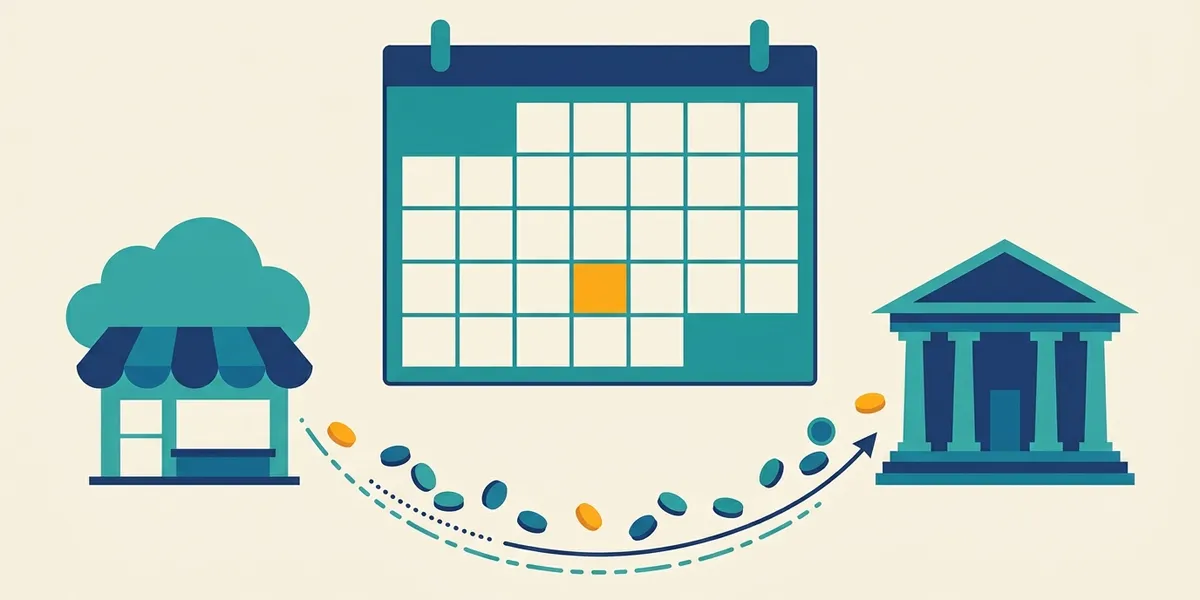
Paddle acts as the merchant of record: it sells to your customers, collects the payment and pays you what is left after its own fee. Payouts follow a fixed monthly schedule. Paddle's help centre says sellers cannot withdraw a balance on demand.
In practice the month runs like this:
- On day 1, if your balance is above your payout threshold, it becomes a payout and moves to the In-Progress queue.
- Between day 2 and day 15, Paddle processes it. Paddle says it sends the payment by the 15th.
- Once the payout is marked as sent, the money can take up to three working days to arrive.
- If the balance is below your threshold, it rolls over to the next month until the threshold is met.
The default minimum payout is $100, and you can raise it as high as $100,000 in your settings. If your balance is held in pounds or euros, the minimum is £100 or €100. Raising the threshold means fewer, larger payouts, which matters once you see how fixed fees add up.
What Paddle charges on a payout
Paddle's help centre says it adds no fees beyond the Paddle fee on payouts, and that payouts are made with that fee already deducted. The costs that remain depend on how the money travels.
- Wire in a matching currency and country: typically free, because Paddle can use local networks. The pairs it lists are USD to a US bank, EUR to a eurozone bank, GBP to a UK bank, CAD to a Canadian bank and AUD to an Australian bank.
- Wire where currency and bank country do not match: the transfer goes by SWIFT and carries a wire fee of $15, €15 or £15. Paddle deducts it before the payout invoice is created, so the invoice shows the amount actually sent.
- Payout in a different currency from your balance: Paddle may add a conversion margin of up to 1.5% at payout.
- Payoneer: you pay whatever Payoneer charges for your account type, on top of the Paddle fee.
Where an Indian seller lands, and what the help pages leave out
Neither payout article names India, Indian banks or the rupee. What you can say with confidence is narrower than most blog posts suggest.
The matching-currency list has no Indian entry, so a dollar, euro or pound payout to an Indian bank does not fit any of the free local routes. By Paddle's own rule that makes it a SWIFT wire with the $15, €15 or £15 fee. A second help page words it more loosely, saying certain countries may incur a $15 SWIFT fee, which is why it is worth confirming the figure for your own account in Payout Settings before you rely on it.
Paddle's fee is only the first deduction. Paddle says any subsequent fees from your bank are yours to bear. Those can include an intermediary bank's charge on the way, your Indian bank's inward remittance charges and the margin your bank builds into the rupee conversion. Paddle lets you name an intermediary bank in the notes of your payout settings, but the fees they charge are still yours. The hidden charges on international payments are rarely itemised on the payout invoice, so the amount that lands in rupees is the only reliable total.
Three ways to receive a Paddle payout in India
1. A wire to your Indian bank account. This is the default. It is simple to set up and the money arrives in your own current or savings account. The cost is the SWIFT fee Paddle deducts, plus intermediary and inward charges, plus your bank's conversion margin. Asking your bank for its inward remittance charges and the rate it applies to dollar receipts is the quickest way to price it.
2. Payoneer. Paddle supports Payoneer as a payout method, and you pay Payoneer's charges for your account type. It can make sense if you already hold a Payoneer account for other income, but it adds a second set of fees and a second withdrawal step. We compare the options in our guide to Payoneer alternatives.
3. Local account details from a collection account. Paddle's help page notes that services which provide account numbers, BIC or IBAN details can be used by entering those details in Transfer Preferences. A collection account that issues local US, UK or euro details is in that category, and a payout that matches the account's currency and country is the case Paddle describes as typically free. Whether a particular provider's details are treated as a local account is for Paddle to confirm, so check with Paddle support before you move your payouts there.
A worked example (illustrative)
Say your payout is $2,000 and Paddle applies the $15 SWIFT fee. The wire sent is $1,985. From there your bank or the intermediary may take a charge, and your bank converts the rest to rupees at its own rate. The only number in that chain you can read in advance is Paddle's $15. If you raise your threshold so that one payout of $2,000 replaces two payouts of $1,000, that fixed fee is paid once instead of twice. These figures are an illustration, not a quote, and your bank's charges will differ.
A fixed fee also hurts small payouts more. $15 is 1.5% of a $1,000 payout and 0.15% of a $10,000 payout, which is the arithmetic behind raising the threshold.
Paperwork to keep for every payout
A payout from Paddle is money coming into India from abroad, so your bank or provider will ask what it is for, and you will want a clean paper trail when your accountant files the year. For each payout, keep the payout invoice, the statement of the sales behind it, and the bank's inward remittance advice or equivalent record. Which purpose code applies depends on how your sales are structured, so confirm it with your bank and your chartered accountant instead of copying a code from a forum thread. Our guide to FEMA documentation for Indian SaaS companies covers the records subscription businesses are expected to keep.
A checklist before your first payout
- Open Payout Settings and Transfer Preferences and complete them before the first payout date.
- Decide your payout currency, and remember a different currency from your balance can add a margin of up to 1.5%.
- Set a payout threshold that makes the fixed wire fee small relative to each payout.
- Ask your bank for its inward remittance charges and its dollar conversion rate on receipts.
- Compare the rate you get with the mid-market rate on the day. Our explainer on how banks hide their cut inside the exchange rate shows how to do it.
- After the first payout, work out the true all-in cost by comparing the rupees received with the dollars Paddle shows as sent.
Where a Global Collections Account fits
A Winvesta Global Collections Account gives you local account details in USD, GBP, EUR, CAD and AUD. For a Paddle seller that means the third route above: you can enter those details as your payout destination and ask Paddle to confirm they qualify as a matching-currency local account, which is the case Paddle describes as typically free of its wire fee. It does not change Paddle's own fee, its monthly schedule or its minimum payout, and the final treatment of the details is Paddle's decision. If you are still choosing between payment platforms, our comparison of Stripe alternatives for India puts the main options side by side.
Disclaimer: The information provided in this blog is for general informational purposes only and does not constitute financial or legal advice. Winvesta makes no representations or warranties about the accuracy or suitability of the content and recommends consulting a professional before making any financial decisions.
Get paid globally. Keep more of it.
No FX markups. No GST. Funds in 1 day.

Table of Contents
Your first month of sales through Paddle looks good on the dashboard. The balance is there, the revenue chart is going up, and then you open the payout settings and a few questions arrive at once. When does the money actually leave? How much of it will reach your Indian bank? And what is that line about a fifteen-dollar wire fee?
Paddle publishes most of the answers in its help centre, but it never mentions India, so Indian sellers are left to work out which rule applies to them. This guide pulls the payout rules together, shows where the gaps are, and lays out the realistic ways to receive the money.
How the monthly payout cycle works
Paddle acts as the merchant of record: it sells to your customers, collects the payment and pays you what is left after its own fee. Payouts follow a fixed monthly schedule. Paddle's help centre says sellers cannot withdraw a balance on demand.
In practice the month runs like this:
- On day 1, if your balance is above your payout threshold, it becomes a payout and moves to the In-Progress queue.
- Between day 2 and day 15, Paddle processes it. Paddle says it sends the payment by the 15th.
- Once the payout is marked as sent, the money can take up to three working days to arrive.
- If the balance is below your threshold, it rolls over to the next month until the threshold is met.
The default minimum payout is $100, and you can raise it as high as $100,000 in your settings. If your balance is held in pounds or euros, the minimum is £100 or €100. Raising the threshold means fewer, larger payouts, which matters once you see how fixed fees add up.
What Paddle charges on a payout
Paddle's help centre says it adds no fees beyond the Paddle fee on payouts, and that payouts are made with that fee already deducted. The costs that remain depend on how the money travels.
- Wire in a matching currency and country: typically free, because Paddle can use local networks. The pairs it lists are USD to a US bank, EUR to a eurozone bank, GBP to a UK bank, CAD to a Canadian bank and AUD to an Australian bank.
- Wire where currency and bank country do not match: the transfer goes by SWIFT and carries a wire fee of $15, €15 or £15. Paddle deducts it before the payout invoice is created, so the invoice shows the amount actually sent.
- Payout in a different currency from your balance: Paddle may add a conversion margin of up to 1.5% at payout.
- Payoneer: you pay whatever Payoneer charges for your account type, on top of the Paddle fee.
Where an Indian seller lands, and what the help pages leave out
Neither payout article names India, Indian banks or the rupee. What you can say with confidence is narrower than most blog posts suggest.
The matching-currency list has no Indian entry, so a dollar, euro or pound payout to an Indian bank does not fit any of the free local routes. By Paddle's own rule that makes it a SWIFT wire with the $15, €15 or £15 fee. A second help page words it more loosely, saying certain countries may incur a $15 SWIFT fee, which is why it is worth confirming the figure for your own account in Payout Settings before you rely on it.
Paddle's fee is only the first deduction. Paddle says any subsequent fees from your bank are yours to bear. Those can include an intermediary bank's charge on the way, your Indian bank's inward remittance charges and the margin your bank builds into the rupee conversion. Paddle lets you name an intermediary bank in the notes of your payout settings, but the fees they charge are still yours. The hidden charges on international payments are rarely itemised on the payout invoice, so the amount that lands in rupees is the only reliable total.
Three ways to receive a Paddle payout in India
1. A wire to your Indian bank account. This is the default. It is simple to set up and the money arrives in your own current or savings account. The cost is the SWIFT fee Paddle deducts, plus intermediary and inward charges, plus your bank's conversion margin. Asking your bank for its inward remittance charges and the rate it applies to dollar receipts is the quickest way to price it.
2. Payoneer. Paddle supports Payoneer as a payout method, and you pay Payoneer's charges for your account type. It can make sense if you already hold a Payoneer account for other income, but it adds a second set of fees and a second withdrawal step. We compare the options in our guide to Payoneer alternatives.
3. Local account details from a collection account. Paddle's help page notes that services which provide account numbers, BIC or IBAN details can be used by entering those details in Transfer Preferences. A collection account that issues local US, UK or euro details is in that category, and a payout that matches the account's currency and country is the case Paddle describes as typically free. Whether a particular provider's details are treated as a local account is for Paddle to confirm, so check with Paddle support before you move your payouts there.
A worked example (illustrative)
Say your payout is $2,000 and Paddle applies the $15 SWIFT fee. The wire sent is $1,985. From there your bank or the intermediary may take a charge, and your bank converts the rest to rupees at its own rate. The only number in that chain you can read in advance is Paddle's $15. If you raise your threshold so that one payout of $2,000 replaces two payouts of $1,000, that fixed fee is paid once instead of twice. These figures are an illustration, not a quote, and your bank's charges will differ.
A fixed fee also hurts small payouts more. $15 is 1.5% of a $1,000 payout and 0.15% of a $10,000 payout, which is the arithmetic behind raising the threshold.
Paperwork to keep for every payout
A payout from Paddle is money coming into India from abroad, so your bank or provider will ask what it is for, and you will want a clean paper trail when your accountant files the year. For each payout, keep the payout invoice, the statement of the sales behind it, and the bank's inward remittance advice or equivalent record. Which purpose code applies depends on how your sales are structured, so confirm it with your bank and your chartered accountant instead of copying a code from a forum thread. Our guide to FEMA documentation for Indian SaaS companies covers the records subscription businesses are expected to keep.
A checklist before your first payout
- Open Payout Settings and Transfer Preferences and complete them before the first payout date.
- Decide your payout currency, and remember a different currency from your balance can add a margin of up to 1.5%.
- Set a payout threshold that makes the fixed wire fee small relative to each payout.
- Ask your bank for its inward remittance charges and its dollar conversion rate on receipts.
- Compare the rate you get with the mid-market rate on the day. Our explainer on how banks hide their cut inside the exchange rate shows how to do it.
- After the first payout, work out the true all-in cost by comparing the rupees received with the dollars Paddle shows as sent.
Where a Global Collections Account fits
A Winvesta Global Collections Account gives you local account details in USD, GBP, EUR, CAD and AUD. For a Paddle seller that means the third route above: you can enter those details as your payout destination and ask Paddle to confirm they qualify as a matching-currency local account, which is the case Paddle describes as typically free of its wire fee. It does not change Paddle's own fee, its monthly schedule or its minimum payout, and the final treatment of the details is Paddle's decision. If you are still choosing between payment platforms, our comparison of Stripe alternatives for India puts the main options side by side.
Disclaimer: The information provided in this blog is for general informational purposes only and does not constitute financial or legal advice. Winvesta makes no representations or warranties about the accuracy or suitability of the content and recommends consulting a professional before making any financial decisions.
Get paid globally. Keep more of it.
No FX markups. No GST. Funds in 1 day.