How RBI's managed float affects the INR Indian exporters actually receive
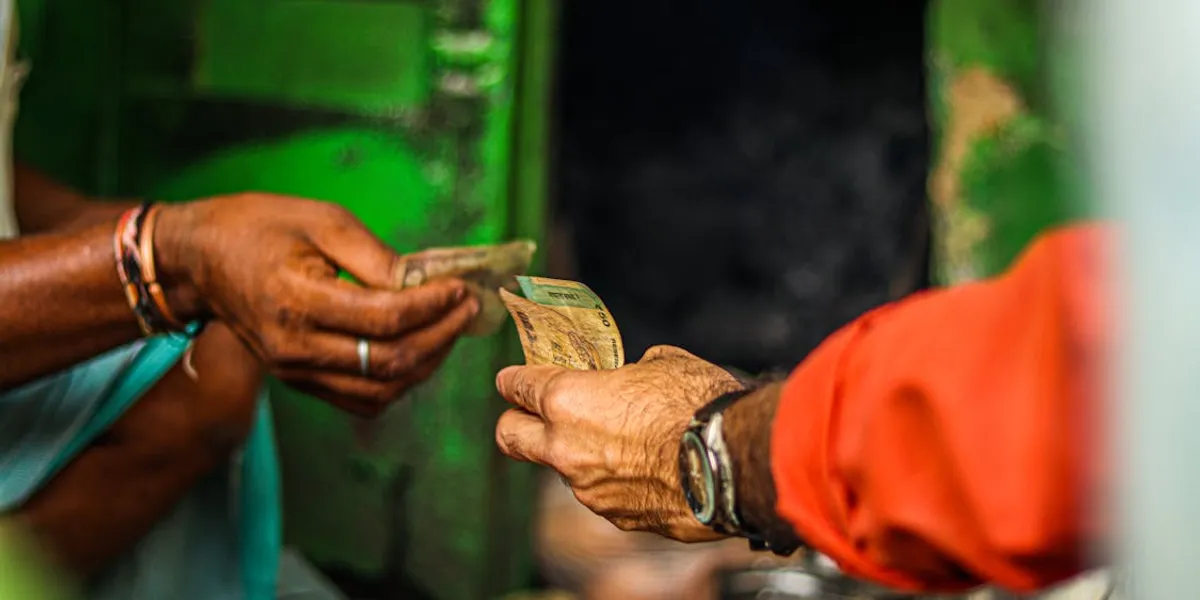
You raised an invoice for $5,000 in January 2026. Your client paid on time. After conversion, roughly ₹4.49 lakh was deposited into your account at the prevailing rate of around ₹89.86 per dollar.
Four months later, you raised another $5,000 invoice. Same client. Same scope. Same payment terms. This time, around ₹4.78 lakh arrived — at a rate of around ₹95.60 per dollar.
A difference of nearly ₹29,000 — from the same work, the same invoice amount.
Nothing changed on your end. The exchange rate did. And sitting behind that exchange rate is a system most exporters and freelancers have never fully understood: the RBI's managed float. Here is what it is, what drives it, and why it matters for the INR you actually receive.
What is a managed float exchange rate?

India does not fix the rupee's value. The RBI does not decide whether one dollar equals ₹85 or ₹95 and holds it at that rate regardless of what happens in global markets.
But India also does not let the rupee float freely, where pure market forces alone set its value with zero central bank involvement. Instead, India follows a managed float system — sometimes called a "dirty float."
Under this system, the market determines the rupee's direction. Global demand and supply for dollars versus rupees is the primary driver, but when the rupee's movement becomes excessive — too fast, too sharp, too disorderly — the RBI steps in to moderate the pace.
The key distinction: the RBI aims to reduce volatility. It does not target a specific exchange rate level. It will not hold the rupee at ₹90 if fundamentals push it toward ₹95. It will, however, try to slow the journey from ₹90 to ₹95 if it happens too abruptly.
For Indian exporters and freelancers, this means the INR you receive is shaped by two overlapping forces: the market dynamics that move the rupee's underlying value, and the RBI's periodic interventions that attempt to manage the speed and magnitude of those moves.
What actually moves the rupee
The rupee's movement does not happen randomly. Several macro factors typically drive its direction, and understanding them helps you anticipate — even if you cannot predict — when the rate might shift.
- Crude oil prices. India imports around 85% of its crude oil requirements. When global crude prices rise, India needs more dollars to pay for it. Higher dollar demand weakens the rupee. In May 2026, Brent crude climbed above $105 per barrel amid Iran-related geopolitical tensions, placing sustained downward pressure on the rupee.
- Foreign portfolio investor flows. When overseas investors buy Indian stocks and bonds, they bring dollars into India. That dollar inflow strengthens the rupee. When they sell and exit, dollars leave the country, and the rupee weakens. During 2025, foreign portfolio investors pulled out more than $17 billion from Indian equities over the year, and that outflow was a consistent weight on the rupee throughout.
- US Federal Reserve policy. When the US Fed keeps interest rates high, dollar-denominated assets look attractive to global investors. Capital tends to flow toward the US, strengthening the dollar — and weakening currencies like the rupee in comparison. Fed rate expectations are a reliable background driver of USD/INR direction.
- India's trade balance and tariffs. A wider trade deficit means India pays more dollars for imports than it earns from exports. When global trade frictions and selective tariffs on Indian exports intensified through 2025, they hurt India’s export earnings marginally and added to downward pressure on the rupee. The trade deficit widened, dollar demand from importers rose, and the rupee bore the cost.
These factors rarely work in isolation. Oil, capital flows, interest rate differentials, and trade dynamics all interact — sometimes reinforcing each other. The result is a rupee that can move meaningfully over days, weeks, and months, often in ways that even professional analysts do not predict correctly.
How the RBI intervenes, and what it actually means for your payment
When the rupee falls sharply, the RBI typically steps in through three main tools.
- Spot market dollar sales. The RBI sells US dollars from its forex reserves directly into the market, easing demand pressure and slowing the rupee's decline. Between January and September 2025, the RBI net-sold approximately $20 billion in the spot market. In April 2026, a further $3.6 billion was deployed to curb a sharp depreciation episode.
- Forward contracts. The RBI agrees to sell dollars at a predetermined future rate. This signals to the market that the RBI has both the capacity and the intent to act, which can itself reduce speculative selling of the rupee, even before a dollar is spent.
- Currency swaps. The RBI now exchanges currencies with counterparties under an agreement to reverse the transaction at a future date. This allows the RBI to manage dollar liquidity in the short term without permanently reducing its reserves. India's forex reserves currently cover approximately 10 to 11 months of projected imports, giving the RBI significant firepower for these operations.
Here is the crucial point for exporters and freelancers: the RBI controls the velocity of the rupee's move, not its direction. If the underlying fundamentals — high oil prices, capital outflows, a strong dollar globally — push the rupee lower, the RBI can slow that fall but usually focuses on smoothing the path rather than engineering a lasting reversal. The USD/INR rate moved from a low of about ₹89.87 in early January 2026 to the mid‑₹95 range by mid‑May 2026, despite the RBI’s active interventions throughout that period.
That roughly 5-and-a-half-rupee move over four months is the difference between about ₹44.93 lakh and ₹47.80 lakh for a $50,000 export order. It is also why the INR you receive on two identical invoices can differ substantially.
The exporter's dilemma: Rupee depreciation is not purely good news

A common first reaction when the rupee weakens is relief — or even satisfaction. More rupees per dollar received sounds like a straightforward win. And in the short term, it often is. On a $10,000 invoice, the difference between converting at ₹89 and converting at ₹95 is ₹60,000.
But the picture is more complicated than it first appears.
When the rupee weakens significantly over time, clients in dollar-paying countries may start to notice. If they are aware that your rupee-equivalent earnings have grown substantially relative to previous years, some may push back on pricing or expect future rates to reflect the currency shift. It does not happen universally, but it is a real dynamic in longer-term client relationships.
Rupee depreciation also raises costs for any part of your business priced in dollars. Cloud services, SaaS subscriptions, international software licences, imported equipment, or overseas travel all become more expensive in rupee terms when the exchange rate weakens. On the other hand, cost increases may partially offset the gain in export revenue.
And volatility itself is a cost. If you are bidding on a project today for delivery in four months, the rate you plan around and the rate you ultimately convert at may differ by several rupees per dollar. That uncertainty makes financial planning harder and can erode margins on fixed-price contracts.
The net effect of a weaker rupee depends on your cost structure, your client relationships, and — critically — when you convert your earnings. That last variable is often the most controllable one.
When you convert, it is as important as what you invoice
Most exporters and freelancers using traditional bank accounts face a structural constraint. When a foreign payment arrives, the bank automatically converts it to INR at the prevailing rate on that day and credits the account. There is no choice in timing.
If the rupee is weak when your payment lands, you benefit. If the rupee happens to be in a stronger phase — perhaps the RBI has just intervened heavily and bought it temporary support — you receive less INR. The invoice amount is identical either way. The INR outcome is not.
The ability to hold foreign-currency earnings and convert when the exchange rate is more favourable is a meaningful financial lever. Understanding the difference between the spot rate and the forward rate helps you make better-informed decisions about when and how to convert your dollar earnings.
Winvesta's Global Currency Account gives you exactly this flexibility. Your payment from a US client lands in USD. It stays in USD — in your Winvesta account — until you decide to withdraw to INR. You choose the moment of conversion, not the bank. Within FEMA's 15-month export proceeds repatriation timeline, you have meaningful room to observe rate movements and act on your own terms.
This does not mean you are speculating on currencies. You are not forced to convert at whatever the rate happens to be on the day your client pays. That distinction matters across many transactions over the course of a year.
Practical steps to manage your exchange rate exposure
You cannot control where the rupee moves. But you can manage how much its movement affects your actual earnings with a few practical habits.
- Invoice in major currencies. Invoicing in USD, GBP, or EUR gives you access to well-traded, liquid currency pairs, with conversion options and platforms widely available. Invoicing in a client's local currency, especially when it is less common, can limit your flexibility. Winvesta's Global Currency Account supports USD, GBP, and EUR collections — giving you well-traded currency pairs and the flexibility to convert on your terms.
- Separate the receipt from the conversion. A Global Currency Account allows your payment to land in the original currency and sit there until you act. You are not forced to convert the same day. This single change gives you the option — not the obligation — to convert at a better time.
- Track macro triggers. Oil price moves, RBI monetary policy decisions, and US Fed communications all reliably influence the rupee's direction. Knowing when these events occur gives you useful context for short-term rate direction without requiring deep financial expertise.
- Stay within FEMA timelines. You can hold export proceeds in a foreign currency account for up to 15 months from the date of export under current RBI guidelines. Use that window strategically rather than converting by default immediately after receipt.
- Avoid obsessing over the rate. Timing conversion perfectly is not realistic. The useful habit is simply avoiding conversion at obviously unfavourable moments — such as the day after a sharp fall in the rupee. Patience, not precision, is the practical skill.
Disclaimer: The information provided in this blog is for general informational purposes only and does not constitute financial or legal advice. Winvesta makes no representations or warranties about the accuracy or suitability of the content and recommends consulting a professional before making any financial decisions.
Get paid globally. Keep more of it.
No FX markups. No GST. Funds in 1 day.

Table of Contents
You raised an invoice for $5,000 in January 2026. Your client paid on time. After conversion, roughly ₹4.49 lakh was deposited into your account at the prevailing rate of around ₹89.86 per dollar.
Four months later, you raised another $5,000 invoice. Same client. Same scope. Same payment terms. This time, around ₹4.78 lakh arrived — at a rate of around ₹95.60 per dollar.
A difference of nearly ₹29,000 — from the same work, the same invoice amount.
Nothing changed on your end. The exchange rate did. And sitting behind that exchange rate is a system most exporters and freelancers have never fully understood: the RBI's managed float. Here is what it is, what drives it, and why it matters for the INR you actually receive.
What is a managed float exchange rate?
India does not fix the rupee's value. The RBI does not decide whether one dollar equals ₹85 or ₹95 and holds it at that rate regardless of what happens in global markets.
But India also does not let the rupee float freely, where pure market forces alone set its value with zero central bank involvement. Instead, India follows a managed float system — sometimes called a "dirty float."
Under this system, the market determines the rupee's direction. Global demand and supply for dollars versus rupees is the primary driver, but when the rupee's movement becomes excessive — too fast, too sharp, too disorderly — the RBI steps in to moderate the pace.
The key distinction: the RBI aims to reduce volatility. It does not target a specific exchange rate level. It will not hold the rupee at ₹90 if fundamentals push it toward ₹95. It will, however, try to slow the journey from ₹90 to ₹95 if it happens too abruptly.
For Indian exporters and freelancers, this means the INR you receive is shaped by two overlapping forces: the market dynamics that move the rupee's underlying value, and the RBI's periodic interventions that attempt to manage the speed and magnitude of those moves.
What actually moves the rupee
The rupee's movement does not happen randomly. Several macro factors typically drive its direction, and understanding them helps you anticipate — even if you cannot predict — when the rate might shift.
- Crude oil prices. India imports around 85% of its crude oil requirements. When global crude prices rise, India needs more dollars to pay for it. Higher dollar demand weakens the rupee. In May 2026, Brent crude climbed above $105 per barrel amid Iran-related geopolitical tensions, placing sustained downward pressure on the rupee.
- Foreign portfolio investor flows. When overseas investors buy Indian stocks and bonds, they bring dollars into India. That dollar inflow strengthens the rupee. When they sell and exit, dollars leave the country, and the rupee weakens. During 2025, foreign portfolio investors pulled out more than $17 billion from Indian equities over the year, and that outflow was a consistent weight on the rupee throughout.
- US Federal Reserve policy. When the US Fed keeps interest rates high, dollar-denominated assets look attractive to global investors. Capital tends to flow toward the US, strengthening the dollar — and weakening currencies like the rupee in comparison. Fed rate expectations are a reliable background driver of USD/INR direction.
- India's trade balance and tariffs. A wider trade deficit means India pays more dollars for imports than it earns from exports. When global trade frictions and selective tariffs on Indian exports intensified through 2025, they hurt India’s export earnings marginally and added to downward pressure on the rupee. The trade deficit widened, dollar demand from importers rose, and the rupee bore the cost.
These factors rarely work in isolation. Oil, capital flows, interest rate differentials, and trade dynamics all interact — sometimes reinforcing each other. The result is a rupee that can move meaningfully over days, weeks, and months, often in ways that even professional analysts do not predict correctly.
How the RBI intervenes, and what it actually means for your payment
When the rupee falls sharply, the RBI typically steps in through three main tools.
- Spot market dollar sales. The RBI sells US dollars from its forex reserves directly into the market, easing demand pressure and slowing the rupee's decline. Between January and September 2025, the RBI net-sold approximately $20 billion in the spot market. In April 2026, a further $3.6 billion was deployed to curb a sharp depreciation episode.
- Forward contracts. The RBI agrees to sell dollars at a predetermined future rate. This signals to the market that the RBI has both the capacity and the intent to act, which can itself reduce speculative selling of the rupee, even before a dollar is spent.
- Currency swaps. The RBI now exchanges currencies with counterparties under an agreement to reverse the transaction at a future date. This allows the RBI to manage dollar liquidity in the short term without permanently reducing its reserves. India's forex reserves currently cover approximately 10 to 11 months of projected imports, giving the RBI significant firepower for these operations.
Here is the crucial point for exporters and freelancers: the RBI controls the velocity of the rupee's move, not its direction. If the underlying fundamentals — high oil prices, capital outflows, a strong dollar globally — push the rupee lower, the RBI can slow that fall but usually focuses on smoothing the path rather than engineering a lasting reversal. The USD/INR rate moved from a low of about ₹89.87 in early January 2026 to the mid‑₹95 range by mid‑May 2026, despite the RBI’s active interventions throughout that period.
That roughly 5-and-a-half-rupee move over four months is the difference between about ₹44.93 lakh and ₹47.80 lakh for a $50,000 export order. It is also why the INR you receive on two identical invoices can differ substantially.
The exporter's dilemma: Rupee depreciation is not purely good news
A common first reaction when the rupee weakens is relief — or even satisfaction. More rupees per dollar received sounds like a straightforward win. And in the short term, it often is. On a $10,000 invoice, the difference between converting at ₹89 and converting at ₹95 is ₹60,000.
But the picture is more complicated than it first appears.
When the rupee weakens significantly over time, clients in dollar-paying countries may start to notice. If they are aware that your rupee-equivalent earnings have grown substantially relative to previous years, some may push back on pricing or expect future rates to reflect the currency shift. It does not happen universally, but it is a real dynamic in longer-term client relationships.
Rupee depreciation also raises costs for any part of your business priced in dollars. Cloud services, SaaS subscriptions, international software licences, imported equipment, or overseas travel all become more expensive in rupee terms when the exchange rate weakens. On the other hand, cost increases may partially offset the gain in export revenue.
And volatility itself is a cost. If you are bidding on a project today for delivery in four months, the rate you plan around and the rate you ultimately convert at may differ by several rupees per dollar. That uncertainty makes financial planning harder and can erode margins on fixed-price contracts.
The net effect of a weaker rupee depends on your cost structure, your client relationships, and — critically — when you convert your earnings. That last variable is often the most controllable one.
When you convert, it is as important as what you invoice
Most exporters and freelancers using traditional bank accounts face a structural constraint. When a foreign payment arrives, the bank automatically converts it to INR at the prevailing rate on that day and credits the account. There is no choice in timing.
If the rupee is weak when your payment lands, you benefit. If the rupee happens to be in a stronger phase — perhaps the RBI has just intervened heavily and bought it temporary support — you receive less INR. The invoice amount is identical either way. The INR outcome is not.
The ability to hold foreign-currency earnings and convert when the exchange rate is more favourable is a meaningful financial lever. Understanding the difference between the spot rate and the forward rate helps you make better-informed decisions about when and how to convert your dollar earnings.
Winvesta's Global Currency Account gives you exactly this flexibility. Your payment from a US client lands in USD. It stays in USD — in your Winvesta account — until you decide to withdraw to INR. You choose the moment of conversion, not the bank. Within FEMA's 15-month export proceeds repatriation timeline, you have meaningful room to observe rate movements and act on your own terms.
This does not mean you are speculating on currencies. You are not forced to convert at whatever the rate happens to be on the day your client pays. That distinction matters across many transactions over the course of a year.
Practical steps to manage your exchange rate exposure
You cannot control where the rupee moves. But you can manage how much its movement affects your actual earnings with a few practical habits.
- Invoice in major currencies. Invoicing in USD, GBP, or EUR gives you access to well-traded, liquid currency pairs, with conversion options and platforms widely available. Invoicing in a client's local currency, especially when it is less common, can limit your flexibility. Winvesta's Global Currency Account supports USD, GBP, and EUR collections — giving you well-traded currency pairs and the flexibility to convert on your terms.
- Separate the receipt from the conversion. A Global Currency Account allows your payment to land in the original currency and sit there until you act. You are not forced to convert the same day. This single change gives you the option — not the obligation — to convert at a better time.
- Track macro triggers. Oil price moves, RBI monetary policy decisions, and US Fed communications all reliably influence the rupee's direction. Knowing when these events occur gives you useful context for short-term rate direction without requiring deep financial expertise.
- Stay within FEMA timelines. You can hold export proceeds in a foreign currency account for up to 15 months from the date of export under current RBI guidelines. Use that window strategically rather than converting by default immediately after receipt.
- Avoid obsessing over the rate. Timing conversion perfectly is not realistic. The useful habit is simply avoiding conversion at obviously unfavourable moments — such as the day after a sharp fall in the rupee. Patience, not precision, is the practical skill.
Disclaimer: The information provided in this blog is for general informational purposes only and does not constitute financial or legal advice. Winvesta makes no representations or warranties about the accuracy or suitability of the content and recommends consulting a professional before making any financial decisions.
Get paid globally. Keep more of it.
No FX markups. No GST. Funds in 1 day.


