Can your bank fine you for a late export filing? From October 2026, no
The debit lands about three weeks after the fact. A few thousand rupees, described on your statement as something like "late submission charge — export documents", for a filing you sent in eleven days past the deadline because your client took eleven days to confirm the invoice. You pay it. Arguing with a bank's trade desk costs more in hours than the charge costs in rupees.
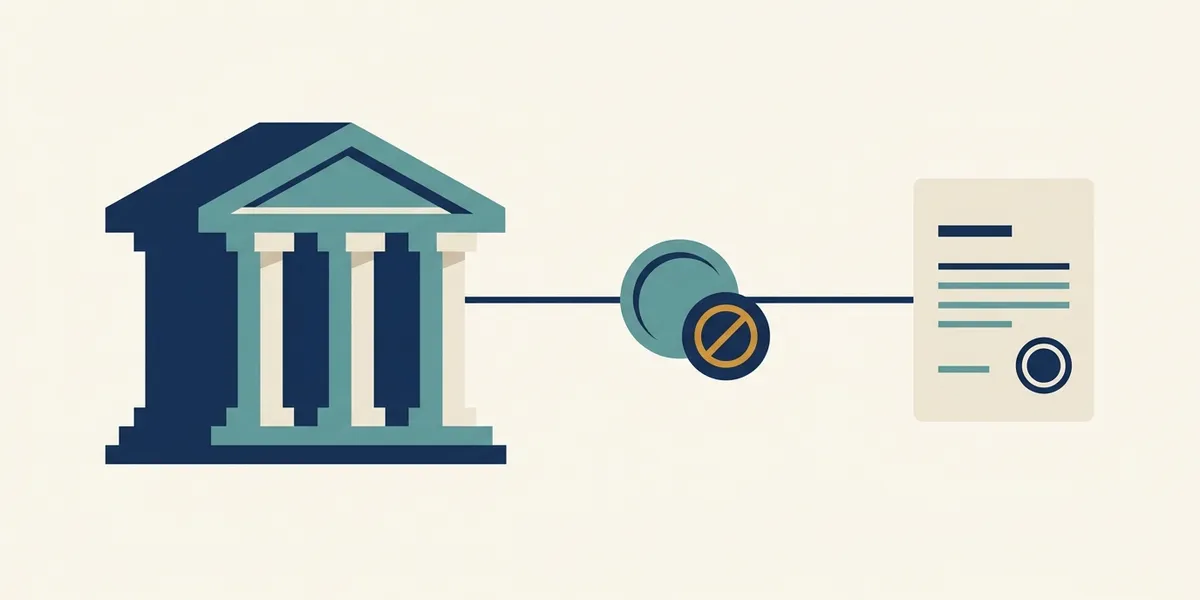
From 1 October 2026, that debit is not permitted. The Foreign Exchange Management (Export and Import of Goods and Services) Regulations, 2026 — notified as FEMA 23(R)/2026-RB on 13 January 2026 and gazetted two days later — contain a provision that almost every summary of the new regime has skipped. It says your bank cannot charge you a penalty for your own regulatory delay.
What Regulation 19(3) actually says
The wording is unusually plain for a FEMA regulation: "An Authorised Dealer shall not levy any charges or penalty on its constituent (exporter or importer or merchant trader) for any regulatory delay/violation by the constituent." The same sub-clause opens by requiring that the charges an AD does levy be reasonable and proportional to the services rendered. A fourth sub-clause, 19(4), adds the transparency half: every Authorised Dealer must disclose its policy and the main features of its standard operating procedure on its website.
Read it twice, because the logic runs against instinct. If you file an export declaration late, the delay is yours. The regulator's position is still that your bank is not the body that gets to fine you for it. FEMA enforcement sits with the RBI and, at the far end, the Directorate of Enforcement — not with a line item on a trade tariff sheet.
Why the RBI bothered to write this down
Because the relationship is lopsided. Your AD bank is the gate every export document passes through, the entity that reports your transaction into EDPMS, and the only party that can grant you an extension. You have no leverage in that arrangement, and until now nothing stopped a bank from attaching a fee to your lateness. Industry bodies have spent years raising the mirror-image complaint: documents sitting unprocessed on the bank's side long after the exporter submitted them, with no charge flowing the other way.
The 2026 regulations answer that structurally rather than complaint by complaint. Regulation 19(1) requires every AD to put in place a documented internal policy and SOP covering exports, imports and merchanting trade — and spells out the minimum contents: the list of documents, timelines and charges for each process and approval; extensions of the realisation and payment periods; adjustment of export proceeds, including under-realisation and non-realisation; advance receipts and advance payments; the internal delegation of approval powers; and export and import factoring. Regulation 19(2) requires that approval responsibility be clearly delegated across internal levels, and that the policy carry a grievance escalation route with an appeal handled at a higher internal level, which must decide on the genuineness of what the customer submitted. Regulation 19(3) removes the bank's ability to earn money from your non-compliance. Regulation 19(4) makes the policy public.
What your bank can still charge you for
Nearly everything it charges for today. Handling an inward remittance, issuing an e-FIRC, processing an export declaration, applying to extend a realisation period, closing an entry in EDPMS — these are services, they take someone's time, and they carry fees. Regulation 19(3) does not make your trade account free.
What changes is the character of the charge. A fee for doing something is fine. A fine for your lateness is not. The distinction matters because the two often sit on the same tariff sheet, a few lines apart, and only one of them has to go.
"Reasonable and proportional" is not defined in the regulation, so the first real test is your bank's own published policy. Do this now rather than in October: pull your bank's foreign exchange and trade tariff schedule — most publish it as a PDF on the corporate banking pages — and read the export section line by line. Anything described as a penalty, a fine, or a charge for delayed or non-submission of documents is a line that has to change. Knowing which ones apply to you is what makes a later conversation short.
The two documents your bank now has to publish
Its internal policy and the main features of its SOP — on its website, per Regulation 19(4). That is a bigger deal than it sounds. Because Regulation 19(1) requires the policy to spell out the documents, timelines and charges for each process, and how extensions and adjustments are handled, you will be able to see how a bank actually behaves on the things that cost exporters money before you open an account with it rather than after.
The honest caveat: as things stand, most AD banks have not published these SOPs yet. The directions telling banks how to implement the new regime went out as A.P. (DIR Series) Circular No. 20 on 16 January 2026 and commence on the same date as the regulations. Until the SOPs appear, you cannot check where your bank stands — you can only note the date and ask. The rest of what changes on 1 October is covered in our guide to FEMA 2026 for service exporters.
If you are charged anyway
Put it in writing, and keep it narrow. Name the debit, the date and the amount, ask which tariff line it was raised under, and ask whether the bank treats it as a service fee or as a penalty for regulatory delay. That single question does most of the work, because the answer either resolves it or gives you the thing you need for the next step.
Regulation 19(2) gives you the internal path: the bank's grievance channel, and then an appeal to a higher level inside the bank. If that runs out, the RBI's ombudsman scheme is the external route. One limit worth knowing before you spend effort on it — the regulation commences on 1 October 2026 and is not retrospective, so a charge levied for a period before that date sits under the old rules.
What an AD Category-I bank is, and why the category matters here
The RBI licenses banks and certain other entities as Authorised Dealers in foreign exchange, in categories that define how much they are allowed to do. Category-I is the widest: the full range of current and capital account transactions, which is why your export proceeds have to land through one. Category-II holders and full-fledged money changers are licensed for narrower sets — largely outward remittances for specified purposes, and currency exchange.
The category matters because Regulation 19 binds the AD. The entity that owes you a published SOP, a grievance route and the no-penalty rule is whichever AD Category-I bank your proceeds route through. Worth separating from a term it gets confused with: an AD Category-I bank is an institution, while an AD code is a branch-level identifier you register against shipping bills. Different things, similar names.
The deadlines this does not move
None of them. Regulation 19(3) limits what your bank can charge; it does not give you longer to do anything. And the realisation clock is the one most guides currently state wrongly, because it moved twice in a year. Exports made between 5 June and 30 September 2026 carry a nine-month window, after the June 2026 amendment reverted an earlier extension. From 1 October the general period is fifteen months, or eighteen where the invoice is raised or settled in Indian rupees.
Filing timelines are unchanged too. From October, a single Export Declaration Form replaces SOFTEX for goods, services and software, filed within 30 days from the end of the month in which you raised the invoice — with a softer route for services other than software, which may be declared on or before the date you receive payment, and an AD-granted extension available on request with reasons. We covered that switch in detail when SOFTEX was retired.
And the provision with real teeth has nothing to do with charges. Under Regulation 13, once proceeds are unrealised more than a year past their due date, you may make further exports only against full advance payment or an irrevocable letter of credit. That is a commercial constraint on your next contract, not a fee — which is why aged receivables deserve more attention than tariff lines.
What to do between now and October
Four things, none of which take long. Read your bank's trade tariff sheet and mark any charge tied to delay or non-submission. Pull the last twelve months of your account statement and total what you have actually paid under those heads — exporters are routinely surprised by the number, and it tells you how much this rule is worth to you. Ask your relationship manager, in writing, when the bank will publish its Regulation 19 SOP and charges policy. Then diarise a check for early October.
One thing not to do: treat this as permission to file late. A charge you can dispute is a nuisance. An entry left open in EDPMS past its window is a compliance problem that follows your business into its next export, and no rule about bank charges touches that.
Where a collections account helps, and where it does not
Be clear about what a product can and cannot do here. A Winvesta Global Collections Account does not file your export declaration, does not waive anyone's bank charges, and does not change a single deadline in the regulations. What it changes is how much there is to be late about: your client pays into local account details in their own currency, the documentation comes back to you as a matter of course rather than as a request — an e-FIRA against each payment, with the purpose code already on it — and the conversion cost is a published number rather than a spread you reverse-engineer later. Most late filings we see start with a document the exporter did not know they were supposed to chase. That is the part worth fixing, and it is cheaper than arguing about a fee.
Disclaimer: The information provided in this blog is for general informational purposes only and does not constitute financial or legal advice. Winvesta makes no representations or warranties about the accuracy or suitability of the content and recommends consulting a professional before making any financial decisions.
Get paid globally. Keep more of it.
No FX markups. No GST. Funds in 1 day.

Table of Contents
The debit lands about three weeks after the fact. A few thousand rupees, described on your statement as something like "late submission charge — export documents", for a filing you sent in eleven days past the deadline because your client took eleven days to confirm the invoice. You pay it. Arguing with a bank's trade desk costs more in hours than the charge costs in rupees.
From 1 October 2026, that debit is not permitted. The Foreign Exchange Management (Export and Import of Goods and Services) Regulations, 2026 — notified as FEMA 23(R)/2026-RB on 13 January 2026 and gazetted two days later — contain a provision that almost every summary of the new regime has skipped. It says your bank cannot charge you a penalty for your own regulatory delay.
What Regulation 19(3) actually says
The wording is unusually plain for a FEMA regulation: "An Authorised Dealer shall not levy any charges or penalty on its constituent (exporter or importer or merchant trader) for any regulatory delay/violation by the constituent." The same sub-clause opens by requiring that the charges an AD does levy be reasonable and proportional to the services rendered. A fourth sub-clause, 19(4), adds the transparency half: every Authorised Dealer must disclose its policy and the main features of its standard operating procedure on its website.
Read it twice, because the logic runs against instinct. If you file an export declaration late, the delay is yours. The regulator's position is still that your bank is not the body that gets to fine you for it. FEMA enforcement sits with the RBI and, at the far end, the Directorate of Enforcement — not with a line item on a trade tariff sheet.
Why the RBI bothered to write this down
Because the relationship is lopsided. Your AD bank is the gate every export document passes through, the entity that reports your transaction into EDPMS, and the only party that can grant you an extension. You have no leverage in that arrangement, and until now nothing stopped a bank from attaching a fee to your lateness. Industry bodies have spent years raising the mirror-image complaint: documents sitting unprocessed on the bank's side long after the exporter submitted them, with no charge flowing the other way.
The 2026 regulations answer that structurally rather than complaint by complaint. Regulation 19(1) requires every AD to put in place a documented internal policy and SOP covering exports, imports and merchanting trade — and spells out the minimum contents: the list of documents, timelines and charges for each process and approval; extensions of the realisation and payment periods; adjustment of export proceeds, including under-realisation and non-realisation; advance receipts and advance payments; the internal delegation of approval powers; and export and import factoring. Regulation 19(2) requires that approval responsibility be clearly delegated across internal levels, and that the policy carry a grievance escalation route with an appeal handled at a higher internal level, which must decide on the genuineness of what the customer submitted. Regulation 19(3) removes the bank's ability to earn money from your non-compliance. Regulation 19(4) makes the policy public.
What your bank can still charge you for
Nearly everything it charges for today. Handling an inward remittance, issuing an e-FIRC, processing an export declaration, applying to extend a realisation period, closing an entry in EDPMS — these are services, they take someone's time, and they carry fees. Regulation 19(3) does not make your trade account free.
What changes is the character of the charge. A fee for doing something is fine. A fine for your lateness is not. The distinction matters because the two often sit on the same tariff sheet, a few lines apart, and only one of them has to go.
"Reasonable and proportional" is not defined in the regulation, so the first real test is your bank's own published policy. Do this now rather than in October: pull your bank's foreign exchange and trade tariff schedule — most publish it as a PDF on the corporate banking pages — and read the export section line by line. Anything described as a penalty, a fine, or a charge for delayed or non-submission of documents is a line that has to change. Knowing which ones apply to you is what makes a later conversation short.
The two documents your bank now has to publish
Its internal policy and the main features of its SOP — on its website, per Regulation 19(4). That is a bigger deal than it sounds. Because Regulation 19(1) requires the policy to spell out the documents, timelines and charges for each process, and how extensions and adjustments are handled, you will be able to see how a bank actually behaves on the things that cost exporters money before you open an account with it rather than after.
The honest caveat: as things stand, most AD banks have not published these SOPs yet. The directions telling banks how to implement the new regime went out as A.P. (DIR Series) Circular No. 20 on 16 January 2026 and commence on the same date as the regulations. Until the SOPs appear, you cannot check where your bank stands — you can only note the date and ask. The rest of what changes on 1 October is covered in our guide to FEMA 2026 for service exporters.
If you are charged anyway
Put it in writing, and keep it narrow. Name the debit, the date and the amount, ask which tariff line it was raised under, and ask whether the bank treats it as a service fee or as a penalty for regulatory delay. That single question does most of the work, because the answer either resolves it or gives you the thing you need for the next step.
Regulation 19(2) gives you the internal path: the bank's grievance channel, and then an appeal to a higher level inside the bank. If that runs out, the RBI's ombudsman scheme is the external route. One limit worth knowing before you spend effort on it — the regulation commences on 1 October 2026 and is not retrospective, so a charge levied for a period before that date sits under the old rules.
What an AD Category-I bank is, and why the category matters here
The RBI licenses banks and certain other entities as Authorised Dealers in foreign exchange, in categories that define how much they are allowed to do. Category-I is the widest: the full range of current and capital account transactions, which is why your export proceeds have to land through one. Category-II holders and full-fledged money changers are licensed for narrower sets — largely outward remittances for specified purposes, and currency exchange.
The category matters because Regulation 19 binds the AD. The entity that owes you a published SOP, a grievance route and the no-penalty rule is whichever AD Category-I bank your proceeds route through. Worth separating from a term it gets confused with: an AD Category-I bank is an institution, while an AD code is a branch-level identifier you register against shipping bills. Different things, similar names.
The deadlines this does not move
None of them. Regulation 19(3) limits what your bank can charge; it does not give you longer to do anything. And the realisation clock is the one most guides currently state wrongly, because it moved twice in a year. Exports made between 5 June and 30 September 2026 carry a nine-month window, after the June 2026 amendment reverted an earlier extension. From 1 October the general period is fifteen months, or eighteen where the invoice is raised or settled in Indian rupees.
Filing timelines are unchanged too. From October, a single Export Declaration Form replaces SOFTEX for goods, services and software, filed within 30 days from the end of the month in which you raised the invoice — with a softer route for services other than software, which may be declared on or before the date you receive payment, and an AD-granted extension available on request with reasons. We covered that switch in detail when SOFTEX was retired.
And the provision with real teeth has nothing to do with charges. Under Regulation 13, once proceeds are unrealised more than a year past their due date, you may make further exports only against full advance payment or an irrevocable letter of credit. That is a commercial constraint on your next contract, not a fee — which is why aged receivables deserve more attention than tariff lines.
What to do between now and October
Four things, none of which take long. Read your bank's trade tariff sheet and mark any charge tied to delay or non-submission. Pull the last twelve months of your account statement and total what you have actually paid under those heads — exporters are routinely surprised by the number, and it tells you how much this rule is worth to you. Ask your relationship manager, in writing, when the bank will publish its Regulation 19 SOP and charges policy. Then diarise a check for early October.
One thing not to do: treat this as permission to file late. A charge you can dispute is a nuisance. An entry left open in EDPMS past its window is a compliance problem that follows your business into its next export, and no rule about bank charges touches that.
Where a collections account helps, and where it does not
Be clear about what a product can and cannot do here. A Winvesta Global Collections Account does not file your export declaration, does not waive anyone's bank charges, and does not change a single deadline in the regulations. What it changes is how much there is to be late about: your client pays into local account details in their own currency, the documentation comes back to you as a matter of course rather than as a request — an e-FIRA against each payment, with the purpose code already on it — and the conversion cost is a published number rather than a spread you reverse-engineer later. Most late filings we see start with a document the exporter did not know they were supposed to chase. That is the part worth fixing, and it is cheaper than arguing about a fee.
Disclaimer: The information provided in this blog is for general informational purposes only and does not constitute financial or legal advice. Winvesta makes no representations or warranties about the accuracy or suitability of the content and recommends consulting a professional before making any financial decisions.
Get paid globally. Keep more of it.
No FX markups. No GST. Funds in 1 day.