7 ways to fund your export business while waiting to get paid
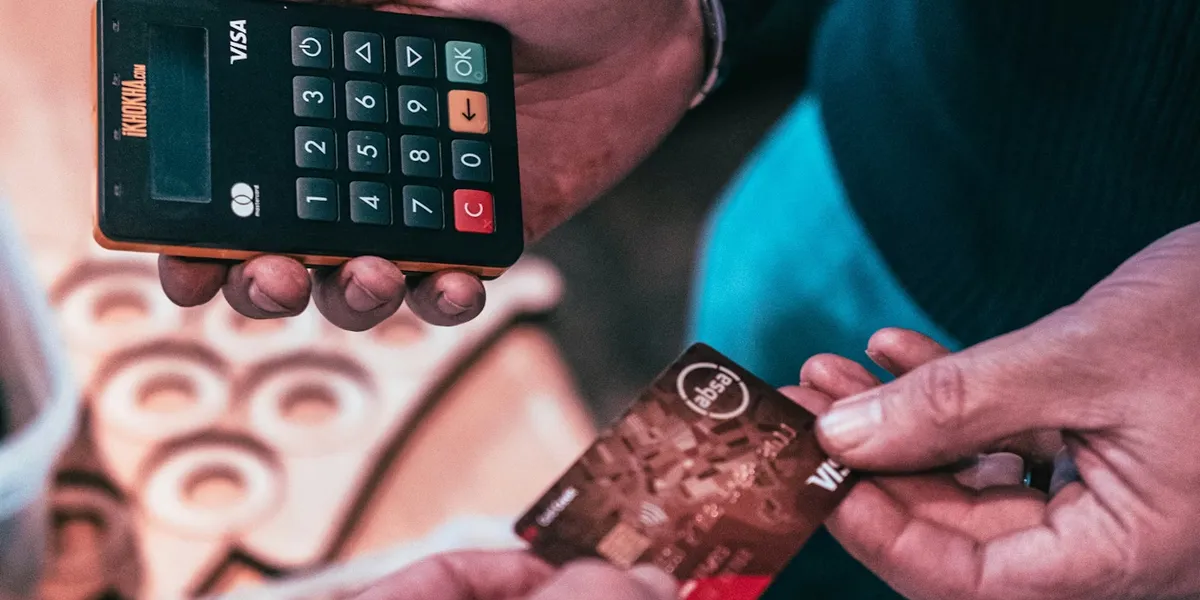
You closed a $50,000 contract with a buyer in Chicago. They pay on NET-60. You still need to pay your factory workers next week.
This is the daily reality for thousands of Indian exporters. You win the business. You deliver the goods or services. Then you wait — 30, 60, sometimes 90 days — while your operating costs run on schedule.
The cash flow gap between raising an invoice and receiving the money is a major working-capital challenge for Indian SME exporters. Your business isn't failing. Your invoices are solid. The cash is just stuck in transit.
Here are seven ways to bridge that gap — most commonly in the 0.5–1.5% per month range, depending on structure and tenor. Most Indian exporters have never used any of them.
Why export cash flow is uniquely hard

Domestic buyers in India typically pay within 15–30 days. International buyers routinely take 30–90 days. That gap alone makes export cash flow structurally harder than domestic trade.
On top of that, currency conversion adds 1–3 more business days after payment arrives. Most exporters don't realise how much they lose to hidden charges on every inward international transfer before the money even hits their account.
Seasonal demand adds another layer of difficulty. A garment exporter filling a December holiday order in August needs cash in August. The payment arrives in November. Production, packaging, and logistics costs all land months before the money does.
The solution isn't to stop exporting. It's to stop self-financing the gap with your own working capital.
Option 1: Pre-shipment credit (packing credit)
Pre-shipment credit — also called packing credit or export packing credit — is a short-term bank loan to fund your order before you ship it.
The loan covers raw materials, manufacturing, packaging, and inland transport. Your bank releases funds against a confirmed export order or Letter of Credit. You repay once your export proceeds arrive.
The RBI classifies export credit as priority sector lending. Banks must offer it at concessional rates — well below a standard business overdraft. In January 2026, the government operationalised the Export Promotion Mission (Niryat Protsahan), adding a 2.75% interest subvention on eligible pre-shipment credit for approximately 75% of India's tariff lines.
The standard tenor is up to 180 days, extendable to 360 days with bank approval. Under RBI trade relief directions issued in November 2025, export credit disbursed before March 31, 2026, can qualify for tenors of up to 450 days.
To apply, you need a valid IEC, a confirmed export order or LC, recent financial statements, and a satisfactory banking track record. Your bank's trade finance or forex desk handles the application.
Option 2: Post-shipment credit (bill discounting)

Once goods are shipped, your invoice becomes a financial asset. Your bank can advance funds against it before your buyer pays.
Post-shipment credit is a loan your bank extends against your export invoice after delivery. Two variants exist.
Bill negotiation: Your bank purchases the export bill and recovers money directly from the overseas buyer. You're effectively off the hook once the bank accepts the bill.
Bill discounting: Your bank advances you funds, but you retain liability. If the buyer defaults, you owe the bank.
Interest on post-shipment rupee credit runs at approximately 8–10% per annum, linked to your bank's MCLR. Foreign currency post-shipment credit (PCFC) is priced off global benchmarks like SOFR and can be cheaper for USD invoices, though you carry currency risk.
This is often one of the fastest bank-route options for exporters who have already shipped. You need your shipped export invoice and standard export documents — that's it.
Option 3: Fintech invoice discounting platforms
If bank paperwork feels slow or your credit limit isn't approved yet, fintech platforms offer an entirely different path.
Platforms like Drip Capital and KredX allow you to sell or pledge your export invoice to a fintech financier. You typically receive 90–98% of the invoice value within 24–72 hours. The remaining balance — minus the platform's discount fee — arrives when your buyer pays.
Minimal collateral is needed. Underwriting is lighter and faster than a traditional bank appraisal. Drip Capital specifically focuses on Indian exporters, serving over 5,000 businesses with collateral-free funding up to $2.5 million per client. KredX operates an IFSCA-licensed International Trade Finance platform for cross-border invoices, with verified funds disbursement in 24–72 hours.
The discount fee is typically 1.2–2% per invoice cycle of 30–90 days. That translates to roughly 8–14% annualised — higher than bank credit, but near-zero paperwork with no collateral requirement.
This option suits SMEs too small for a bank working capital limit, but with receivables from credible international buyers.
Option 4: ECGC-backed export credit
ECGC (Export Credit Guarantee Corporation of India) is a government-owned body that insures Indian exporters against buyer defaults, delayed payments, and political risks.
Its direct value for cash flow: banks lend far more willingly when your receivables carry ECGC coverage. An ECGC policy covering 80–90% of your receivable value sharply reduces the bank's credit risk, making both pre-shipment and post-shipment approvals significantly easier to get.
In March 2026, ECGC launched its RELIEF Scheme under the Export Promotion Mission to protect exporters hit by disruptions near the Strait of Hormuz. Shipments covered by ECGC for the February 14–March 15, 2026 period received 100% risk coverage. Exports from March 16 to June 15, 2026, are eligible for up to 95% coverage. MSME exporters without existing ECGC cover receive 50% reimbursement on additional logistics costs, capped at ₹50 lakh per exporter.
For any MSME exporter shipping to buyers in West Asia, Africa, or Eastern Europe, ECGC cover should be standard practice — not an afterthought.
Option 5: Export Promotion Mission and SIDBI schemes
Two government institutions offer subsidised financing that most MSME exporters have never approached.
The Export Promotion Mission (EPM): The Union Cabinet approved this flagship scheme in November 2025, with a total outlay of ₹25,060 crore for FY2025-26 to FY2030-31. Its Niryat Protsahan sub-scheme provides interest subvention on both pre-shipment and post-shipment export credit for eligible exporters. The annual benefit is capped at ₹50 lakh per IEC. Claims are filed through the DGFT portal. Rates are reviewed every March and September.
SIDBI: SIDBI's SMILE scheme (SIDBI Make in India Loans for Enterprises) offers direct term loans to MSMEs with repayment tenors up to 10 years and a moratorium of up to 3 years. SIDBI also lends directly to export-oriented MSMEs through its direct lending programs. You can apply through the Udyamimitra portal at udyamimitra.in.
Both routes involve more paperwork than fintech platforms. But the subsidised rates and long repayment windows make them worth pursuing for any exporter planning to scale beyond ₹2–3 crore in annual export turnover.
Option 6: Supplier credit — the most overlooked option
Before you approach a bank or fintech platform, look at your own supply chain first.
Most Indian exporters pay their raw material suppliers within 30 days. But many suppliers — especially those you've worked with for years — will agree to 60 or 90-day payment terms if you ask directly.
Negotiating 60–90 day supplier credit gives you a free, zero-interest working capital buffer equal to your material procurement costs. If your buyer pays on NET-60 and your supplier extends NET-60 terms as well, the cash flow mismatch shrinks dramatically.
Start by reviewing your top three input suppliers. Calculate how much cash you've advanced them in the last six months. Then have a direct conversation about extended terms. The worst outcome is they say no.
For larger procurement contracts, you can also offer to pay a slightly higher unit price in exchange for 90-day terms. A 1–2% price premium on materials often costs less than the interest on a working capital loan of the same amount.
Option 7: Multi-currency account and strategic FX holding
This option doesn't give you cash early — but it can make the cash you receive worth more.
When a US or UK buyer pays you, most Indian exporters convert to INR immediately through their bank. That locks you into whatever exchange rate is available on the day of receipt — typically with a 1.5–3.5% forex markup already baked in.
A Global Collection Account (GCA) lets you receive and hold payments in the original foreign currency — USD, GBP, EUR, AUD — without converting immediately. When you actually need INR for salaries, vendor payments, or rent, you convert at a time you choose.
The rupee has historically depreciated against the USD over time. Holding foreign currency for even 2–4 weeks and converting when the rate is more favourable generates a natural yield on your holding period.
With Winvesta's GCA specifically, every transfer also generates an automatic e-FIRA at no charge — understand how your FIRA connects to GST refunds on your exports and why it matters at year-end filing.
This isn't speculative currency trading. It's simply choosing not to convert at the worst possible moment.
Choosing the right option for your situation
| Your situation | Best option |
|---|---|
| Order confirmed, haven't shipped yet | Pre-shipment packing credit |
| Goods shipped, awaiting buyer payment | Post-shipment bill discounting |
| No bank credit limit, need cash in 48 hours | Fintech invoice discounting (Drip Capital, KredX) |
| Shipping to risky or unfamiliar markets | ECGC cover + bank export credit |
| Scaling exports, want long-term subsidised capital | SIDBI SMILE or EPM subvention via DGFT |
| Strong relationships with Indian suppliers | Negotiate 60–90 day supplier credit terms |
| Receiving frequent USD/GBP payments | Multi-currency GCA with strategic conversion timing |
The right answer is usually a combination of two or three options. A manufacturing exporter might use packing credit for large seasonal orders, fintech invoice discounting for smaller urgent shipments, and a GCA to hold USD for a few weeks before converting.
Export finance isn't a single product. It's a toolkit. The exporters who grow fastest are the ones who know which tool fits each situation — and aren't waiting for their bank to tell them.
Disclaimer: The information provided in this blog is for general informational purposes only and does not constitute financial or legal advice. Winvesta makes no representations or warranties about the accuracy or suitability of the content and recommends consulting a professional before making any financial decisions.
Get paid globally. Keep more of it.
No FX markups. No GST. Funds in 1 day.

Table of Contents
You closed a $50,000 contract with a buyer in Chicago. They pay on NET-60. You still need to pay your factory workers next week.
This is the daily reality for thousands of Indian exporters. You win the business. You deliver the goods or services. Then you wait — 30, 60, sometimes 90 days — while your operating costs run on schedule.
The cash flow gap between raising an invoice and receiving the money is a major working-capital challenge for Indian SME exporters. Your business isn't failing. Your invoices are solid. The cash is just stuck in transit.
Here are seven ways to bridge that gap — most commonly in the 0.5–1.5% per month range, depending on structure and tenor. Most Indian exporters have never used any of them.
Why export cash flow is uniquely hard
Domestic buyers in India typically pay within 15–30 days. International buyers routinely take 30–90 days. That gap alone makes export cash flow structurally harder than domestic trade.
On top of that, currency conversion adds 1–3 more business days after payment arrives. Most exporters don't realise how much they lose to hidden charges on every inward international transfer before the money even hits their account.
Seasonal demand adds another layer of difficulty. A garment exporter filling a December holiday order in August needs cash in August. The payment arrives in November. Production, packaging, and logistics costs all land months before the money does.
The solution isn't to stop exporting. It's to stop self-financing the gap with your own working capital.
Option 1: Pre-shipment credit (packing credit)
Pre-shipment credit — also called packing credit or export packing credit — is a short-term bank loan to fund your order before you ship it.
The loan covers raw materials, manufacturing, packaging, and inland transport. Your bank releases funds against a confirmed export order or Letter of Credit. You repay once your export proceeds arrive.
The RBI classifies export credit as priority sector lending. Banks must offer it at concessional rates — well below a standard business overdraft. In January 2026, the government operationalised the Export Promotion Mission (Niryat Protsahan), adding a 2.75% interest subvention on eligible pre-shipment credit for approximately 75% of India's tariff lines.
The standard tenor is up to 180 days, extendable to 360 days with bank approval. Under RBI trade relief directions issued in November 2025, export credit disbursed before March 31, 2026, can qualify for tenors of up to 450 days.
To apply, you need a valid IEC, a confirmed export order or LC, recent financial statements, and a satisfactory banking track record. Your bank's trade finance or forex desk handles the application.
Option 2: Post-shipment credit (bill discounting)
Once goods are shipped, your invoice becomes a financial asset. Your bank can advance funds against it before your buyer pays.
Post-shipment credit is a loan your bank extends against your export invoice after delivery. Two variants exist.
Bill negotiation: Your bank purchases the export bill and recovers money directly from the overseas buyer. You're effectively off the hook once the bank accepts the bill.
Bill discounting: Your bank advances you funds, but you retain liability. If the buyer defaults, you owe the bank.
Interest on post-shipment rupee credit runs at approximately 8–10% per annum, linked to your bank's MCLR. Foreign currency post-shipment credit (PCFC) is priced off global benchmarks like SOFR and can be cheaper for USD invoices, though you carry currency risk.
This is often one of the fastest bank-route options for exporters who have already shipped. You need your shipped export invoice and standard export documents — that's it.
Option 3: Fintech invoice discounting platforms
If bank paperwork feels slow or your credit limit isn't approved yet, fintech platforms offer an entirely different path.
Platforms like Drip Capital and KredX allow you to sell or pledge your export invoice to a fintech financier. You typically receive 90–98% of the invoice value within 24–72 hours. The remaining balance — minus the platform's discount fee — arrives when your buyer pays.
Minimal collateral is needed. Underwriting is lighter and faster than a traditional bank appraisal. Drip Capital specifically focuses on Indian exporters, serving over 5,000 businesses with collateral-free funding up to $2.5 million per client. KredX operates an IFSCA-licensed International Trade Finance platform for cross-border invoices, with verified funds disbursement in 24–72 hours.
The discount fee is typically 1.2–2% per invoice cycle of 30–90 days. That translates to roughly 8–14% annualised — higher than bank credit, but near-zero paperwork with no collateral requirement.
This option suits SMEs too small for a bank working capital limit, but with receivables from credible international buyers.
Option 4: ECGC-backed export credit
ECGC (Export Credit Guarantee Corporation of India) is a government-owned body that insures Indian exporters against buyer defaults, delayed payments, and political risks.
Its direct value for cash flow: banks lend far more willingly when your receivables carry ECGC coverage. An ECGC policy covering 80–90% of your receivable value sharply reduces the bank's credit risk, making both pre-shipment and post-shipment approvals significantly easier to get.
In March 2026, ECGC launched its RELIEF Scheme under the Export Promotion Mission to protect exporters hit by disruptions near the Strait of Hormuz. Shipments covered by ECGC for the February 14–March 15, 2026 period received 100% risk coverage. Exports from March 16 to June 15, 2026, are eligible for up to 95% coverage. MSME exporters without existing ECGC cover receive 50% reimbursement on additional logistics costs, capped at ₹50 lakh per exporter.
For any MSME exporter shipping to buyers in West Asia, Africa, or Eastern Europe, ECGC cover should be standard practice — not an afterthought.
Option 5: Export Promotion Mission and SIDBI schemes
Two government institutions offer subsidised financing that most MSME exporters have never approached.
The Export Promotion Mission (EPM): The Union Cabinet approved this flagship scheme in November 2025, with a total outlay of ₹25,060 crore for FY2025-26 to FY2030-31. Its Niryat Protsahan sub-scheme provides interest subvention on both pre-shipment and post-shipment export credit for eligible exporters. The annual benefit is capped at ₹50 lakh per IEC. Claims are filed through the DGFT portal. Rates are reviewed every March and September.
SIDBI: SIDBI's SMILE scheme (SIDBI Make in India Loans for Enterprises) offers direct term loans to MSMEs with repayment tenors up to 10 years and a moratorium of up to 3 years. SIDBI also lends directly to export-oriented MSMEs through its direct lending programs. You can apply through the Udyamimitra portal at udyamimitra.in.
Both routes involve more paperwork than fintech platforms. But the subsidised rates and long repayment windows make them worth pursuing for any exporter planning to scale beyond ₹2–3 crore in annual export turnover.
Option 6: Supplier credit — the most overlooked option
Before you approach a bank or fintech platform, look at your own supply chain first.
Most Indian exporters pay their raw material suppliers within 30 days. But many suppliers — especially those you've worked with for years — will agree to 60 or 90-day payment terms if you ask directly.
Negotiating 60–90 day supplier credit gives you a free, zero-interest working capital buffer equal to your material procurement costs. If your buyer pays on NET-60 and your supplier extends NET-60 terms as well, the cash flow mismatch shrinks dramatically.
Start by reviewing your top three input suppliers. Calculate how much cash you've advanced them in the last six months. Then have a direct conversation about extended terms. The worst outcome is they say no.
For larger procurement contracts, you can also offer to pay a slightly higher unit price in exchange for 90-day terms. A 1–2% price premium on materials often costs less than the interest on a working capital loan of the same amount.
Option 7: Multi-currency account and strategic FX holding
This option doesn't give you cash early — but it can make the cash you receive worth more.
When a US or UK buyer pays you, most Indian exporters convert to INR immediately through their bank. That locks you into whatever exchange rate is available on the day of receipt — typically with a 1.5–3.5% forex markup already baked in.
A Global Collection Account (GCA) lets you receive and hold payments in the original foreign currency — USD, GBP, EUR, AUD — without converting immediately. When you actually need INR for salaries, vendor payments, or rent, you convert at a time you choose.
The rupee has historically depreciated against the USD over time. Holding foreign currency for even 2–4 weeks and converting when the rate is more favourable generates a natural yield on your holding period.
With Winvesta's GCA specifically, every transfer also generates an automatic e-FIRA at no charge — understand how your FIRA connects to GST refunds on your exports and why it matters at year-end filing.
This isn't speculative currency trading. It's simply choosing not to convert at the worst possible moment.
Choosing the right option for your situation
| Your situation | Best option |
|---|---|
| Order confirmed, haven't shipped yet | Pre-shipment packing credit |
| Goods shipped, awaiting buyer payment | Post-shipment bill discounting |
| No bank credit limit, need cash in 48 hours | Fintech invoice discounting (Drip Capital, KredX) |
| Shipping to risky or unfamiliar markets | ECGC cover + bank export credit |
| Scaling exports, want long-term subsidised capital | SIDBI SMILE or EPM subvention via DGFT |
| Strong relationships with Indian suppliers | Negotiate 60–90 day supplier credit terms |
| Receiving frequent USD/GBP payments | Multi-currency GCA with strategic conversion timing |
The right answer is usually a combination of two or three options. A manufacturing exporter might use packing credit for large seasonal orders, fintech invoice discounting for smaller urgent shipments, and a GCA to hold USD for a few weeks before converting.
Export finance isn't a single product. It's a toolkit. The exporters who grow fastest are the ones who know which tool fits each situation — and aren't waiting for their bank to tell them.
Disclaimer: The information provided in this blog is for general informational purposes only and does not constitute financial or legal advice. Winvesta makes no representations or warranties about the accuracy or suitability of the content and recommends consulting a professional before making any financial decisions.
Get paid globally. Keep more of it.
No FX markups. No GST. Funds in 1 day.


